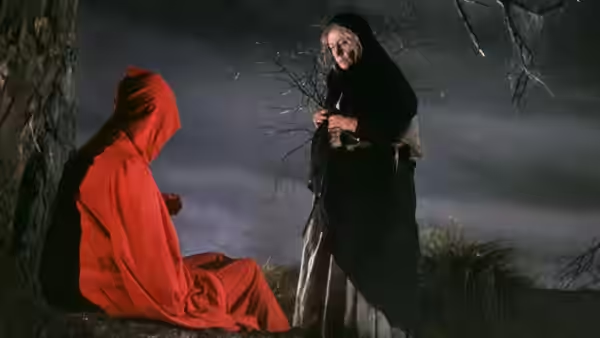
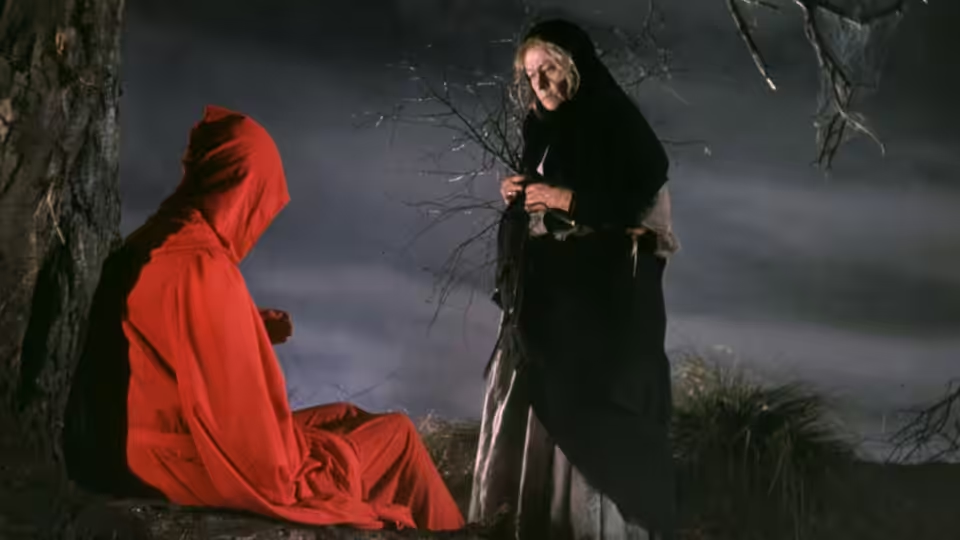
A red-hooded figure sits beside a black-cloaked man beneath bare branches
Film review

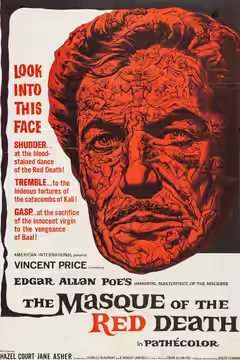
The Masque of the Red Death

1964 · Directed by Roger Corman · 1h 30m

In a sentenceVincent Price seals the doors, invites the aristocracy and dares Death to find the dress code

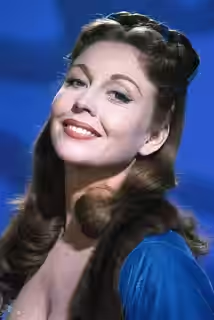
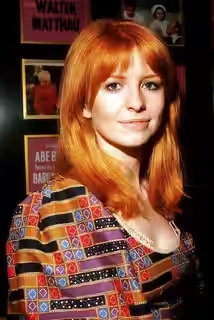
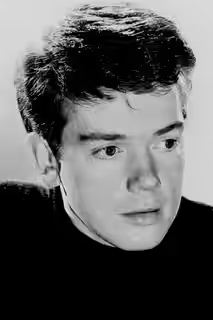
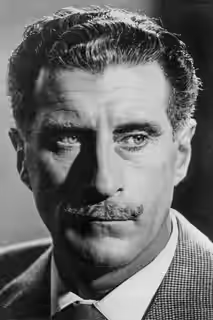
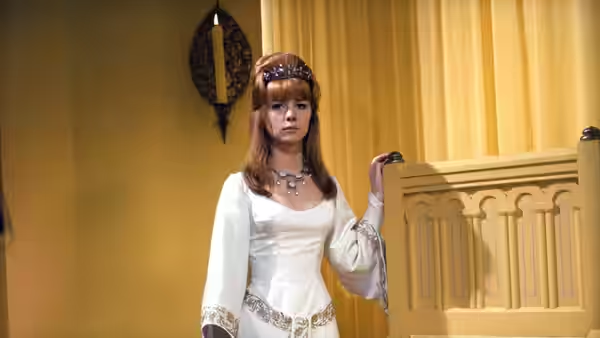
Medieval Italy, in the season of a plague called the Red Death. A hooded figure in red hands an old woman a white rose in the forest; it turns red in her hands. Prince Prospero (Vincent Price) rides into a village whose people ask him for food, and when Gino (David Weston) and Ludovico (Nigel Green) answer him back he orders them seized. Francesca (Jane Asher), Gino’s lover and Ludovico’s daughter, pleads for them, and then the old woman is found with the plague on her. Prospero has the village burned and takes all three back to his castle, where he seals the gates against the sickness and prepares a masked ball for the nobles sheltering with him. His consort Juliana (Hazel Court) wants to be initiated into his worship of Satan. The jester Hop Toad (Skip Martin) entertains the guests.

Plays from YouTube when you press play; nothing loads from them until then.

Fi1m review

The best of Roger Corman’s Poe films and the strangest: Vincent Price as a Satanist prince sealing his castle against plague while Nicolas Roeg paints the rooms one colour at a time. The plot is a scrap. The pictures are not.

Roger Corman had been filming Edgar Allan Poe for four years by the time he made The Masque of the Red Death, nearly always with Vincent Price, and this is the one where he stopped treating the stories as haunted-house material and started treating them as a starting point. Poe’s tale is a few pages long: a prince, a plague, a sealed castle, a ball. Robert Wright Campbell and Charles Beaumont’s screenplay bolts on a second Poe story, Hop-Frog, about a jester and his revenge, and fills the gaps with Satanism, a captive village girl and a great deal of talk about whether God has left the building. It is the best of Corman’s Poe films and we would recommend it to anyone with a taste for horror that moves slowly and dresses well. The plot is a scrap. Everything around the plot is remarkable.

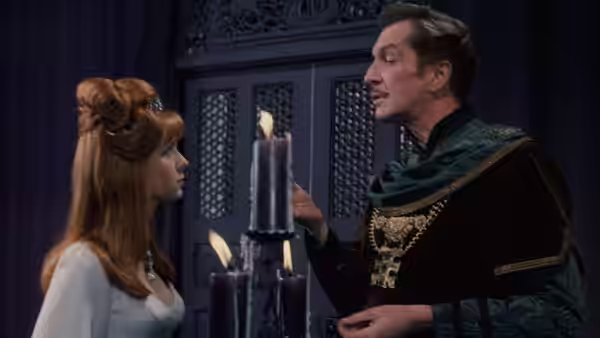
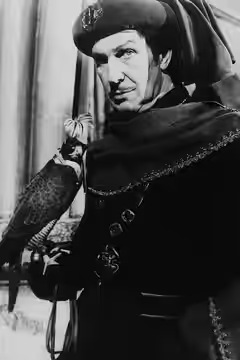
Price is often called a ham, and he is not one here. He plays Prospero as a man who has thought it all through: God is absent, the Devil is at least reliable, and cruelty is a form of teaching. He explains this to Francesca in a low, patient voice, as a tutor might, and the surprise, which moved us more than we expected from a man in a red doublet, is how tired he looks doing it. There is sadness under the arched eyebrows. He is throwing the last party in Christendom and he already knows how parties end.

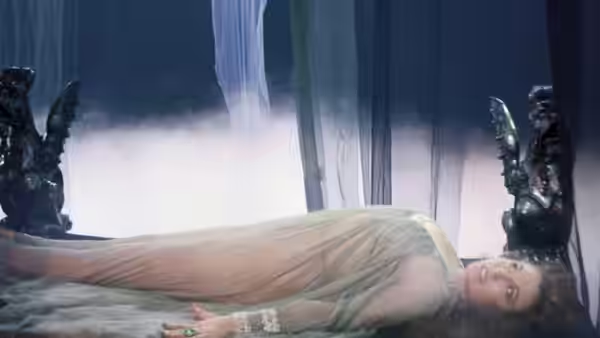
The look belongs to Nicolas Roeg, who was still a cinematographer and not yet a director. Daniel Haller’s castle is a run of rooms each painted a single colour, yellow, then purple, then white, and at the end of the corridor a black room with red glass in the windows that Prospero keeps locked. Roeg lights each room in its own key, so a character walking the length of the castle changes colour as she goes, and the effect is not pretty so much as oppressive. We had not expected to be unsettled by a corridor. When the guests fill the rooms for the ball in their masks and feathers, the colours fight each other and Roeg lets them.

Hazel Court’s Juliana asks to be initiated into Prospero’s faith, and the sequence Ann Chegwidden cuts for her, a dream of masked figures in a succession of costumes each meaning to kill her, is the one stretch of the film that frightened us outright. It is short, fast and nearly wordless, and it looks like something from ten years later. David Lee’s music is sparse and slightly antique, and the film is often at its best when it stops.

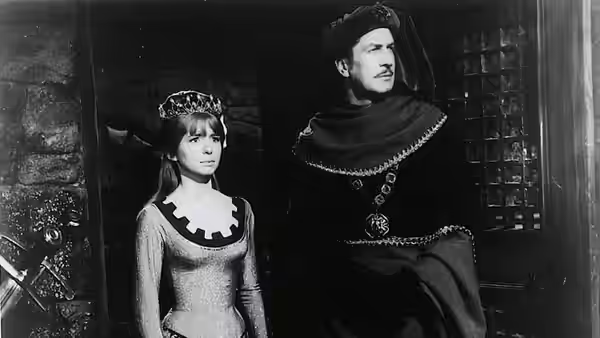
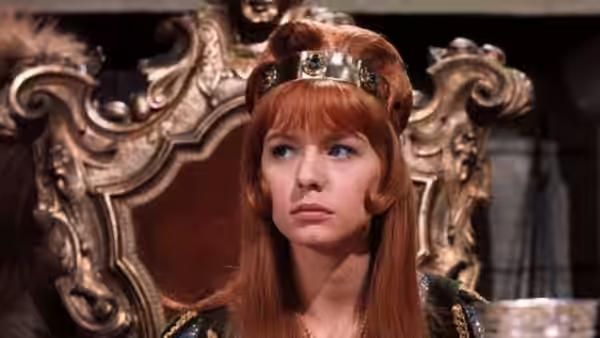
Not everything is this good. Jane Asher’s Francesca is required to be pure and appalled for ninety minutes and is given little else to do; David Weston’s Gino has less. Their scenes in the dungeon slow the middle badly. Prospero’s speeches about the Devil are eloquent the first time and familiar by the fourth, and the plot stops dead more than once so that he can deliver them. The opening in the village is rough, with extras standing about waiting for their cue, and the plague itself is a matter of a few red smears.

The best of the added material is Skip Martin’s Hop Toad, a jester whose companion is struck by Patrick Magee’s Alfredo, a guest with a wet mouth and a short temper. Hop Toad’s revenge, which begins with persuading Alfredo into an ape costume for the ball, is the strand most critics single out, and they are right. Martin plays it with a courtesy that is more frightening than anything Prospero says. We laughed at Magee in the suit, and then we stopped laughing, and the film knew exactly when that would happen. We will not say what follows.

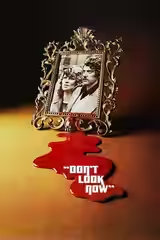
Against the rest of Corman’s Poe films it stands apart for ambition. The Tomb of Ligeia, made the same year, is tidier; this is stranger and reaches further. Roeg went on to direct Don’t Look Now, and anyone who has seen it will recognise, in the small figure in red who opens this film, a shape he came back to.

It is a 15 certificate and it runs 90 minutes, which is the right length; another twenty and the speeches would have won. Watch it in the dark, on the largest screen you have, and do not let anyone touch the colour.
Critical consensus AI synthesised

82
Positive
7
Mixed
0
Negative
0

The reviews are unanimous in the film’s favour. Most critics settle first on its colour: the colour-coded rooms of the castle, the Technicolor lustre of the restoration, a look one review compares to Mario Bava. Vincent Price is the other fixed point, praised for a charismatic, melancholy performance and for the conviction of his evil. Two of the reviews name it the finest of Roger Corman’s Poe adaptations, and the doom-laden atmosphere is credited across the board.

The reservations are small and mostly concern the script. Variety finds the plot vague and involved, and Time Out, though it calls the film the most ambitious of the cycle, thinks it less polished than The Tomb of Ligeia and notes a scruffy opening scene. The spread is narrow, running from a warm Variety to an emphatic Eye for Film, and nobody comes in below positive.

Empire
1 January 2000 · Kim Newman
90*

Newman praises the film as a remarkable, ravishing Gothic entertainment. He singles out Vincent Price’s performance and the beautifully choreographed, visually daring horrors.

Read the full review →
Little White Lies
· Anton Bitel
85*

Bitel presents the film as a vivid, richly layered meditation on death’s arbitrariness and the limits of privilege. He especially praises its brilliant, Bava-esque colour, restored to its full Technicolor lustre.

Read the full review →
The Guardian
21 January 2021 · Peter Bradshaw
85*

Bradshaw finds the film’s theatrical horror strikingly apt and praises its formal artistry and sinuous elegance. He singles out the bizarre jester dance and the vividly colour-coded castle as especially captivating.

Read the full review →
Radio Times
★★★★ · Alan Jones
80

Jones calls it the finest of Roger Corman’s Edgar Allan Poe adaptations. He praises the doom-laden atmosphere and Vincent Price’s embodiment of evil.

Read the full review →
Time Out
· TM
75*

The critic calls it the best and most ambitious of Corman’s Poe cycle, though less polished than The Tomb of Ligeia. They praise its stunning visual look but note a scruffy opening scene.

Read the full review →
Variety
31 December 1963 · Variety Staff
70*

The review is positive about the film’s atmosphere and production values. It singles out the color camerawork, sets and music, while noting that the plot is vague and involved.

Read the full review →

Straight answers AI written, from our review

Is The Masque of the Red Death worth watching?
The Masque of the Red Death is worth watching for anyone with a taste for horror that moves slowly and dresses well, and we scored it 83. Nicolas Roeg's one-colour rooms and Vincent Price's tired, patient Satanist prince carry it; the plot is a scrap and the dungeon scenes slow the middle. Watch it in the dark on the largest screen you have.
How long is The Masque of the Red Death, and what is it rated?
The Masque of the Red Death runs 1h 30m. It is a drama and horror film.
Where can I watch The Masque of the Red Death in Denmark?
The Masque of the Red Death is not on any streaming or rental service in Denmark at the moment. It is available in 5 other countries; change your country at the top of the page to see where. Availability is checked daily.
How violent or frightening is The Masque of the Red Death, and is it suitable for children?
The Masque of the Red Death is a UK 15 and not for children, though its horror is mostly atmosphere rather than gore. The plague is a few red smears, a village is burned, and one masked dream sequence frightened us outright. Teenagers used to slow, talkative horror will manage it; the squeamish have little to fear beyond the mood.
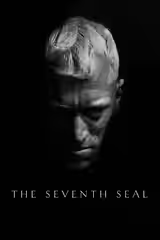
How does The Masque of the Red Death compare to The Seventh Seal?
The Masque of the Red Death is the stranger and more decorative of the two, while The Seventh Seal is the finer film. Both put a man in argument with Death during a plague, but Bergman's knight is frightening, funny and humane, where Corman's prince talks about the Devil until the speeches wear thin. Choose Bergman for the people, Corman for the pictures.
What should I watch after The Masque of the Red Death?
After The Masque of the Red Death, try The Seventh Seal (1957, Fi1m 88): Bergman’s plague, knight and chess game; the same argument with Death, no doublets. Then Don't Look Now (1973, Fi1m 90): Roeg as director; the small red figure returns, and this time it is in Venice.

Cast

If you liked this, try…

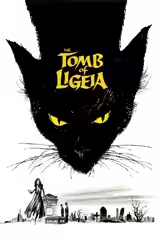
  1. The Tomb of Ligeia (1964) · not on Fi1m yetCorman’s tidier Poe film from the same year, with Price quieter and the house creepier.

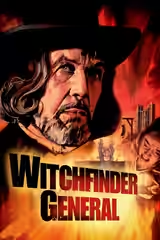
  2. Witchfinder General (1968) · not on Fi1m yetPrice again, stripped of velvet and camp, in a colder and crueller England.

  3. The Seventh Seal (1957, Fi1m 88)Bergman’s plague, knight and chess game; the same argument with Death, no doublets.

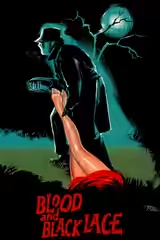
  4. Blood and Black Lace (1964) · not on Fi1m yetMario Bava lights murder in the same poisoned colours, in a Rome fashion house.

  5. Don't Look Now (1973, Fi1m 90)Roeg as director; the small red figure returns, and this time it is in Venice.