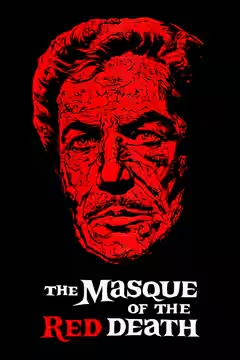
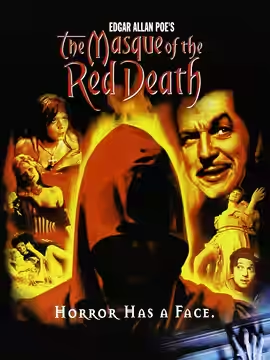
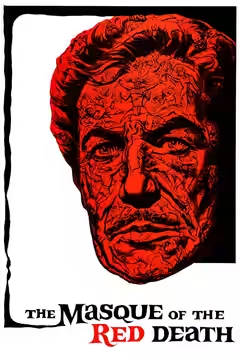
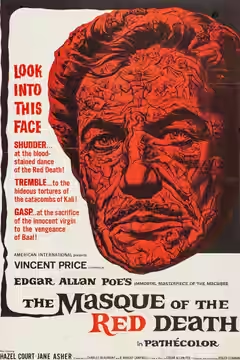
The best of Roger Corman’s Poe films and the strangest: Vincent Price as a Satanist prince sealing his castle against plague while Nicolas Roeg paints the rooms one colour at a time. The plot is a scrap. The pictures are not.
Roger Corman had been filming Edgar Allan Poe for four years by the time he made The Masque of the Red Death, nearly always with Vincent Price, and this is the one where he stopped treating the stories as haunted-house material and started treating them as a starting point. Poe’s tale is a few pages long: a prince, a plague, a sealed castle, a ball. Robert Wright Campbell and Charles Beaumont’s screenplay bolts on a second Poe story, Hop-Frog, about a jester and his revenge, and fills the gaps with Satanism, a captive village girl and a great deal of talk about whether God has left the building. It is the best of Corman’s Poe films and we would recommend it to anyone with a taste for horror that moves slowly and dresses well. The plot is a scrap. Everything around the plot is remarkable.
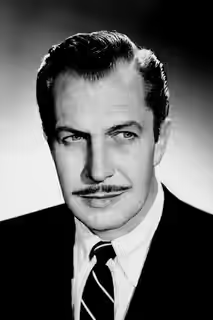
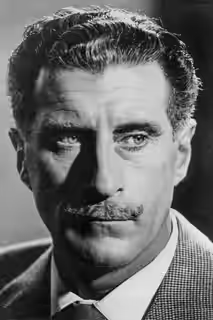
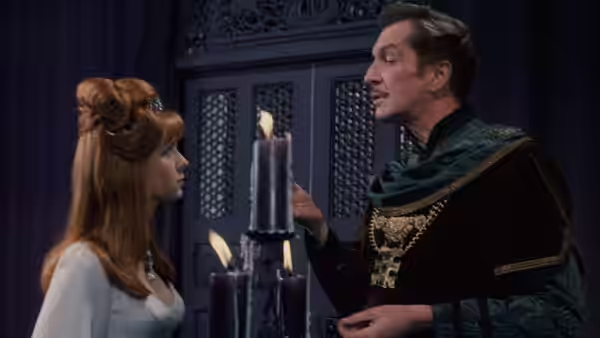
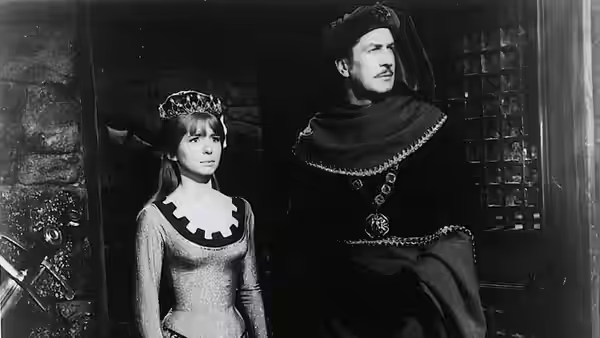
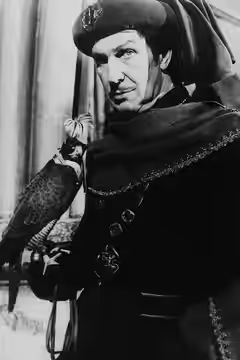
Price is often called a ham, and he is not one here. He plays Prospero as a man who has thought it all through: God is absent, the Devil is at least reliable, and cruelty is a form of teaching. He explains this to Francesca in a low, patient voice, as a tutor might, and the surprise, which moved us more than we expected from a man in a red doublet, is how tired he looks doing it. There is sadness under the arched eyebrows. He is throwing the last party in Christendom and he already knows how parties end.
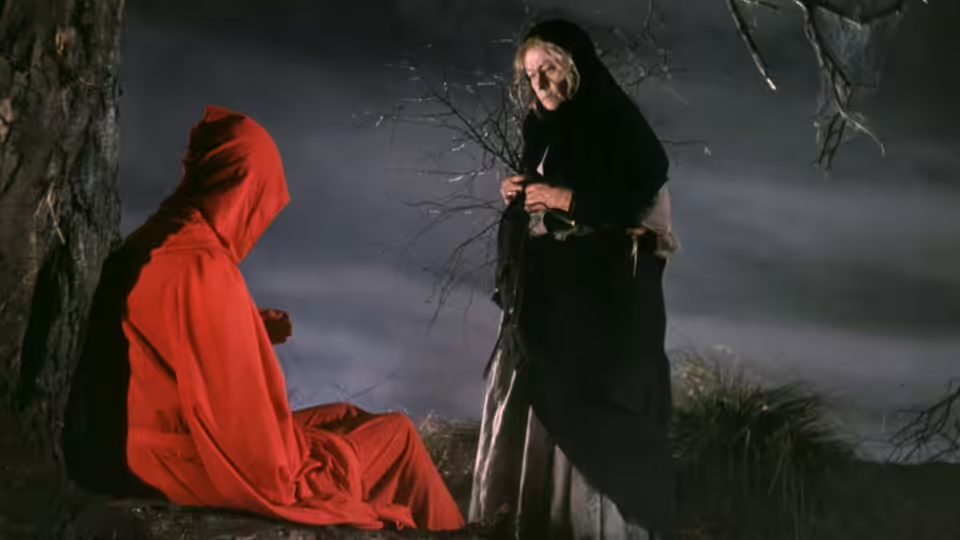
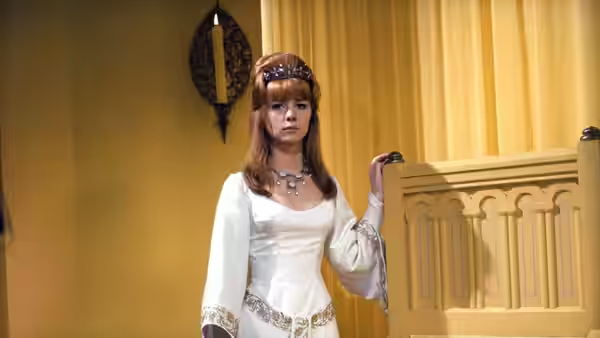
The look belongs to Nicolas Roeg, who was still a cinematographer and not yet a director. Daniel Haller’s castle is a run of rooms each painted a single colour, yellow, then purple, then white, and at the end of the corridor a black room with red glass in the windows that Prospero keeps locked. Roeg lights each room in its own key, so a character walking the length of the castle changes colour as she goes, and the effect is not pretty so much as oppressive. We had not expected to be unsettled by a corridor. When the guests fill the rooms for the ball in their masks and feathers, the colours fight each other and Roeg lets them.
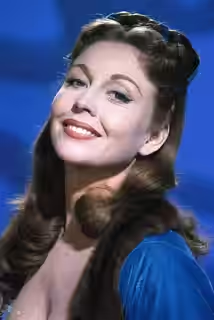
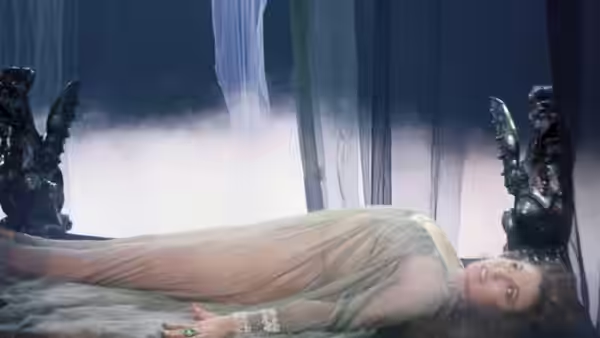
Hazel Court’s Juliana asks to be initiated into Prospero’s faith, and the sequence Ann Chegwidden cuts for her, a dream of masked figures in a succession of costumes each meaning to kill her, is the one stretch of the film that frightened us outright. It is short, fast and nearly wordless, and it looks like something from ten years later. David Lee’s music is sparse and slightly antique, and the film is often at its best when it stops.
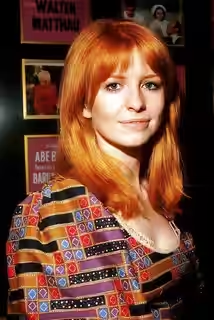
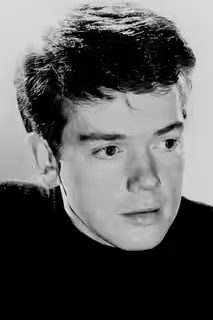
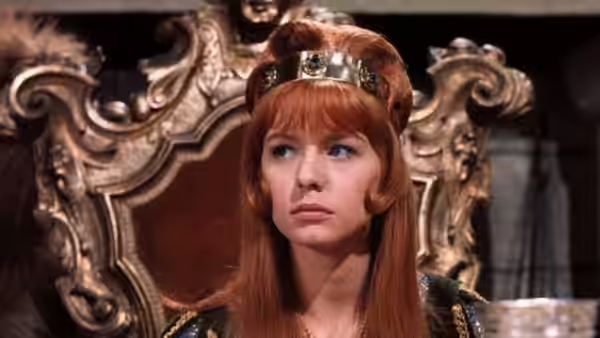
Not everything is this good. Jane Asher’s Francesca is required to be pure and appalled for ninety minutes and is given little else to do; David Weston’s Gino has less. Their scenes in the dungeon slow the middle badly. Prospero’s speeches about the Devil are eloquent the first time and familiar by the fourth, and the plot stops dead more than once so that he can deliver them. The opening in the village is rough, with extras standing about waiting for their cue, and the plague itself is a matter of a few red smears.
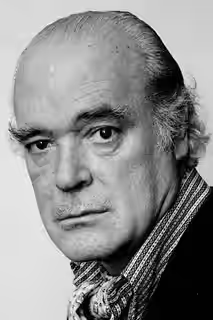
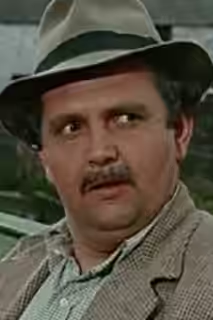
The best of the added material is Skip Martin’s Hop Toad, a jester whose companion is struck by Patrick Magee’s Alfredo, a guest with a wet mouth and a short temper. Hop Toad’s revenge, which begins with persuading Alfredo into an ape costume for the ball, is the strand most critics single out, and they are right. Martin plays it with a courtesy that is more frightening than anything Prospero says. We laughed at Magee in the suit, and then we stopped laughing, and the film knew exactly when that would happen. We will not say what follows.
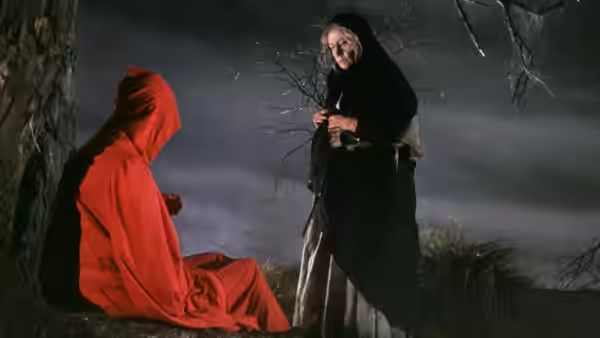
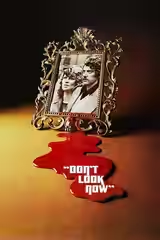
Against the rest of Corman’s Poe films it stands apart for ambition. The Tomb of Ligeia, made the same year, is tidier; this is stranger and reaches further. Roeg went on to direct Don’t Look Now, and anyone who has seen it will recognise, in the small figure in red who opens this film, a shape he came back to.
It is a 15 certificate and it runs 90 minutes, which is the right length; another twenty and the speeches would have won. Watch it in the dark, on the largest screen you have, and do not let anyone touch the colour.