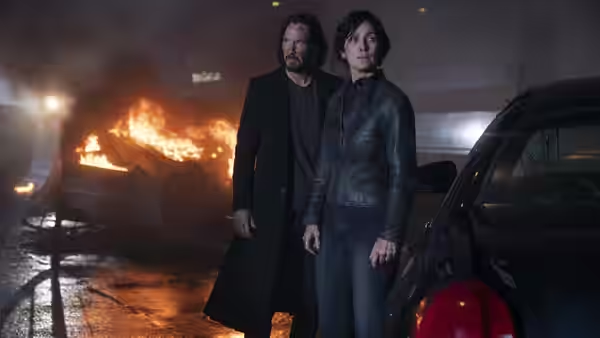
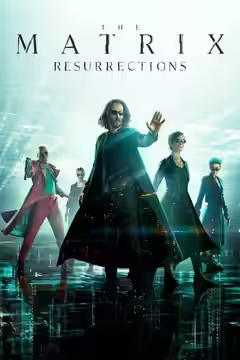
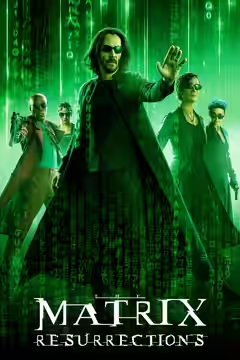
Keanu Reeves and Carrie-Anne Moss make this return worth considering for the romance. Lana Wachowski’s self-aware sequel is much less persuasive when it starts explaining itself or trying to stage a readable fight.
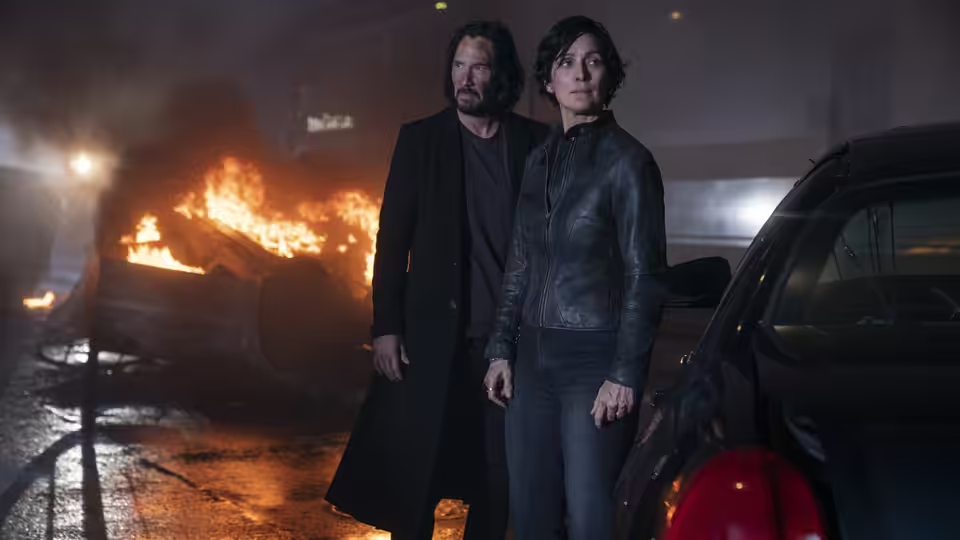
Lana Wachowski’s The Matrix Resurrections is worth the trouble chiefly for Keanu Reeves and Carrie-Anne Moss, and there is more trouble than there should be. The return keeps asking what a familiar story can still offer, sometimes with wit and sometimes with the persistence of someone who has forgotten we understood the joke. Its answer is most convincing when Neo and Trinity try to reconnect. Those scenes give an uneven science-fiction sequel a reason to exist, though they cannot excuse everything around them.
The screenplay by Lana Wachowski, David Mitchell and Aleksandar Hemon begins with an enjoyable willingness to question the whole undertaking. The opening’s jokes about revisiting familiar material have some bite, especially when they make the audience’s appetite for repetition part of the problem. We can enjoy a sequel being rude about the business of sequels. The difficulty comes when the jokes keep returning without becoming much sharper. After a while, the film seems to expect credit for recognising difficulties it has not managed to overcome.
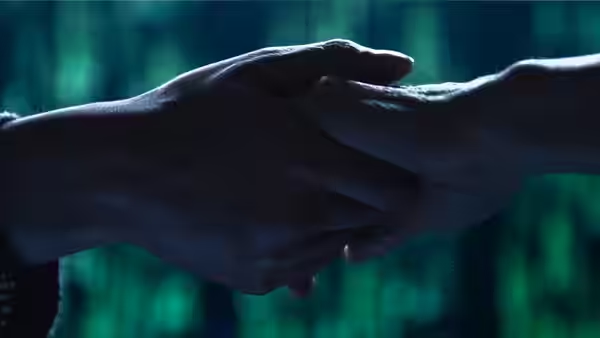
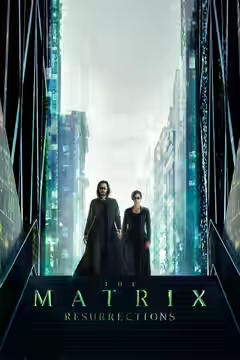
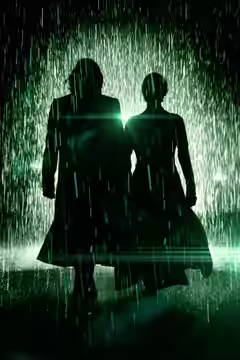
Keanu Reeves and Carrie-Anne Moss give it something more persuasive to do. We were moved by Neo’s attempts to reconnect with Trinity, because Keanu Reeves makes the wish to be near her feel tentative and difficult. Carrie-Anne Moss gives their encounters enough warmth to make that uncertainty matter. The attraction feels adult, and neither actor treats familiarity as a substitute for paying attention to the other. These scenes allow us to care about the relationship without needing another explanation of its importance.
Jessica Henwick brings welcome energy to Bugs, but the supporting characters compete with a great deal of explanation. The middle spends too long attending to plot mechanics while leaving the central relationship short of time. Carrie-Anne Moss is too important to what works here to be used so sparingly. By then, we want to stay with the two people whose reunion matters, rather than hear another account of how it can happen.
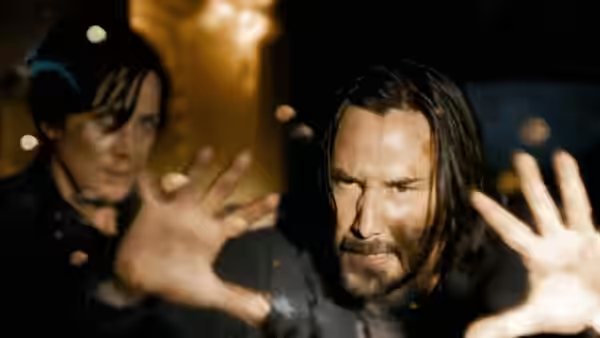
The action is a substantial disappointment against the series’ own standards for invention and clarity. Daniele Massaccesi and John Toll’s cinematography keeps the fighting busy, but too often we struggle to follow how one movement leads to the next. Joseph Jett Sally’s editing compounds the problem, registering impacts more readily than the movements that cause them. Individual passages have energy, yet the cutting repeatedly interrupts the pleasure of watching bodies move through a space we understand.
Hugh Bateup and Peter Walpole’s production design gives the film a polished finish, though few of its surroundings remain distinct in the memory. During the fights, there is too little opportunity to take those spaces in. Johnny Klimek and Tom Tykwer’s score is more effective at sustaining urgency than at making the romance matter. Keanu Reeves and Carrie-Anne Moss have already done that job, and the music need not work so hard around them.
Treat this as a film for people who still care about Neo and Trinity, and its disappointments become easier to weigh. We would not choose it as an introduction to the series, or for an evening chiefly devoted to action. At 148 minutes, it asks for more patience than its strongest scenes require. Give it an evening if the reunion matters more to you than the fights.