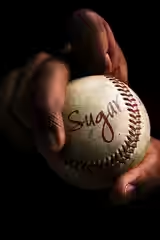
Barry Levinson turns Bernard Malamud’s sour novel into a golden fable, and Caleb Deschanel lights it like a church window. It is lovely to look at and it wants to be wept at, and we held out for most of two hours and then did not.
Bernard Malamud’s novel is a bitter book about a gifted man who wastes the gift. Barry Levinson’s film, from a screenplay by Roger Towne and Phil Dusenberry, keeps the story and reverses the weather. Where the book is grey, the film is gold. The result is a handsome, slow, openly sentimental 137 minutes that is worth your evening if you like baseball, or Robert Redford, or being told that goodness wins. If you like none of those, it will feel like a long sermon with a good organist.
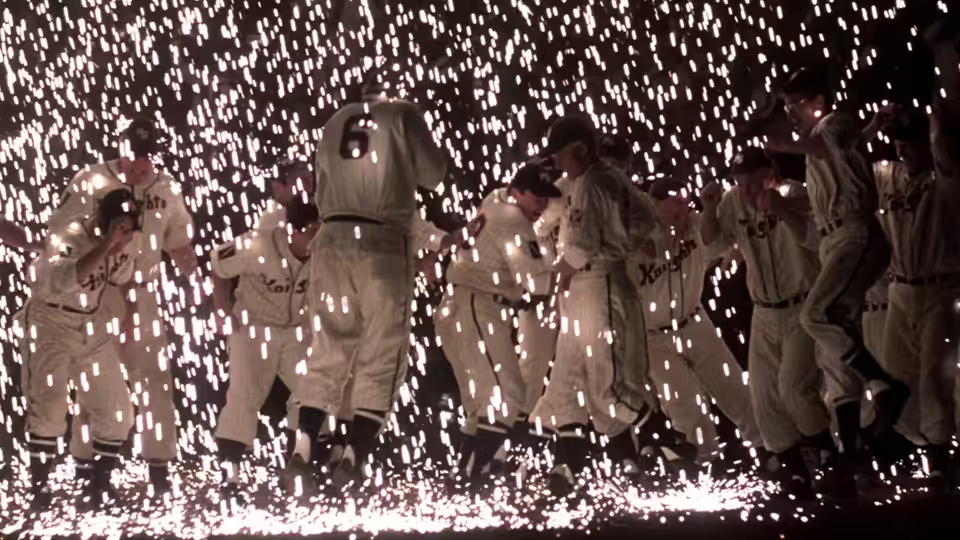
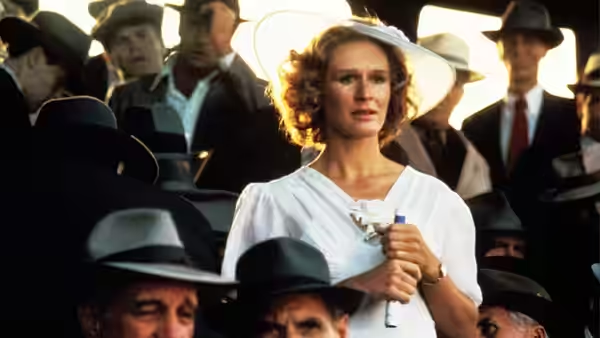
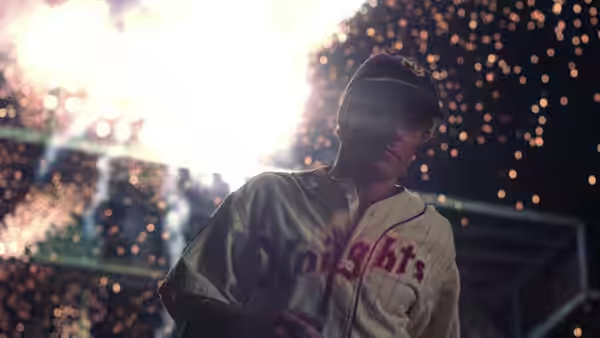
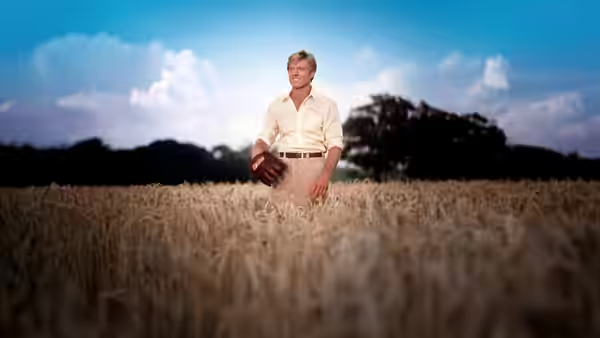
The organist is Caleb Deschanel. He shoots the farm at the hour when wheat glows, the train at dusk, and the ballpark under a late sun that turns the Knights’ cream flannel to butter. The Judge (Robert Prosky), who owns the club and wants it to lose, sits in an office with the blinds drawn and one lamp he keeps turned off. Angelo P. Graham and Mel Bourne build a stadium of wooden seats, hand-painted advertisements and a scoreboard worked by men with numbers, and Bernie Pollack and Gloria Gresham put Kim Basinger’s Memo Paris in white satin and Glenn Close’s Iris Gaines in a white dress and a wide hat, so we know which white is which.
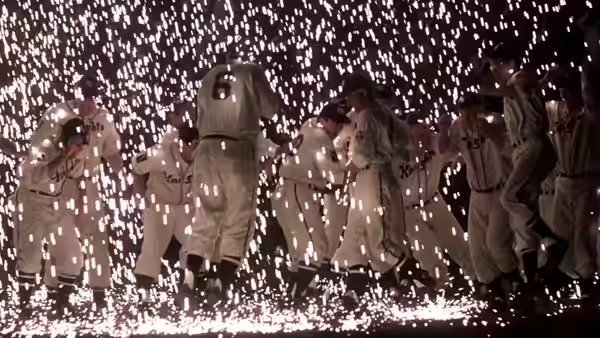
Randy Newman’s score does a great deal of the work. The brass fanfare that goes with the bat is the sort of tune that gets into the walls of a house, and Newman plays it sparingly enough that it still lands the sixth time. Christopher Holmes and Stu Linder cut the baseball well: the swing, a beat, the fielders looking up, then the crowd, so that the ball is barely seen and its effect is everything. The first time Pop tells Roy to knock the cover off the ball and he does exactly that, we laughed out loud, and the film has earned the laugh.
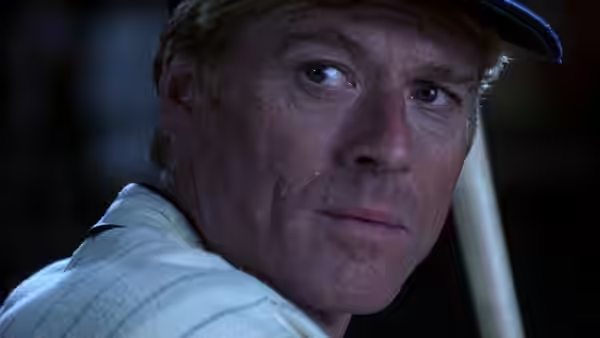
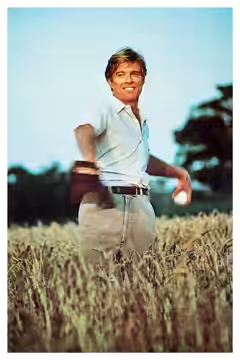
Redford plays Roy as a man who has decided not to explain himself, and it suits him. He does not tell the team where he has been for sixteen years and the film does not tell us much more. Wilford Brimley’s Pop is the best thing on the bench, a manager chewing on decades of grievance who sees his last chance walk in wearing a suit that does not fit. Richard Farnsworth, as the coach Red Blow, says little and is right about all of it. Robert Duvall gives Max Mercy, the columnist who remembers the boy from the fairground, a bright, nosy menace the script never quite uses.
The women are where the writing gives out. Iris is the light and Memo is the dark and Harriet Bird is a symbol holding a pistol, and none of them is given a reason to be there beyond what Roy needs from her. Close does more with a look from the stands than Towne and Dusenberry give her in a page of dialogue.
Here is what happened to us. Roy is in a slump, in Chicago, and a woman in white stands up in the afternoon crowd with the sun behind her hat while everyone around her stays seated. We knew precisely what was being done to us, and our throat tightened regardless. It happened again near the end, in a sequence we will not describe. Between those two moments there is a long, soft middle hour of gamblers and hospital beds that we spent admiring the lampshades.
Levinson’s previous film, Diner (1982), was all talk in a booth. This one barely talks and does not trust a quiet scene without brass under it. Malamud’s ending has been changed, and you will guess the direction of the change from the first shot of the wheat. Most critics have found it too sweet, and they are not wrong; we simply did not mind as much as we should have.
See it on the largest screen you have, in the dark, with someone who will not pretend afterwards that they were unmoved. It carries a PG and runs 137 minutes, of which about fifteen belong to the Judge’s office and could go.