J. A. Bayona’s ghost story earns its scares through Belén Rueda’s convincing distress. The middle needs tightening, but the feeling is strong enough to make the familiar horror machinery worth another evening.
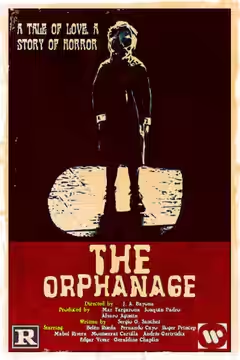
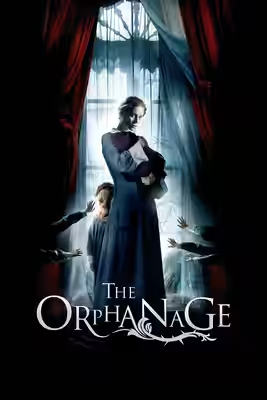
The Orphanage is a ghost story worth watching for the care it takes with fear, and for Belén Rueda, who makes that fear matter. J. A. Bayona understands that a horror film can ask us to worry about someone before asking us to jump. Childhood anxiety and the obligations of motherhood give the suspense something substantial to work on. It is involving and often frightening, though the middle takes longer than it needs to.
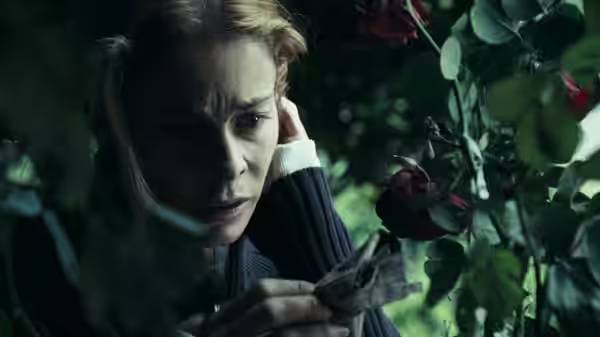
Belén Rueda gives Laura an emotional consistency that the suspense needs. The performance keeps grief present without making every scene an appeal for sympathy, and gives the fear a recognisably human cause. We were moved more than we expected to be by her maternal anxiety; she makes the prospect of failing a child feel frightening before the supernatural needs to help. It is a sensitive performance in a genre that often rewards the louder one.
The director’s handling of ordinary situations is where the film earns its unease. He gives us time to become uncomfortable before insisting on a fright, an approach well served by Óscar Faura’s cinematography. There is enough visual calm for us to look for danger ourselves, which makes the shocks feel like interruptions to something already troubling. That restraint is welcome, especially when so much horror seems anxious that a quiet stretch will be mistaken for inactivity.
The difficulty is sustaining that patience across 105 minutes. Elena Ruiz Guitart’s editing preserves the gradual accumulation of fear, but the middle begins to repeat an emotional pressure we have already understood. The lead performance keeps those passages watchable, though it should not have to carry quite so much of their weight. A tighter stretch here would have sharpened the uncertainty without sacrificing the time needed to care about Laura.
Sergio G. Sánchez’s screenplay works most persuasively when a child’s fear and an adult’s worry are allowed equal seriousness. Its familiar ghost-story devices are less interesting on their own, and there are passages when recognition gets ahead of apprehension. The direction is steady enough to guide us through them, but steadiness cannot make every development surprising. The writing depends heavily on our concern for Laura to keep those devices effective.
Fernando Velázquez’s music is most useful when it supports that concern without pressing for a larger response. The film already has a performance capable of conveying distress, and the score’s more insistent emotional emphasis can feel unnecessary. This is also our reservation about the sentiment: occasionally the film makes too certain that we understand how much it hurts. Its leading performance is more convincing when allowed to do less.
This is for an evening when the familiar ghost-story routines still appeal, provided somebody takes them seriously. Give it time, and allow for more sadness than the genre label might suggest. We would choose it for the performance rather than the prospect of constant surprises. Save something lighter for afterwards.