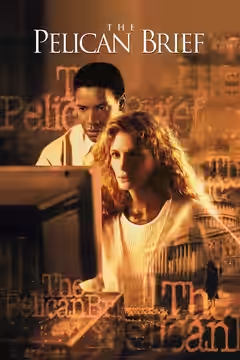
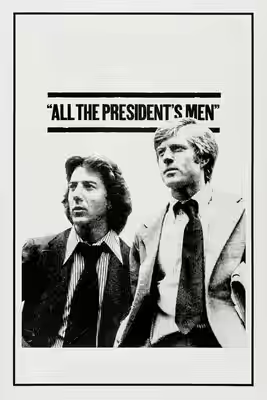
Alan J. Pakula brings his old paranoid-thriller skills to John Grisham’s airport novel, and for an hour it works: handsome, tense, properly frightening. Then it settles into explanation, keeps its two stars apart too long, and runs twenty minutes past its welcome.
Two Supreme Court justices are killed in one night, a law student in New Orleans works out why, and everyone who reads her theory starts dying. That is John Grisham’s novel, and Alan J. Pakula, who made All the President’s Men, is the right man to film it: nobody has shot Washington’s corridors with more dread. The Pelican Brief is a decent, good-looking thriller with two stars who are a pleasure to watch. It is also 141 minutes long, and for the second half of them it is mostly people in rooms telling each other what we already know.
The opening is the best of it. Stephen Goldblatt lights Justice Rosenberg’s house so that the old man (Hume Cronyn, asleep in a chair with a blanket over his knees) is a small pale shape in a brown room, and Stanley Tucci’s Khamel comes out of the dark behind him without a sound. Tucci says almost nothing and is the more alarming for it. We were properly frightened in those first ten minutes, and it was the quiet that did it: no music, no struggle, a killer who knows exactly where everything is.
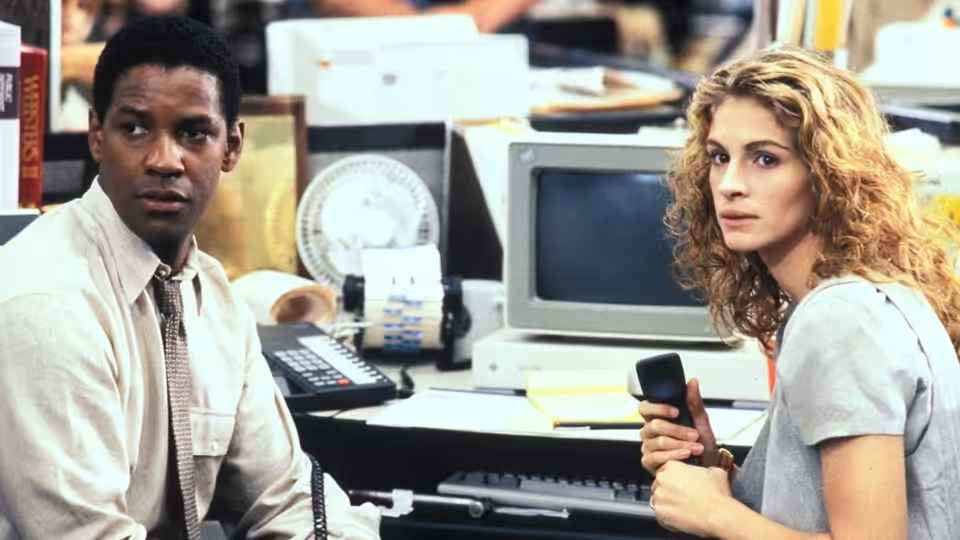
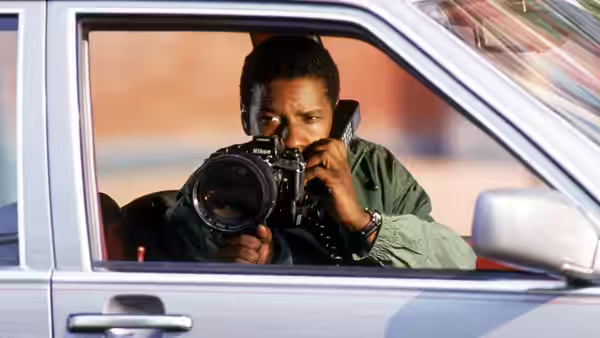
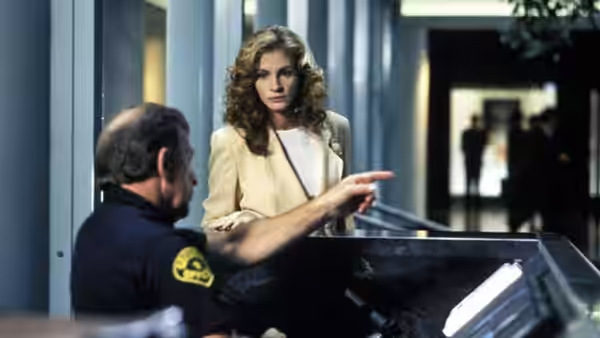
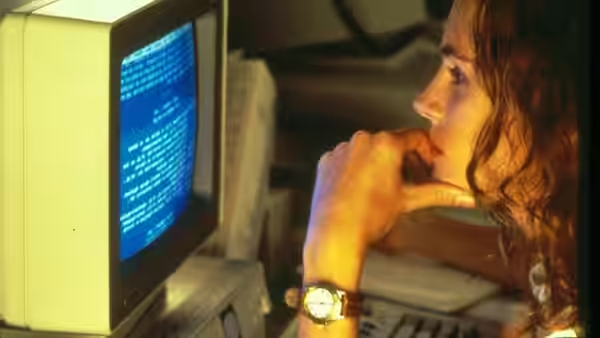
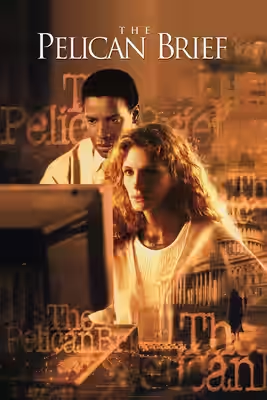
Julia Roberts carries the next hour on her own, and she is good at being hunted. Her Darby Shaw is clever, but mostly she is scared, in doorways and hotel lobbies and on the back of a streetcar, and Roberts plays fear as something that makes a person precise rather than hysterical. She cuts her hair short and dyes it dark, and Albert Wolsky puts her in borrowed-looking jackets and bought-this-morning dresses so that she looks like someone else every twenty minutes. Denzel Washington’s Gray Grantham is introduced early and then visited in fragments while the film waits for the plot to bring the two of them together.
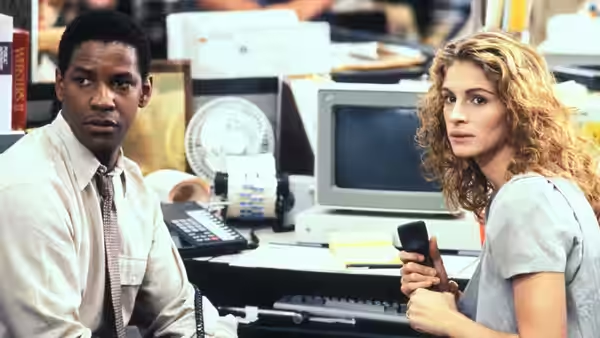
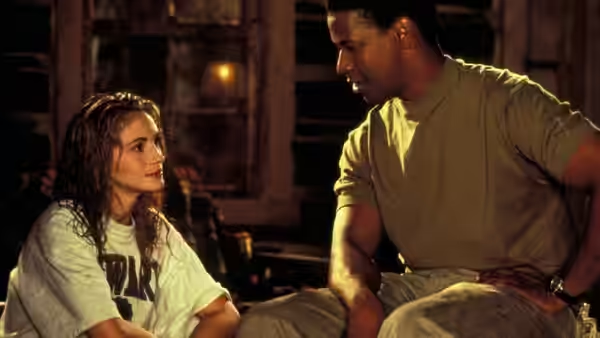
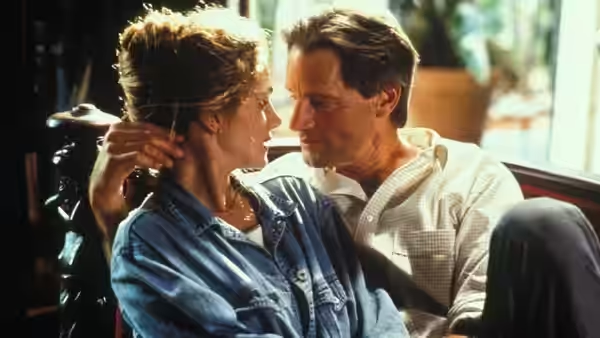
When it does, the film lifts. Washington is relaxed, amused, listening more than he talks, and he makes a reporter’s patience look like a kind of strength. John Lithgow, as his editor Smith Keen, is drily good, a man who wants the story and the lawyers kept happy in the same breath. The scenes of Darby and Gray in hotel rooms, on the phone, in a library with a stack of filings, are the film’s warmest and sharpest. Pakula also refuses to let them touch. There is a moment near a window where any other film of the period would have cut to a kiss, and this one cuts to a car.
The conspiracy is explained in meetings. Tony Goldwyn’s Fletcher Coal runs the White House with a smile that never reaches his voice, Robert Culp’s President is vague and golfing and happy to be managed, and James Sikking’s FBI director Voyles and William Atherton’s CIA man Gminski trade warnings across a table. All well played, all there to say a paragraph of plot. Philip Rosenberg gives them handsome offices, dark wood and green lamps and venetian blinds, and Goldblatt shoots the capital in long lenses from across streets, as though someone were always watching. What is missing is the sense, so strong in All the President’s Men, that the buildings themselves are in on it. Here the menace is in the dialogue, and dialogue can be paused.
James Horner’s score is piano and low synthesiser, a mournful tune for Darby and a tick for the chases, and it is mixed with tact. Tom Rolf and Trudy Ship cut the pursuits cleanly, and cut the rest as if under instruction not to lose a single clause. Somewhere around the two-hour mark we were working out how much was left, and we were a little cross about it, because the film had earned our attention in its first hour and was now spending it on a man reading a document aloud.
It is not a bad evening. The leads are good together and the villains are a well-stocked cupboard of 1990s character actors. Watch it at home on a wet night, where the hotel-room stretches feel companionable rather than slow, and forgive it the length. It carries a 12 certificate and almost no blood, which, given how many people it kills, is rather Washington’s style too.