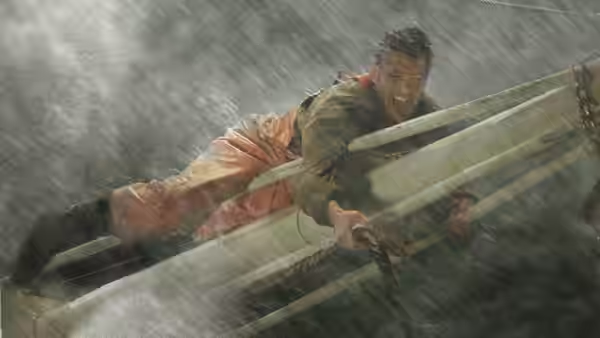
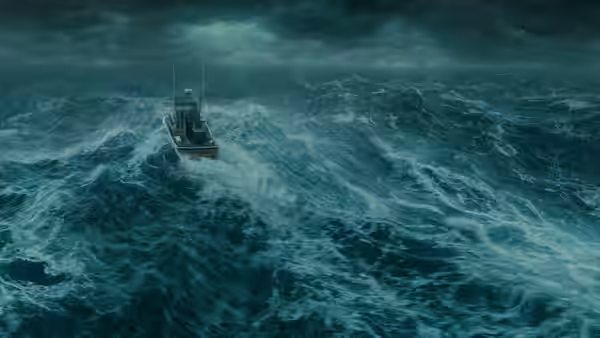
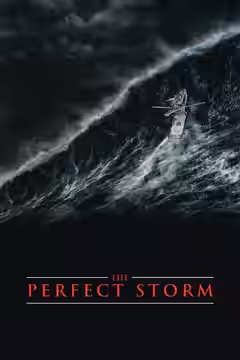
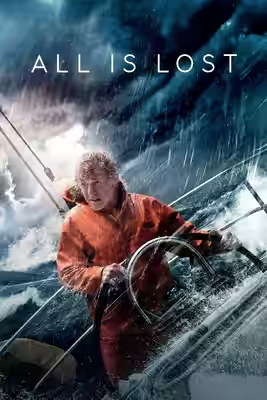
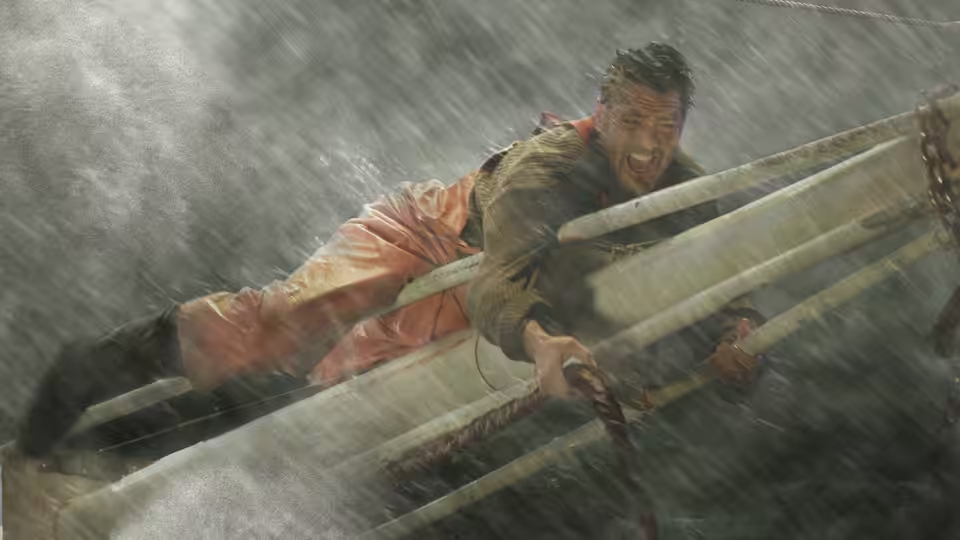
A fisherman in orange waterproofs clings to the rail of a boat in driving rain
Film review

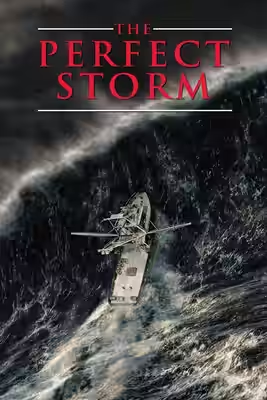
The Perfect Storm

2000 · Directed by Wolfgang Petersen · 2h 10m · ACB M

In a sentenceEven George Clooney struggles to hold a scene against that much water

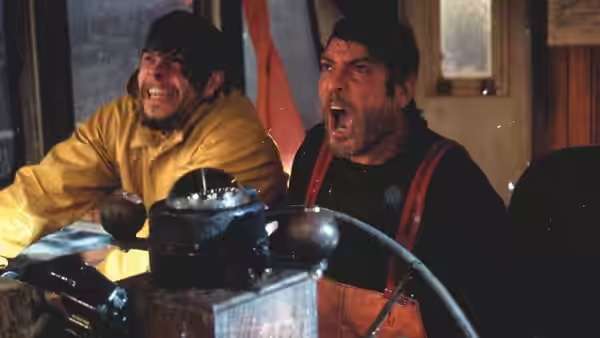
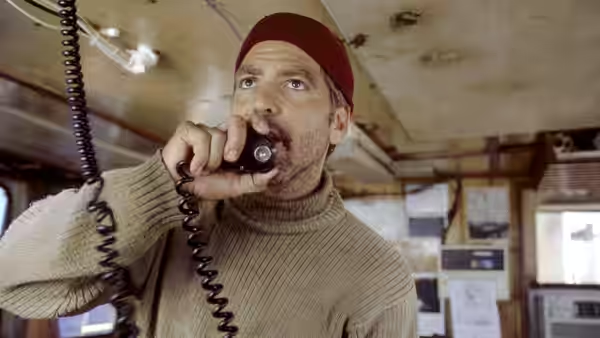
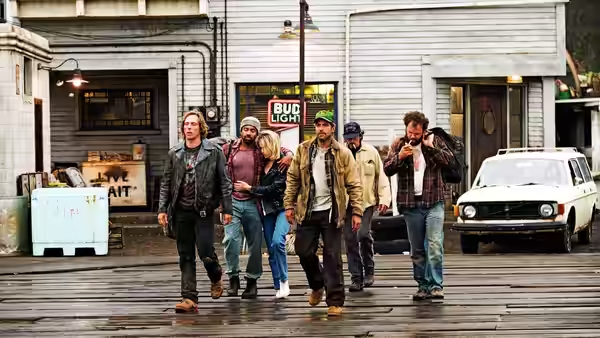
Capt. Billy Tyne (George Clooney) belongs to a fishing community whose working life takes place at sea. Bobby Shatford (Mark Wahlberg), Dale “Murp” Murphy (John C. Reilly) and David “Sully” Sullivan (William Fichtner) share the demands of the job. The men want to earn a living, but their work means accepting the dangers of the sea. The opening follows their lives and the practical business of modern fishing, with boats and equipment central to their daily concerns. A storm threatens that routine, putting dangerous water between the fishermen and safety.

Plays from YouTube when you press play; nothing loads from them until then.

Fi1m review

Wolfgang Petersen makes the sea frightening enough to justify an evening for disaster-film devotees. The people fare less well: a fine cast struggles with thin characters, clumsy dialogue and sentiment the film has not earned.

Wolfgang Petersen takes 130 minutes to put working lives and a violent sea into the same disaster film. The Perfect Storm is worth the time for viewers who enjoy a prolonged physical ordeal, although its thin character writing keeps the drama at a distance. Its attention to modern fishing gives it something solid to begin with. The opening spends time establishing the characters, and there is a welcome patience in that preparation.

George Clooney gives Capt. Billy Tyne enough presence to hold our attention, which is useful when the writing has so little to add. Mark Wahlberg’s Bobby Shatford and John C. Reilly’s Dale “Murp” Murphy benefit from actors who can make familiar types seem worth knowing. We wanted more of their ordinary working lives, because the fishing details are more absorbing than the dialogue. William D. Wittliff’s screenplay too often settles for a recognisable type and a line that tells us exactly how to feel.

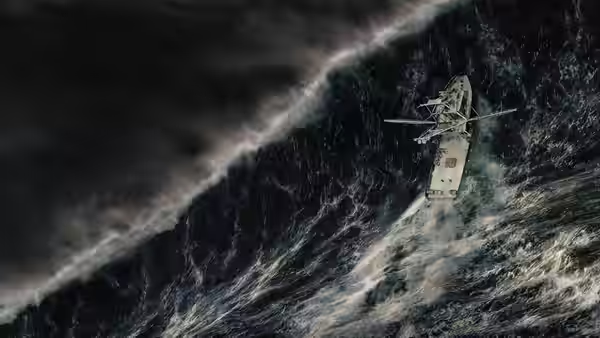
William Sandell’s production design helps make the fishing feel like work, with boats and equipment that matter before the weather can batter them. John Seale’s cinematography gives the water enough weight to make the danger convincing. The towering waves dominate the image, and the people look painfully exposed. The trouble is that some of the digital water still looks manufactured. With so much of the film asking us to fear the sea, those moments are harder to overlook than an unconvincing effect usually would be.

We tensed up during the rescue sequences, because reaching anyone in that water looks close to impossible. Richard Francis-Bruce’s editing is most effective here, keeping the immediate task clear amid the violence of the sea. These passages give the spectacle something specific to do, and the struggle to reach safety holds our attention without requiring much explanation. Elsewhere, the repeated emphasis on the storm’s size becomes tiring, even with the considerable skill that has gone into these sequences.

James Horner’s music adds to the film’s tendency to insist on feelings the script has only sketched in. The score’s emotional emphasis is understandable, but it can make a thinly written exchange feel thinner still. Wolfgang Petersen treats these people with affection, and that earnestness is welcome in a film that could have been content simply to batter them. The dialogue gives the actors too few chances to surprise us. The result is a good cast spending too much time making familiar sentiments sound personal.

The disaster film can manage with broadly drawn people, provided their decisions keep us involved. Here, the practical business of fishing and rescue does that more reliably than the dialogue, which limits how much the suffering can mean. We can recommend it to those who find the genre’s physical ordeals absorbing in themselves. The relentlessness of the water is part of the attraction, and also a fair warning about the evening ahead. If the cast is the attraction, expect to wish they had been given more to do.
Critical consensus AI synthesised

53
Positive
3
Mixed
4
Negative
4

The reviews are divided, with mixed and negative responses outnumbering positive ones. Praise centres on the storm effects, the scale of the waves and the tension of the rescue sequences; even some detractors acknowledge the spectacle’s force. The more enthusiastic critics find an exciting, old-fashioned blockbuster, while a recurring reservation across favourable and unfavourable reviews is that the characters lack the depth to make the danger emotionally compelling.

The spread is wide, and the disagreement extends to both the build-up and the effects. The Guardian welcomes the time spent developing the story before the storm, whereas the Evening Standard finds the setup sluggish and the character drama weak. The AV Club offers a different objection, finding the details of fishing and the characters’ lives more interesting than the storm spectacle. Elsewhere, complaints cluster around formula, sentimentality and effects that overwhelm the actors.

Total Film
28 July 2000 · ★★★★ · Yael Shuv
80

The review finds the film an awe-inspiring spectacle despite its weak emotional core and shallow characterization. It singles out the storm and rescue sequences for their gripping intensity and visual virtuosity.

Read the full review →
The Guardian
27 July 2000 · Xan Brooks
75*

Brooks finds the film an impressive, warmly old-fashioned blockbuster, despite clunky dialogue and archetypal characters. He especially praises how it develops the story before unleashing its spectacular storm sequences.

Read the full review →
Empire
1 January 2000 · Angie Errigo
70*

Errigo finds the film’s character setup serviceable but says it ultimately succeeds as an exciting, harrowing action spectacle. She especially praises the storm sequences, cinematography, and effects.

Read the full review →
The New York Times
30 June 2000
64*

The page does not expose the critic’s verdict. No specific praise or complaint can be verified from the available text.

Read the full review →
Time Out
· TCh
64*

The accessible page does not reveal the critic’s verdict. It provides no review text indicating what the critic praised or criticized.

Read the full review →
RogerEbert.com
30 June 2000 · ★★½/4 · Roger Ebert
62

The review finds the film’s human drama less compelling than its spectacle. It singles out the storm effects while faulting the characters and story.

Read the full review →

Straight answers AI written, from our review

Is The Perfect Storm worth watching?
The Perfect Storm is worth watching for disaster-film devotees who enjoy a prolonged physical ordeal at sea, though our score of 63 reflects substantial flaws. The fishing details and tense rescues hold our attention, but thin characters, clumsy dialogue and insistent sentiment leave a fine cast with too little to do.
How long is The Perfect Storm, and what is it rated?
The Perfect Storm runs 2h 10m and is rated M by the ACB in Australia. It is a drama and adventure film.
Where can I watch The Perfect Storm in Australia?
The Perfect Storm is streaming on Netflix in Australia, and it is also available to rent from Amazon Prime Video and Apple TV from A$4.99. It leaves Netflix on 22 October. Availability is checked daily; the links above go straight to each service.
How violent or frightening is The Perfect Storm, and is it suitable for children?
The Perfect Storm carries a UK 12 certificate and features frightening sea peril, with towering waves and tense rescue sequences making it unsuitable for younger children. We find the struggle to reach people in dangerous water especially stressful; older children who dislike sustained danger may find the storm’s relentlessness too much.
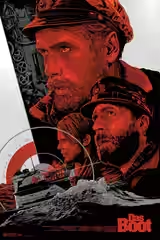
How does The Perfect Storm compare to Das Boot?
The Perfect Storm offers large-scale disaster spectacle, but we recommend Das Boot as the stronger Wolfgang Petersen film about people under punishing pressure at sea. The submarine drama finds sharper human detail despite some thin supporting characters; The Perfect Storm suits viewers more interested in towering waves and practical rescue work.
Is The Perfect Storm based on a true story or a book?
The Perfect Storm is adapted from a book by Sebastian Junger, and familiarity with the source is not necessary to follow it. The opening patiently establishes the fishing community and the practical demands of the job, giving the danger a clear context before the storm threatens that routine.
What should I watch after The Perfect Storm?
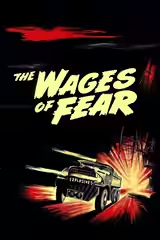
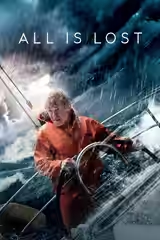
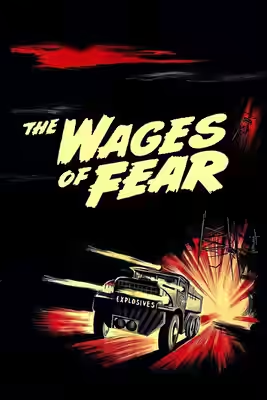
After The Perfect Storm, try Das Boot (1981, Fi1m 89): Wolfgang Petersen finds sharper human detail under equally punishing pressure at sea. Then The Wages of Fear (1953, Fi1m 90): Dangerous work, desperate men and tension built from the smallest practical decisions; and All Is Lost (2013, Fi1m 82): A quieter sea ordeal, with practical problems replacing the crowded cast.

Cast

Awards

Academy Awards, 2001

Nominated
Best Sound
Nominated
Best Visual Effects

If you liked this, try…

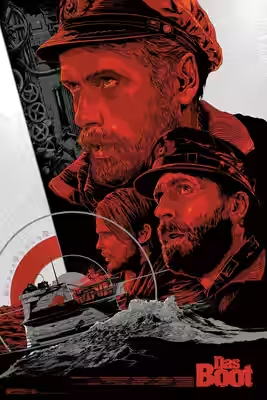
  1. Das Boot (1981, Fi1m 89)Wolfgang Petersen finds sharper human detail under equally punishing pressure at sea.

  2. The Wages of Fear (1953, Fi1m 90)Dangerous work, desperate men and tension built from the smallest practical decisions.

  3. All Is Lost (2013, Fi1m 82)A quieter sea ordeal, with practical problems replacing the crowded cast.

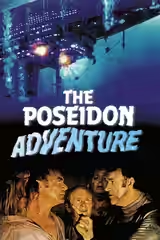
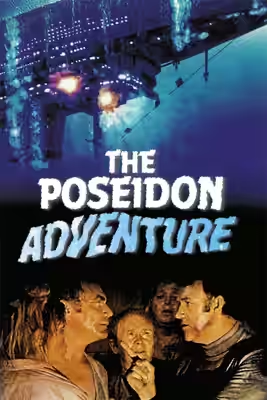
  4. The Poseidon Adventure (1972) · not reviewed yetOld-fashioned disaster storytelling gives its endangered ensemble more room to register.

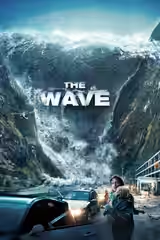
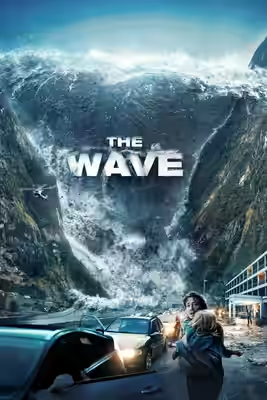
  5. The Wave (2015) · not reviewed yetNorwegian disaster drama that gives a family something worse than domestic trouble.

Free account

Know what to watch tonight

Two lists that know where things are streaming, collections you can share, your own score beside ours, and Discover that remembers what you have seen.

  • Want to see, sorted by what is streaming now
  • Seen, with your score out of ten
  • No adverts, ever