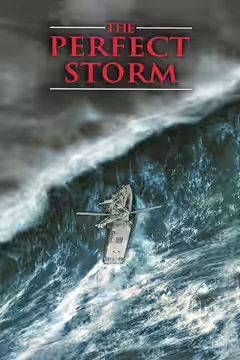
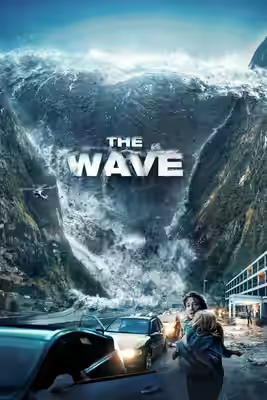
Wolfgang Petersen makes the sea frightening enough to justify an evening for disaster-film devotees. The people fare less well: a fine cast struggles with thin characters, clumsy dialogue and sentiment the film has not earned.
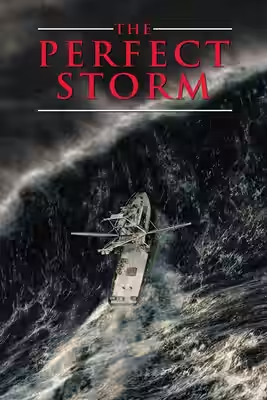
Wolfgang Petersen takes 130 minutes to put working lives and a violent sea into the same disaster film. The Perfect Storm is worth the time for viewers who enjoy a prolonged physical ordeal, although its thin character writing keeps the drama at a distance. Its attention to modern fishing gives it something solid to begin with. The opening spends time establishing the characters, and there is a welcome patience in that preparation.
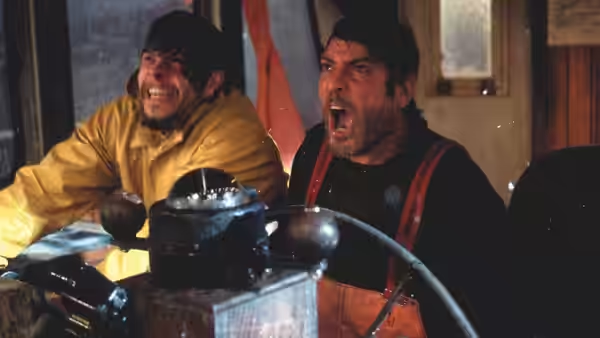
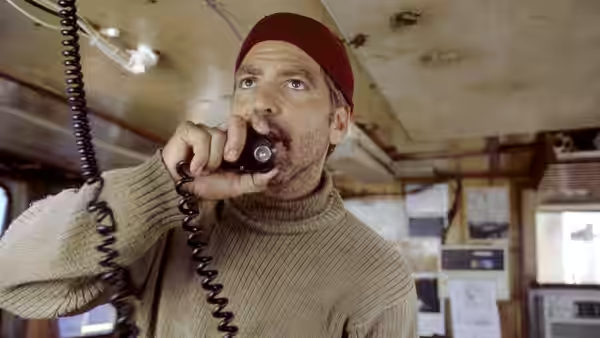
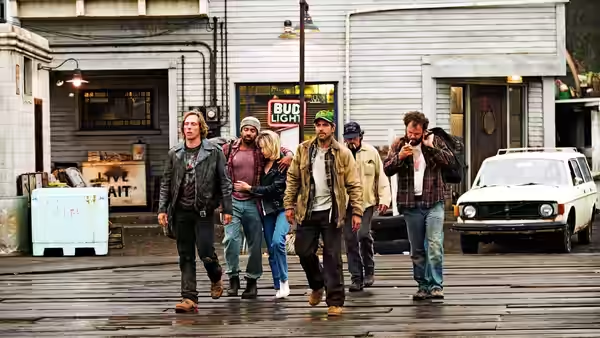
George Clooney gives Capt. Billy Tyne enough presence to hold our attention, which is useful when the writing has so little to add. Mark Wahlberg’s Bobby Shatford and John C. Reilly’s Dale “Murp” Murphy benefit from actors who can make familiar types seem worth knowing. We wanted more of their ordinary working lives, because the fishing details are more absorbing than the dialogue. William D. Wittliff’s screenplay too often settles for a recognisable type and a line that tells us exactly how to feel.
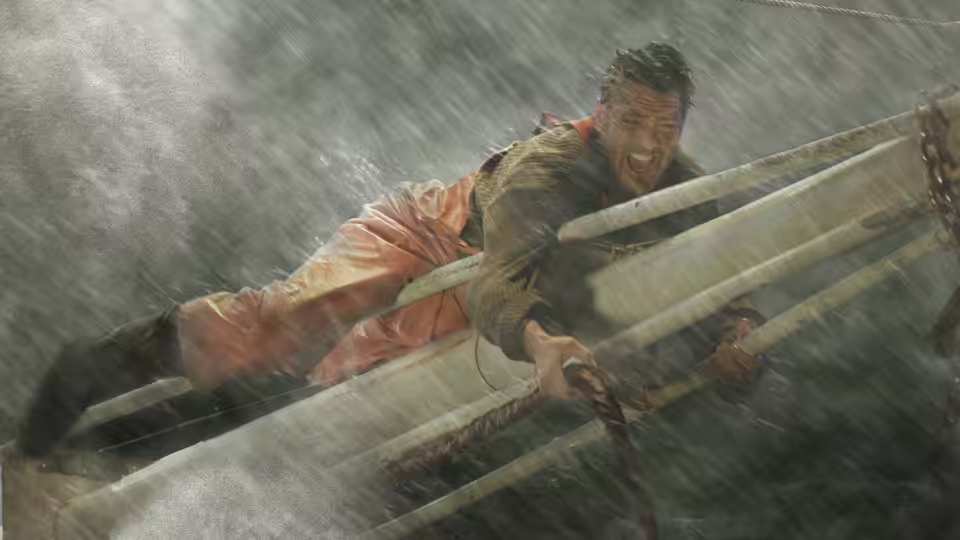
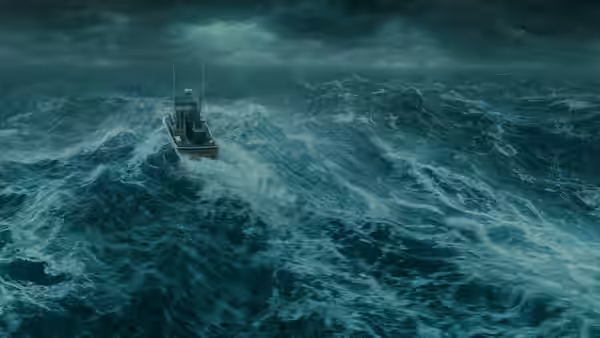
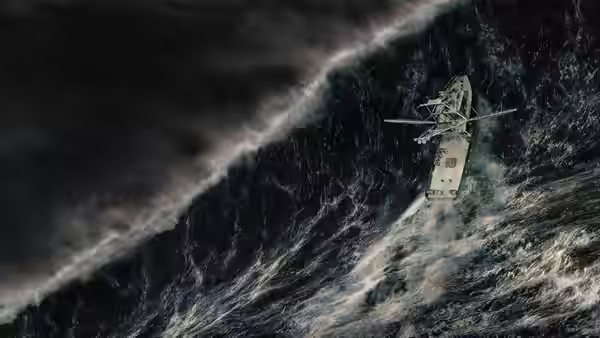
William Sandell’s production design helps make the fishing feel like work, with boats and equipment that matter before the weather can batter them. John Seale’s cinematography gives the water enough weight to make the danger convincing. The towering waves dominate the image, and the people look painfully exposed. The trouble is that some of the digital water still looks manufactured. With so much of the film asking us to fear the sea, those moments are harder to overlook than an unconvincing effect usually would be.
We tensed up during the rescue sequences, because reaching anyone in that water looks close to impossible. Richard Francis-Bruce’s editing is most effective here, keeping the immediate task clear amid the violence of the sea. These passages give the spectacle something specific to do, and the struggle to reach safety holds our attention without requiring much explanation. Elsewhere, the repeated emphasis on the storm’s size becomes tiring, even with the considerable skill that has gone into these sequences.
James Horner’s music adds to the film’s tendency to insist on feelings the script has only sketched in. The score’s emotional emphasis is understandable, but it can make a thinly written exchange feel thinner still. Wolfgang Petersen treats these people with affection, and that earnestness is welcome in a film that could have been content simply to batter them. The dialogue gives the actors too few chances to surprise us. The result is a good cast spending too much time making familiar sentiments sound personal.
The disaster film can manage with broadly drawn people, provided their decisions keep us involved. Here, the practical business of fishing and rescue does that more reliably than the dialogue, which limits how much the suffering can mean. We can recommend it to those who find the genre’s physical ordeals absorbing in themselves. The relentlessness of the water is part of the attraction, and also a fair warning about the evening ahead. If the cast is the attraction, expect to wish they had been given more to do.