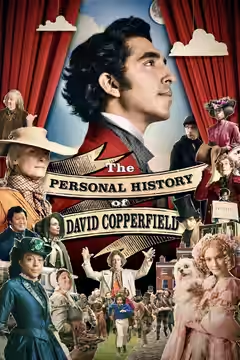
Armando Iannucci makes Charles Dickens funny without treating his characters as fools, and Dev Patel gives the bustle a human centre. It is warm, nimble entertainment, though the hurried storytelling sometimes shortens feelings worth staying with.
Armando Iannucci approaches The Personal History of David Copperfield with an affection that makes room for people to be ridiculous. We recommend it for the company, especially Dev Patel, whose performance gives an often hurried film someone worth following. The screenplay, by Armando Iannucci and Simon Blackwell, understands how much comedy Charles Dickens finds in the way people speak and present themselves. Its chief mistake is to keep moving just when we have begun to care about someone.
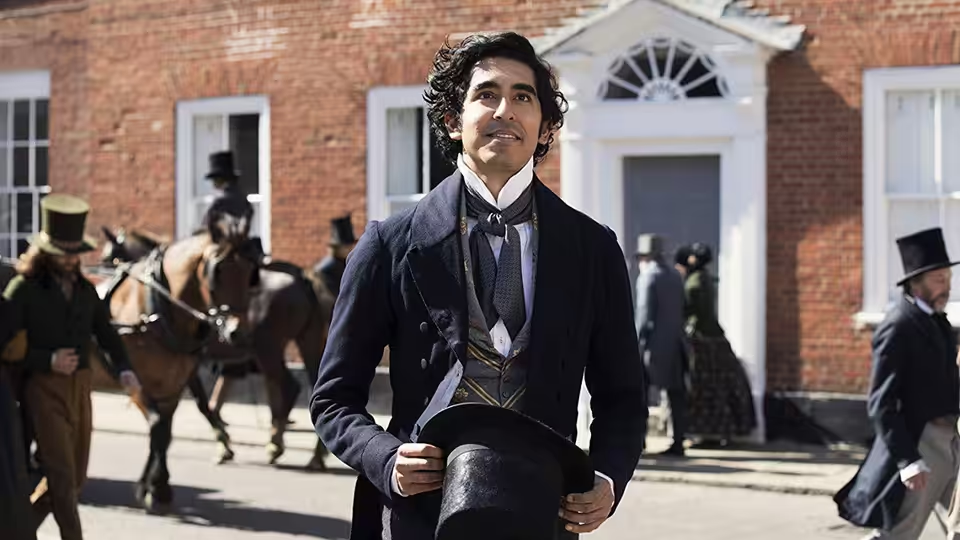
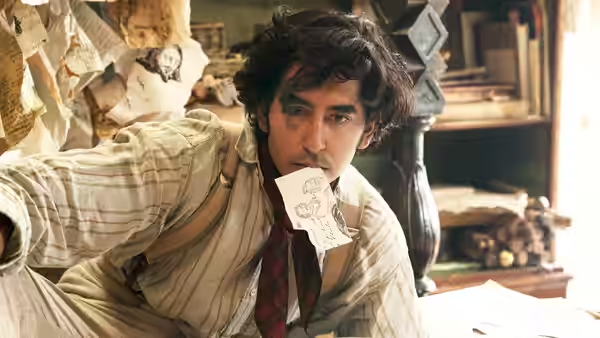
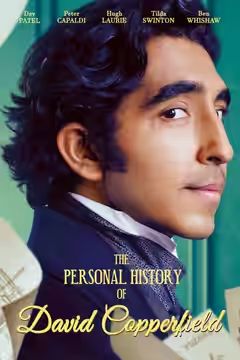
Dev Patel has the difficult job of making David Copperfield interesting among characters with louder voices and more conspicuous peculiarities. He succeeds through the alertness of his responses, keeping us interested in what David makes of the company he finds himself in. The performance is warm and funny, with a welcome willingness to let another actor have the laugh. A less engaging lead could disappear among so many personalities; here we keep looking for him.
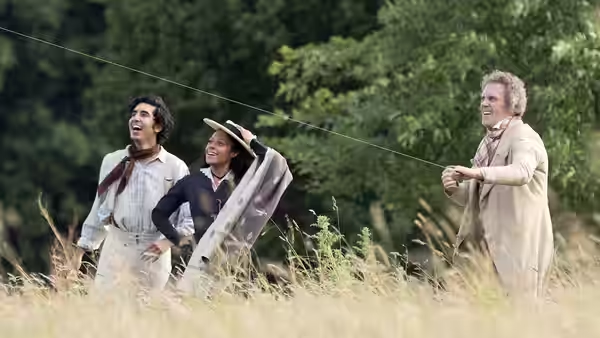
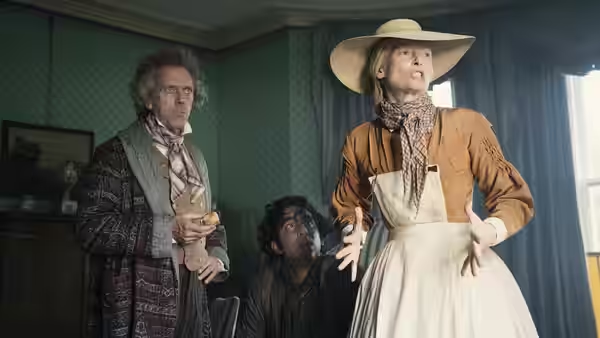
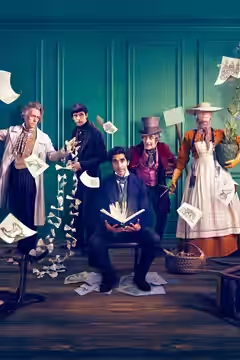
Tilda Swinton gives Betsey Trotwood enough authority to organise the whole film if anyone would let her. We were touched by the kindness that remains visible beneath her bossiness; it gives the performance something to return to between laughs. Hugh Laurie is equally attentive to Mr. Dick, making room for affection amid the comic business. Peter Capaldi’s Mr. Micawber adds to the sense that every supporting player has arrived with a complete person in mind.
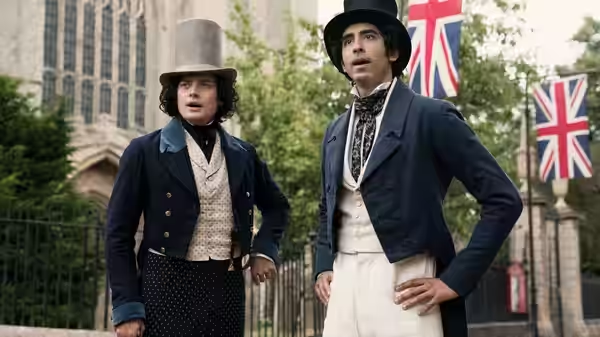
Zac Nicholson’s cinematography gives the comedy a brightness that suits its hopeful mood. Cristina Casali’s production design helps the Victorian setting accommodate the theatrical presentation, rather than making the actors seem obliged to behave respectfully around it. The visual playfulness is welcome, even when a transition draws more attention than it deserves. The mixed-race casting works with considerably less fuss: temperament and social position are what distinguish people here, and the ensemble feels comfortable together.
Editors Peter Lambert and Mick Audsley give the visual transitions a brisk comic rhythm, though their eagerness to reach the next encounter can become tiring. Christopher Willis’s music contributes to the cheerful momentum; occasionally we would welcome a little less encouragement. At 119 minutes, this is hardly a punishingly long film, but its speed makes it feel crowded. There are passages when a pause would do more for the characters than another clever change of scene.
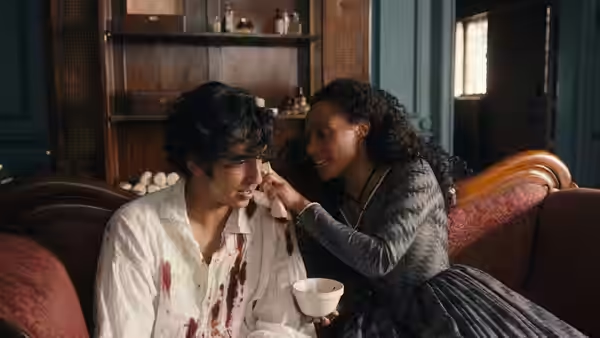
That haste also limits how deeply the hardship can register. The film acknowledges the differences between being comfortable and being poor, yet its eagerness to entertain sometimes makes those differences seem easier to survive than they should. We do not need every comedy to become a lecture on social conditions. We do need a little time to absorb what an experience costs a character, and the screenplay does not always leave it.
As a period comedy, it puts an unusually welcome emphasis on enjoying the company rather than admiring the furnishings. Anyone looking for a sustained account of suffering will find the cheerfulness a limitation, particularly when the pace refuses to ease. There is more pleasure here for those willing to let a comic performance occupy their attention for its own sake. Choose it for an evening when eccentric company sounds welcome, and do not expect much quiet.