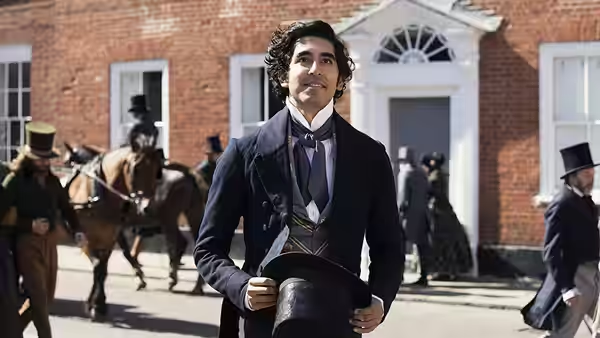
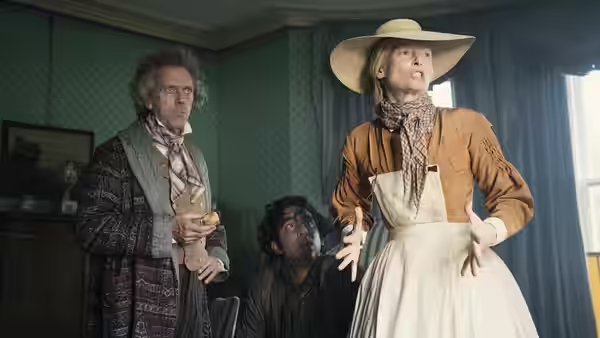
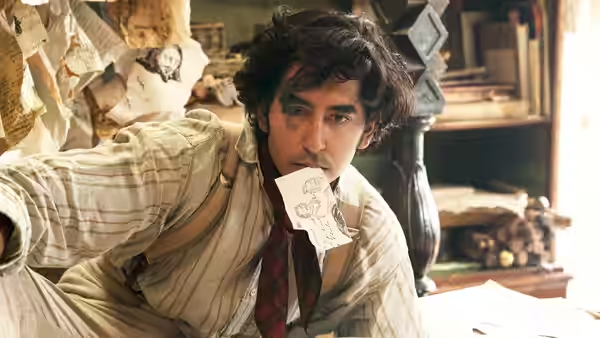
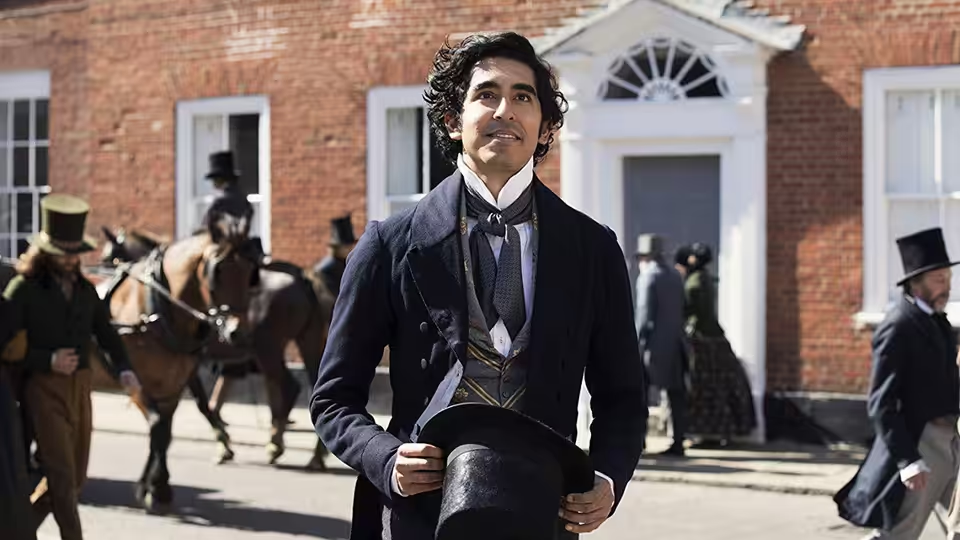
David Copperfield (Dev Patel) stands outside a brick house, holding his top hat as people and a horse pass behind him
Film review

The Personal History of David Copperfield

2019 · Directed by Armando Iannucci · 1h 59m

In a sentenceDev Patel deserves a quiet afternoon after keeping up with this lot

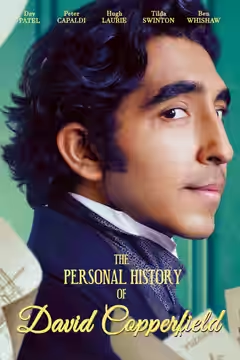
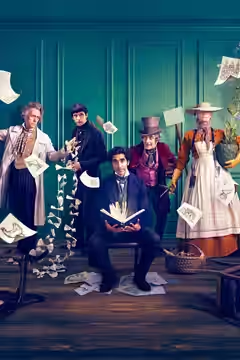
David Copperfield (Dev Patel) recounts his changing fortunes in Victorian society, from poverty to prosperity and back again. His aunt Betsey Trotwood (Tilda Swinton) brings a forceful manner and a capacity for kindness to a life also populated by Mr. Micawber (Peter Capaldi) and Mr. Dick (Hugh Laurie). David tries to make an account of his experiences while giving space to the people who shape them. Money, social position and the way people speak all figure in a personal history told from his point of view.

Plays from YouTube when you press play; nothing loads from them until then.

Fi1m review

Armando Iannucci makes Charles Dickens funny without treating his characters as fools, and Dev Patel gives the bustle a human centre. It is warm, nimble entertainment, though the hurried storytelling sometimes shortens feelings worth staying with.

Armando Iannucci approaches The Personal History of David Copperfield with an affection that makes room for people to be ridiculous. We recommend it for the company, especially Dev Patel, whose performance gives an often hurried film someone worth following. The screenplay, by Armando Iannucci and Simon Blackwell, understands how much comedy Charles Dickens finds in the way people speak and present themselves. Its chief mistake is to keep moving just when we have begun to care about someone.

Dev Patel has the difficult job of making David Copperfield interesting among characters with louder voices and more conspicuous peculiarities. He succeeds through the alertness of his responses, keeping us interested in what David makes of the company he finds himself in. The performance is warm and funny, with a welcome willingness to let another actor have the laugh. A less engaging lead could disappear among so many personalities; here we keep looking for him.

Tilda Swinton gives Betsey Trotwood enough authority to organise the whole film if anyone would let her. We were touched by the kindness that remains visible beneath her bossiness; it gives the performance something to return to between laughs. Hugh Laurie is equally attentive to Mr. Dick, making room for affection amid the comic business. Peter Capaldi’s Mr. Micawber adds to the sense that every supporting player has arrived with a complete person in mind.

Zac Nicholson’s cinematography gives the comedy a brightness that suits its hopeful mood. Cristina Casali’s production design helps the Victorian setting accommodate the theatrical presentation, rather than making the actors seem obliged to behave respectfully around it. The visual playfulness is welcome, even when a transition draws more attention than it deserves. The mixed-race casting works with considerably less fuss: temperament and social position are what distinguish people here, and the ensemble feels comfortable together.

Editors Peter Lambert and Mick Audsley give the visual transitions a brisk comic rhythm, though their eagerness to reach the next encounter can become tiring. Christopher Willis’s music contributes to the cheerful momentum; occasionally we would welcome a little less encouragement. At 119 minutes, this is hardly a punishingly long film, but its speed makes it feel crowded. There are passages when a pause would do more for the characters than another clever change of scene.

That haste also limits how deeply the hardship can register. The film acknowledges the differences between being comfortable and being poor, yet its eagerness to entertain sometimes makes those differences seem easier to survive than they should. We do not need every comedy to become a lecture on social conditions. We do need a little time to absorb what an experience costs a character, and the screenplay does not always leave it.

As a period comedy, it puts an unusually welcome emphasis on enjoying the company rather than admiring the furnishings. Anyone looking for a sustained account of suffering will find the cheerfulness a limitation, particularly when the pace refuses to ease. There is more pleasure here for those willing to let a comic performance occupy their attention for its own sake. Choose it for an evening when eccentric company sounds welcome, and do not expect much quiet.

Critical consensus AI synthesised

78
Positive
23
Mixed
3
Negative
0

Most critics welcome Armando Iannucci’s adaptation as a funny, warm and energetic take on Dickens, with praise clustering around Dev Patel’s appealing lead performance and the spirited ensemble. Tilda Swinton and Hugh Laurie receive particular attention, while several reviews credit the colour-blind casting with making the characters feel fresh. The playful visual storytelling also wins broad approval, alongside an optimism that many find touching rather than merely cheerful.

Reservations centre on the speed: compressed episodes and hurried subplots can weaken the drama, while some critics miss Dickens’s darker social concerns. Enthusiasm ranges from wholehearted delight to qualified approval, with no outright negative verdicts. IndieWire finds the restless visual transitions gimmicky despite admiring Patel and the film’s charm. The AV Club offers a sharper dissent, arguing that rushed, episodic storytelling largely defeats the drama, even as it praises the leading performance and theatrical framing.

Radio Times
★★★★★ · Emma Simmonds
100

Simmonds finds Iannucci’s adaptation joyously funny and genuinely touching. She praises its blend of Dickensian humour with crooked comedy and its invigorating colour-blind casting.

Read the full review →
Empire
20 January 2020 · John Nugent
90*

Nugent calls the adaptation a breezy, brilliant treat, praising its buoyant, optimistic spirit. He singles out the energetic storytelling and memorable ensemble, while noting that the brisk pace sometimes sidelines Dickens’s social message.

Read the full review →
Los Angeles Times
27 August 2020 · Justin Chang
90*

Chang finds the adaptation a witty, charming, and inventive take on Dickens, despite some patchiness and clumsiness. He especially praises its purposeful, richly varied casting and Dev Patel’s affecting performance.

Read the full review →
The Hollywood Reporter
5 September 2019 · festival review · John DeFore
85*

The critic finds the adaptation delightful, fast-moving and consistently entertaining. He especially praises its inventive visual transitions and Dev Patel’s charismatic performance.

Read the full review →
Variety
6 September 2019 · festival review · Peter Debruge
85*

Debruge finds the adaptation bright, funny, and delightfully modern while retaining Dickens’s Victorian setting. He especially praises Tilda Swinton’s consistently amusing performance as Aunt Betsey.

Read the full review →
Evening Standard
23 January 2020 · ★★★★ · David Sexton
80

Sexton finds the adaptation a delight, though he says its comic remixes make it only half very good. He especially praises Dev Patel’s performance and Tilda Swinton’s imperious, kind Betsey Trotwood.

Read the full review →

Straight answers AI written, from our review

Is The Personal History of David Copperfield worth watching?
The Personal History of David Copperfield is worth watching for its warm comedy and eccentric company, especially Dev Patel’s engaging lead performance; we score it 81 out of 100. We recommend it to anyone who enjoys character-led period comedy, with the caveat that its hurried storytelling leaves some hardship and feeling less room than they deserve.
How long is The Personal History of David Copperfield, and what is it rated?
The Personal History of David Copperfield runs 1h 59m. It is a comedy film.
Where can I watch The Personal History of David Copperfield in Croatia?
The Personal History of David Copperfield is not on any streaming or rental service in Croatia at the moment. It is available in 26 other countries; change your country at the top of the page to see where. Availability is checked daily.
How does The Personal History of David Copperfield compare to Great Expectations?
The Personal History of David Copperfield is the warmer, more hurried Dickens adaptation; we recommend Great Expectations for a more unsettling experience and a stronger sense of vulnerability. We favour David Copperfield for cheerful company and Dev Patel’s warmth, while David Lean’s film gives its eccentrics more time to disturb us, despite a less persuasive adult romance.
Is The Personal History of David Copperfield based on a true story or a book?
The Personal History of David Copperfield is adapted from a novel by Charles Dickens, rather than presented as a true story. Armando Iannucci and Simon Blackwell’s screenplay emphasises the comedy in how Dickens’s characters speak and behave, though it hurries through some of their hardship. We recommend it as an accessible period comedy without requiring familiarity with the book.
What should I watch after The Personal History of David Copperfield?
After The Personal History of David Copperfield, try Great Expectations (1946, Fi1m 84): Another Charles Dickens adaptation, with more time for its eccentrics to unsettle us. Then The Grand Budapest Hotel (2014, Fi1m 86): Another crowded period comedy where precise manners offer little protection from chaos; and Mon oncle (1958, Fi1m 82): For carefully observed social comedy that finds feeling in people’s peculiar habits.

Cast

Awards

European Film Award for Best Production Designer, 2020

Won
European Film Award for Best Production Designer

If you liked this, try…

  1. Great Expectations (1946, Fi1m 84)Another Charles Dickens adaptation, with more time for its eccentrics to unsettle us.

  2. The Grand Budapest Hotel (2014, Fi1m 86)Another crowded period comedy where precise manners offer little protection from chaos.

  3. Mon oncle (1958, Fi1m 82)For carefully observed social comedy that finds feeling in people’s peculiar habits.

  4. Local Hero (1983, Fi1m 86)Another visitor discovers that an eccentric community deserves more attention than his plans.

  5. Good Morning (1959) · not reviewed yetA gentler neighbourhood comedy, equally alert to the absurdity of respectable behaviour.