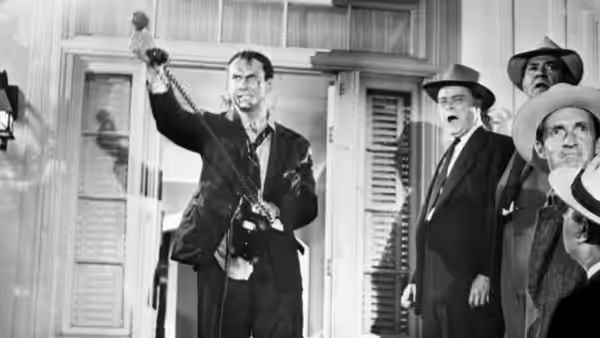
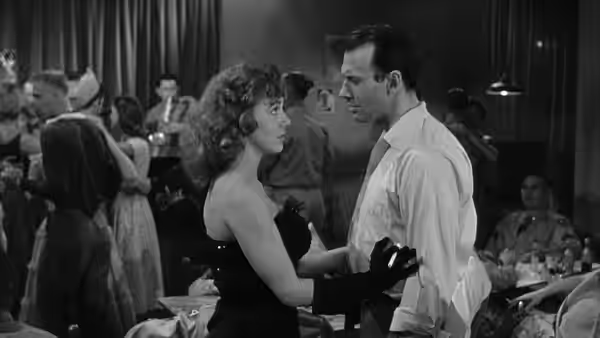
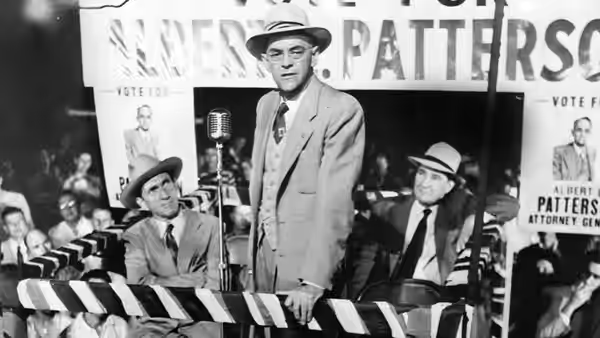
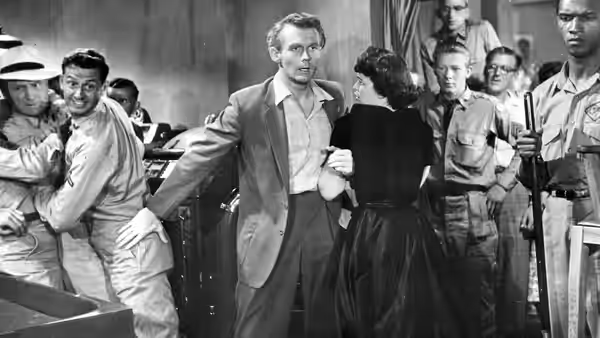
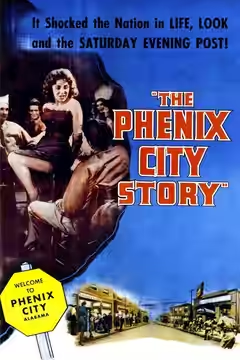
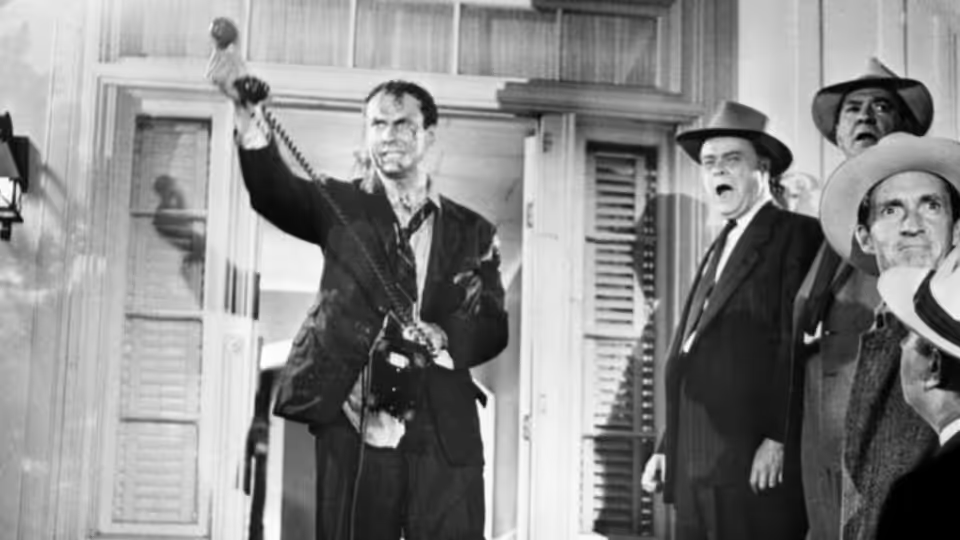
A man raises his arm before a group of men gathered in a doorway
Film review

The Phenix City Story

1955 · Directed by Phil Karlson · 1h 40m

In a sentenceEdward Andrews makes a crime boss look disturbingly easy to get used to

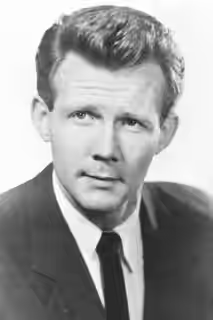
In Phenix City, Alabama, corruption is backed by violence. Albert L. “Pat” Patterson (John McIntire), John Patterson (Richard Kiley) and Ellie Rhodes (Kathryn Crosby) are caught up in the town’s affairs, while crime boss Rhett Tanner (Edward Andrews) represents its criminal power. An early encounter between Tanner and Albert L. “Pat” Patterson brings that power into focus through a personal confrontation. The story follows a community living with intimidation, where challenging the men in control means facing the force behind their authority.

Fi1m review

Phil Karlson’s crime film makes corruption feel unpleasantly plausible, especially whenever Edward Andrews is on screen. The plotting is blunt and sometimes slack, but the strongest confrontations still have the power to unsettle us.

The Phenix City Story is a good, bruising crime film with some uneven storytelling. Phil Karlson gives intimidation an everyday credibility that makes the violence difficult to dismiss as entertainment. His direction can also be sensational, pressing the ugliness until the insistence begins to work against him. We recommend it to crime-film enthusiasts, though anyone expecting the plot to develop with the same conviction as the strongest individual scenes should temper those expectations.

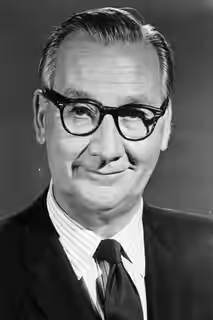
Edward Andrews supplies much of that conviction as Rhett Tanner. He makes the crime boss believable without requiring us to find him interesting merely because he is dangerous. The early encounter with John McIntire, playing Albert L. “Pat” Patterson, is particularly effective because the people involved seem substantial enough to exist beyond the immediate business of the scene. We were unsettled by it: Andrews makes criminal authority seem like something a community could become accustomed to. That possibility gives the encounter its unpleasant hold.

Harry Neumann’s cinematography contributes to the film’s credibility, keeping the people and their surroundings from feeling merely illustrative. The photography works because the setting seems capable of containing ordinary life alongside the brutality. George White’s editing is effective within the confrontations, giving their pressure time to register, although the movement between them is less assured. Across 100 minutes, the uneven momentum becomes noticeable: individual scenes command attention, then the connecting story has to earn it again.

The screenplay by Crane Wilbur and Daniel Mainwaring is where our reservations gather. Its account of corruption is forceful, but the dramatic progression can feel flat, with further ugliness providing emphasis when the story needs development. The bluntness has a purpose, and we would not ask this material to become polite. Even so, repeatedly demonstrating how bad things are does not always deepen our understanding of the people involved. Harry Sukman’s music contributes to the pressure, though the actors have already supplied much of the unease the film needs.

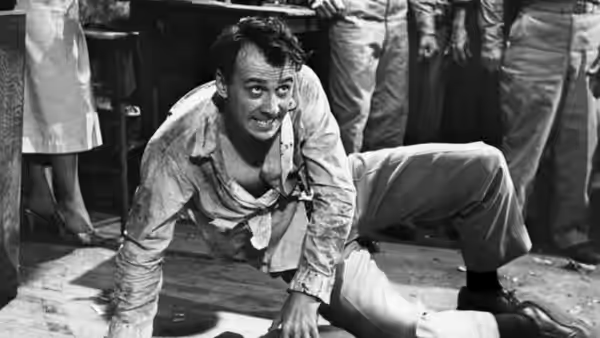
McIntire helps by giving Andrews a substantial presence to play against, and their early scene establishes a standard the writing does not consistently maintain. Richard Kiley and Kathryn Crosby also help keep the drama from becoming merely an account of criminal power. Crosby, in particular, gives the human consequences some weight within a film inclined to push hard for a reaction. The performances deserve credit for making the people matter when the broader storytelling threatens to reduce them to positions in a dispute.

As a crime film, this has responsibilities beyond delivering shocks. Karlson’s strength is making intimidation credible; his weakness is allowing the force of the presentation to do work that sometimes belongs to the writing. The brutality still registers, but we wanted a steadier dramatic account of the community enduring it. There is enough conviction in the direction and acting to justify the evening. Watch it for Andrews and McIntire, and allow for a story that occasionally needs them to keep it moving.
Critical consensus AI synthesised

61
Positive
3
Mixed
2
Negative
1
Film Comment
· Nick Pinkerton
70*

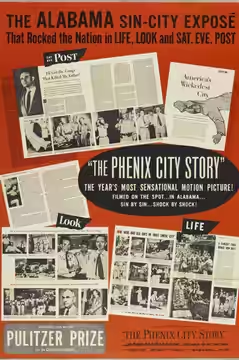
The piece presents the film as a still-shocking account of the Jim Crow South. Its standfirst singles out the film’s view of that setting for praise.

Read the full review →
The New York Times
11 September 1955
70*

The headline presents the film positively as an exciting, potent work. The article content is inaccessible, so it offers no further detail about what the critic praises.

Read the full review →
Time Out
· DP
70*

The review presents the film as a forceful, barnstorming thriller. It praises the film for pulling few punches in its account of a real Alabama town.

Read the full review →
Radio Times
★★★ · Tony Sloman
60

The critic finds the film sensational and brutally unsparing. They praise Phil Karlson’s expert direction and single out the story’s vivid realism.

Read the full review →
Variety
31 December 1954 · Variety Staff
60*

The review presents the film as a largely grounded, violent account of corruption in Phenix City. It praises Edward Andrews as a believable crime boss and notes Kathryn Grant’s performance as another standout.

Read the full review →
Slant Magazine
11 November 2009
35*

The critic says the film no longer lives up to its reputation, finding its story flat and less impactful today. He praises the early scene between Edward Andrews and John McIntyre, while noting that some moments still shock.

Read the full review →

Straight answers AI written, from our review

Is The Phenix City Story worth watching?
The Phenix City Story is worth watching for crime-film enthusiasts, and we score it 71 out of 100. Edward Andrews makes criminal authority disturbingly plausible, especially opposite John McIntire, but the blunt plotting and uneven momentum mean the story does not always match the strength of its confrontations.
How long is The Phenix City Story, and what is it rated?
The Phenix City Story runs 1h 40m. It is a crime film.
Where can I watch The Phenix City Story in New Zealand?
The Phenix City Story is not on any streaming or rental service in New Zealand at the moment. It is available in 2 other countries; change your country at the top of the page to see where. Availability is checked daily.
How violent or frightening is The Phenix City Story, and is it suitable for children?
The Phenix City Story contains bruising violence and credible intimidation; with no UK or US certificate supplied, we would not treat it as suitable for children. We find its everyday acceptance of criminal authority unsettling, and the sometimes sensational emphasis on brutality makes it a poor choice for squeamish viewers.
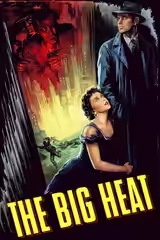
How does The Phenix City Story compare to The Big Heat?
The Phenix City Story is the less tightly told of these two forceful crime films; we recommend The Big Heat first for its tauter storytelling. Both make organised corruption unpleasantly credible and violence uncomfortable, but Edward Andrews gives The Phenix City Story a particular pull by making a crime boss seem disturbingly easy to get used to.
What should I watch after The Phenix City Story?
After The Phenix City Story, try The Big Heat (1953, Fi1m 86): Another blunt encounter with organised corruption, with violence that refuses to feel comfortable. Then Z (1969, Fi1m 84): Political intimidation becomes a gripping investigation, with anger sharpened by procedural detail; and The Long Good Friday (1980, Fi1m 88): A crime boss discovers how little his apparent authority can guarantee.

Cast

If you liked this, try…

  1. The Big Heat (1953, Fi1m 86)Another blunt encounter with organised corruption, with violence that refuses to feel comfortable.

  2. Salvatore Giuliano (1962) · not on Fi1m yetFor a more demanding examination of crime, political power and a community’s history.

  3. Z (1969, Fi1m 84)Political intimidation becomes a gripping investigation, with anger sharpened by procedural detail.

  4. The Long Good Friday (1980, Fi1m 88)A crime boss discovers how little his apparent authority can guarantee.

  5. City of Hope (1991) · not on Fi1m yetBroadens the view of urban corruption without forgetting the people living inside it.

The Phenix City Story (1955) review: Tough crime with a thin plot (New Zealand) | Fi1m