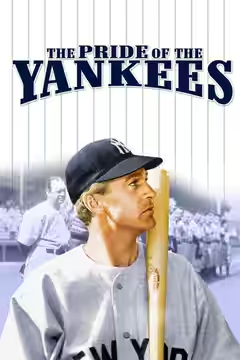
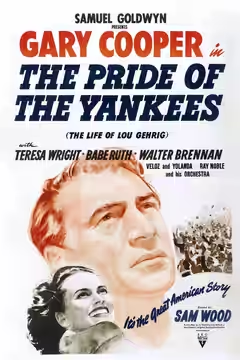
Sam Wood’s memorial to Lou Gehrig is soft, slow in the middle and barely a baseball film at all. It is also honest about a decent man, Teresa Wright is a delight, and the last ten minutes have lost none of their force.
Lou Gehrig played first base for the New York Yankees, did not miss a game for fourteen years, and died in 1941 at the age of 37. Samuel Goldwyn had a film about him in cinemas the following summer. The haste shows in the film’s manners rather than its craft: it is a memorial and it behaves like one, respectful, soft-spoken and careful never to say an unkind word about anybody. It is also, for most of its 128 minutes, a good film, and for its last ten a hard one to argue with. It is worth your evening, provided you know going in that it is a love story with a ballpark attached and that the middle sags.
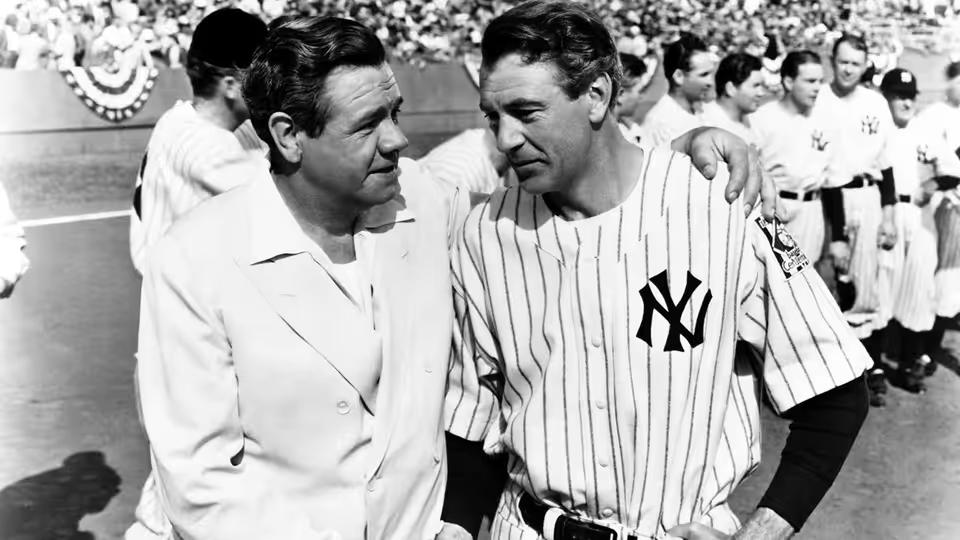
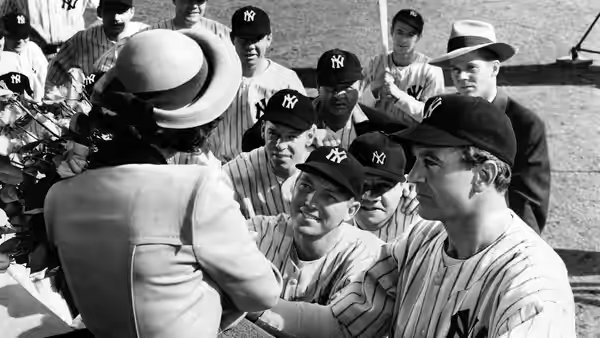
Gary Cooper does not look like a ballplayer. He is long and narrow and he swings a bat as if unsure whose it is, and Daniel Mandell’s editing is kind to him, leaving each swing a beat before the ball arrives. The director, Sam Wood, and the writers, Herman J. Mankiewicz and Jo Swerling, plainly know this and build around it. There is remarkably little baseball. What there is comes as montage, pennants and scoreboards and Leigh Harline’s brass, and whole seasons pass in the time it takes to read a headline. Cooper’s real job is the man off the field: shy, dutiful, faintly comic, a son who brings his first pay packet home to his mother. He plays it with his hands, which are never quite in the right place, and it works.
Teresa Wright is the reason to stay. Eleanor Twitchell meets Lou when he trips over a row of bats in Chicago, laughs, and names him Tanglefoot, and their scenes are the best written in the film. She teases; he takes ten seconds to notice. Wright plays a quick woman who has decided to marry a slow one and does not regret it for a moment, and the marriage the film shows, all kitchen business and gentle needling, is more grown-up than anything that happens on the diamond. Elsa Janssen’s Mom Gehrig, who wanted an engineer and got a first baseman, is the other woman in his life, and the quiet war between the two of them over how the young couple’s house should be furnished is played for comedy and gets its laughs.
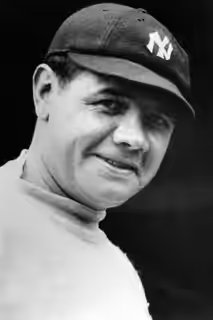
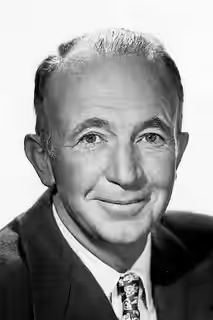
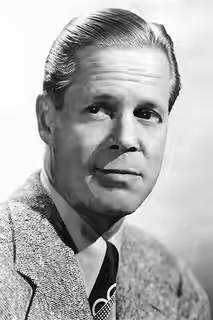
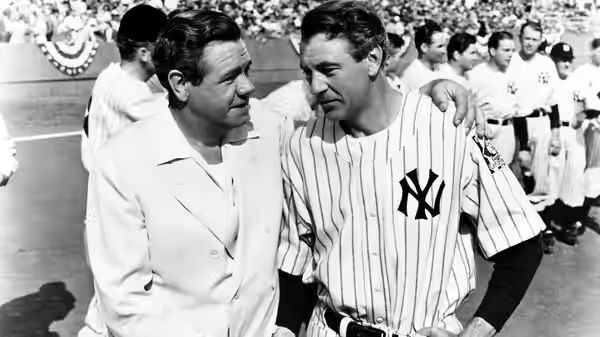
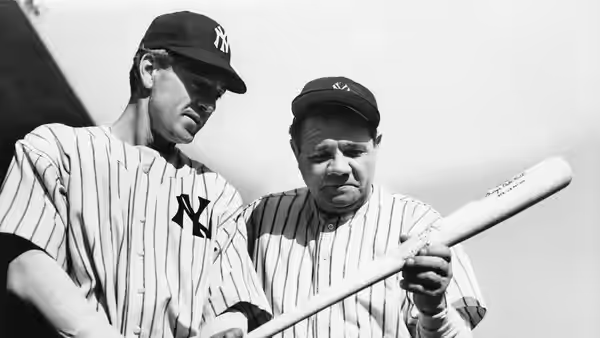
The middle hour is where the patience wears. Walter Brennan’s sportswriter Sam Blake exists to admire Gehrig out loud, and Dan Duryea’s Hank Hanneman exists to sneer at him so that Blake can admire him again. Babe Ruth plays himself, large and cheerful and clearly enjoying it, and the film’s one sharp observation about the sport is in that casting: Ruth is the show and Gehrig is the man who turns up. But the years arrive as a list of good deeds. A boy in a hospital bed gets a promise. A banquet gets a speech. Somewhere past the hour mark we were bored, and then cross about being bored, because a life this odd, a shy man who did not take a day off for fourteen years, deserved a film that wondered why.
Rudolph Maté shoots it in soft greys and lights the Gehrig kitchen warmer than the stadium, which tells you where the film’s heart is. William Cameron Menzies’s ballpark is mostly dugout, tunnel and a slice of stand, a workplace, which suited the man. René Hubert dresses Wright plainly and well; Eleanor is the sensible one and looks it. Harline puts music under nearly everything, and a good deal of it could go.
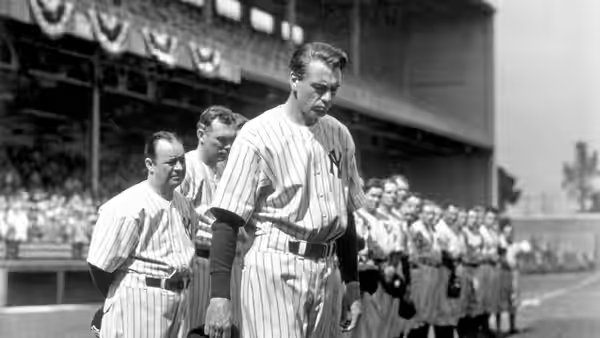
Then the last stretch, which we will not describe beyond saying that anyone who knows Gehrig’s name knows what it is. We knew. We had seen it before. It made no difference. Wood shoots it plainly and lets Cooper’s voice carry it, and the voice catches once and no more. We were moved more than we expected to be, and faintly embarrassed about it, and then not embarrassed at all, because the film had earned it the slow way, over two hours of a man being decent in small rooms.
Most critics who saw it in 1942 found it slow, and one or two found it soft. It is both. It is also a decent film about a decent man, which is rarer than it sounds, and a fair choice for a sofa built for two, on the understanding that one of you will need a handkerchief and will insist afterwards that it was the other.