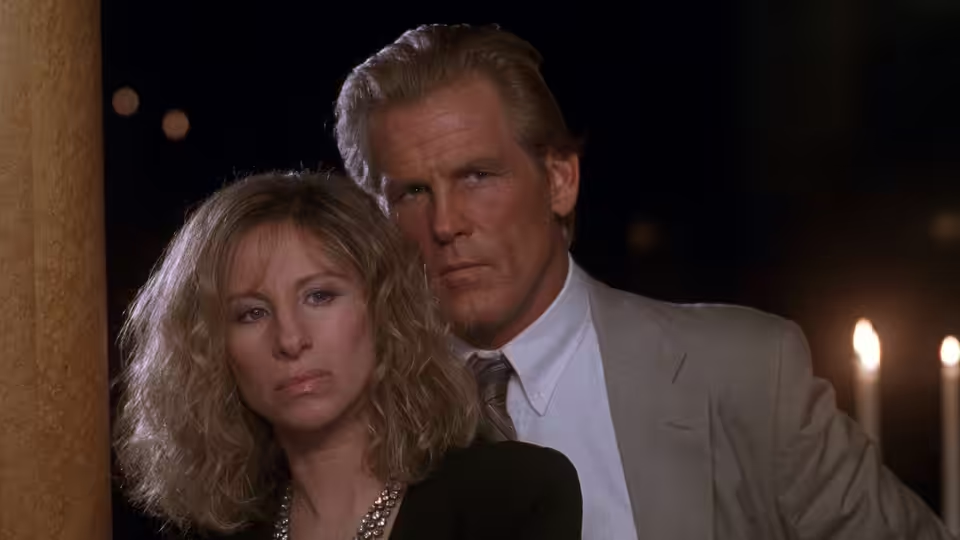
Barbra Streisand takes Pat Conroy’s big Southern novel and makes something handsome, earnest and soft-centred of it. Nick Nolte, as a man talking his way back through a childhood he has spent his adult life not mentioning, is the reason to watch.
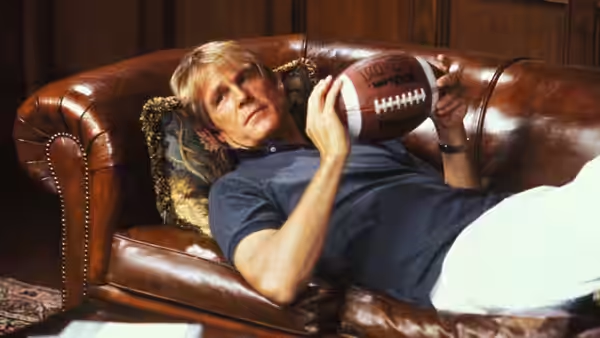
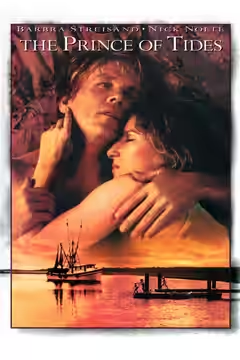
Barbra Streisand directs and stars in a love story built on a course of psychotherapy, adapted with Becky Johnston from Pat Conroy’s novel. A South Carolina football coach goes to New York to help a psychiatrist treat his sister and ends up being treated himself. The film is handsome, sincere and soft in the middle, and the reason to watch it is Nick Nolte, who plays a man who has spent his adult life making jokes so that he does not have to say anything.
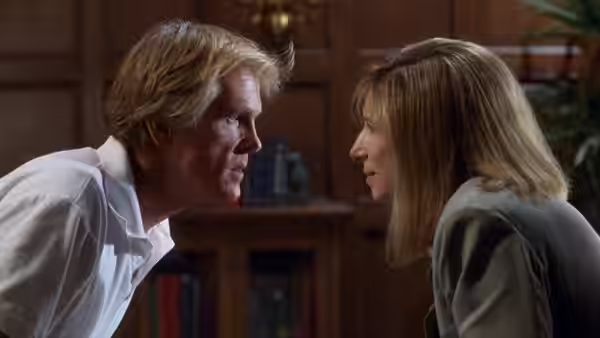
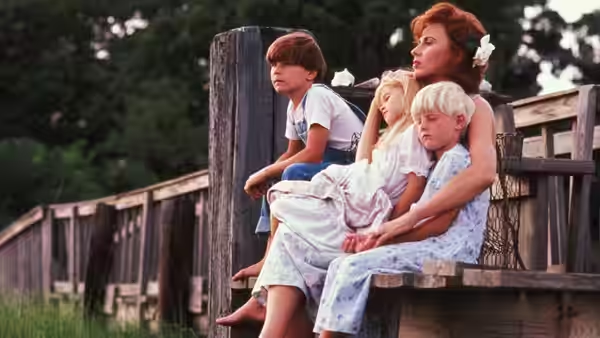
Nolte is a big, shambling presence, hands in pockets, drawl slowed down for company, and the performance lives in what he does when the jokes run out. In Lowenstein’s office he fills the silence with talk about grits and Yankees; when she waits him out, his face does something small and the air in the office changes. The flashbacks give him a childhood on a shrimp boat with a father, Henry (Brad Sullivan), who shouts, and a mother, Lila (Kate Nelligan), who smiles through it and keeps score. One early image, three children slipping off the dock and holding hands under the water while their parents fight on the bank, moved us more than we expected. Nobody explains it and the film is wise enough not to try.
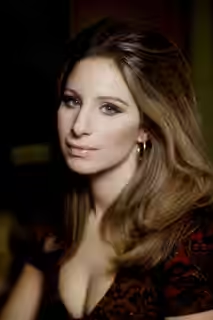
Streisand the director serves Nolte well and keeps her own scenes quieter than her reputation suggests. Susan Lowenstein is a composed Manhattan psychiatrist married to a famous violinist, Herbert Woodruff (Jeroen Krabbé), who treats her like staff, and Streisand plays her with her voice down and her hands still. She is also the star, and Stephen Goldblatt lights her that way: a haze on the lens, the hair backlit, the office in permanent late afternoon. The Carolina scenes get a harder, whiter light, salt marsh and open sky. Paul Sylbert dresses the Wingo house in bare boards and the Lowenstein flat in dark wood and lamps. Ruth Morley puts Nolte in the same crumpled jacket for most of the film and Streisand in a different silk blouse for every session.
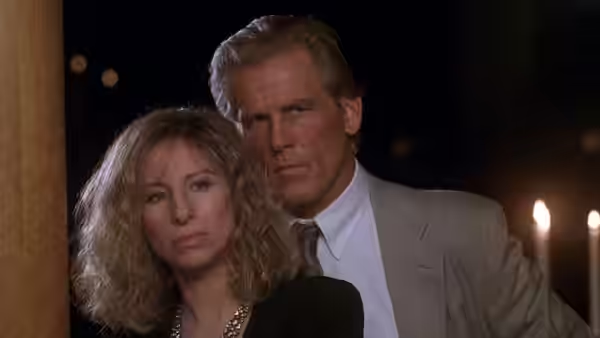
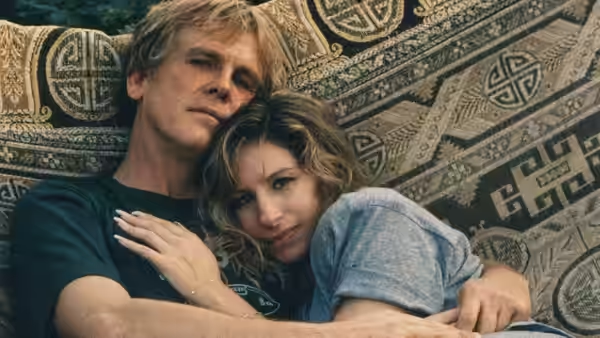
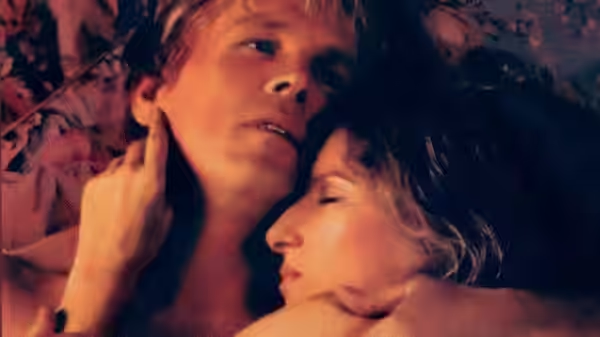
The trouble is the romance, and the trouble is that it looks so nice. Once Tom and Susan stop talking about Savannah and start having dinner, the film becomes a montage of Manhattan at dusk, with James Newton Howard’s piano and strings rising under every kiss to tell us how to feel about it. Don Zimmerman cuts the sessions and the flashbacks with a clean logic, a question in the office, an answer on the water, and it works; the courtship he cuts like a perfume advertisement. Our attention went somewhere around the first candlelit dinner and came back only when Nolte had something to remember.
There is also a subplot in which Tom coaches Lowenstein’s son, Bernard (Jason Gould), a sulky violin student who would rather play football, and it is written to guarantee Tom a kind word from somebody. Gould does what he can with a boy who exists to be won over. A dinner party at the Woodruff flat, at which Herbert humiliates his wife and Tom does something about it, is the film’s one scene of open theatre, and Krabbé is so smoothly hateful that we enjoyed it while knowing we were being played. Blythe Danner, as Tom’s wife Sally, spends most of her part on the other end of a telephone. Melinda Dillon, as Savannah, is in hospital for most of the film and asked only to be the reason everyone else talks.
The idea underneath is that a secret said aloud is a wound healed, and that once it is out a marriage, a career and a family can be mended in a fortnight. Conroy’s novel had room to doubt that. The film does not, and its second half moves towards a reveal we will not describe with the confidence of a story that has already decided what the reveal will fix. It is a weepie built the way they used to build them, and on those terms it is done with competence and some tenderness.
See it for Nolte, who gives the film a weight it does not always earn, and for the marsh light. Keep something to hand for the Manhattan half, which is the weaker one. It runs 132 minutes and carries a 15 certificate.