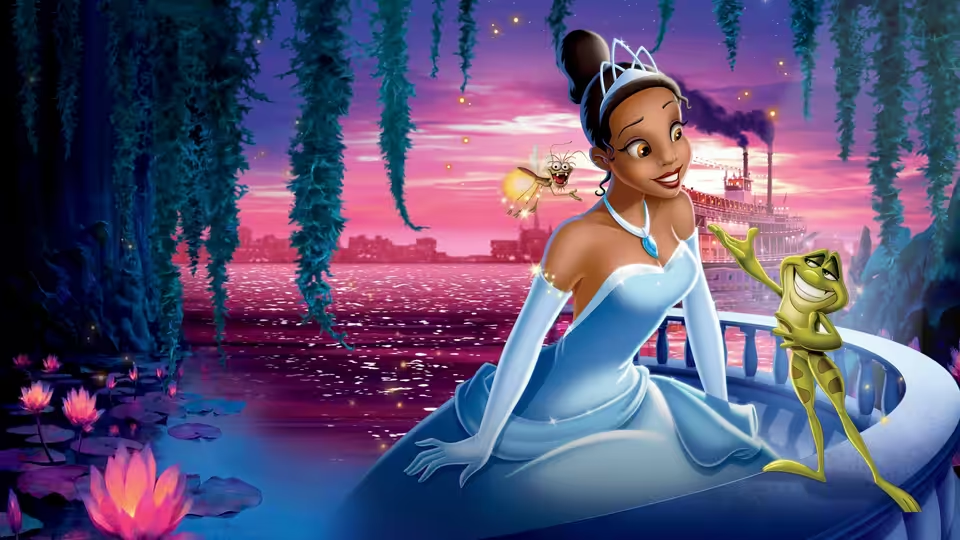
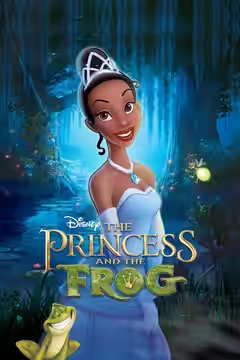
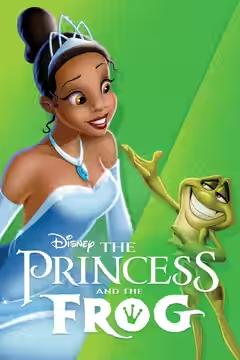
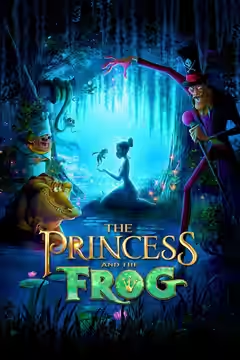
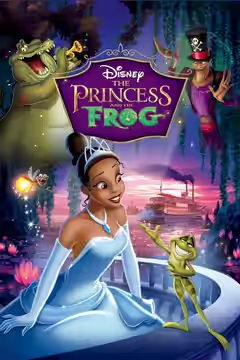
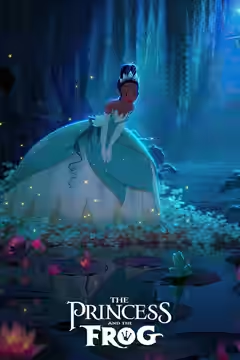
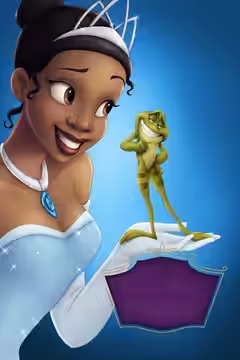
Musker and Clements bring Disney back to hand-drawn animation and to New Orleans, and the city looks wonderful. Keith David’s shadow-dealing villain is the best thing in it; the songs are pleasant, the bayou stretch slow, and Tiana deserves more of her own film.
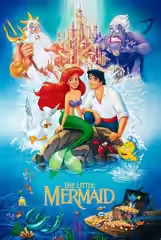
John Musker and Ron Clements, the pair who made The Little Mermaid (1989) and Aladdin (1992), bring Disney back to pencils and paint after years of computer animation, and they bring the old frog story to New Orleans in the 1920s. It is warm, handsome and easy to like. Three or four scenes in it are excellent. The rest is Disney doing what Disney does well enough, and we would happily send a family to it without telling them it is one of the studio’s great ones.
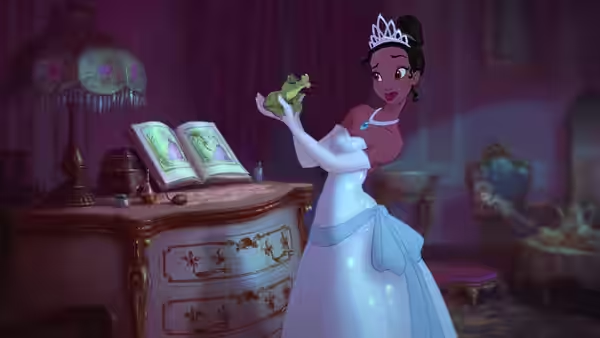
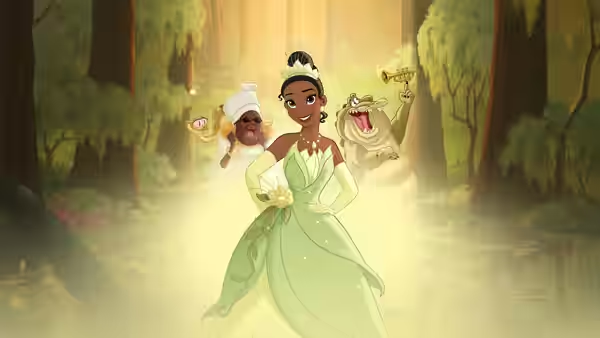
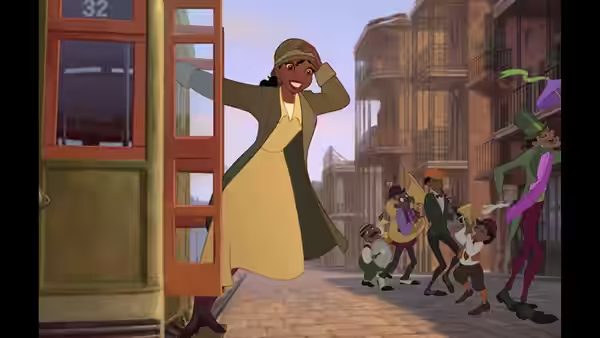
The city is the first pleasure. James Aaron Finch’s production design gives us wrought-iron balconies, a streetcar, a riverboat lit up at night, and a bayou hung with Spanish moss and lit green and gold. The best-looking stretch is Tiana’s song “Almost There”, in which the drawing flattens into hard shapes and gold-and-black colour like a poster of the period, and for two minutes the film looks like nothing else Disney has made. Then it goes back to the round, soft house style, which is well done and a little safe.
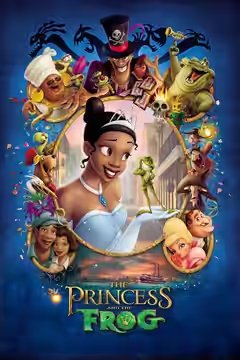
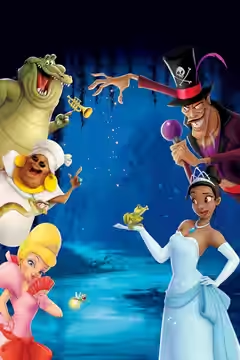
Keith David’s Facilier is the reason to go. He is thin, top-hatted and courteous, and his shadow does not do what he does; it stretches up walls, grabs at people and grins on its own. His number, “Friends on the Other Side”, fills a small room with purple light, a card table and a wall of masks that open their eyes, and we were more unsettled than a U certificate had led us to expect. It is the one part of the film where the pictures, the song and the story all pull in the same direction. Children under six may want a hand to hold.
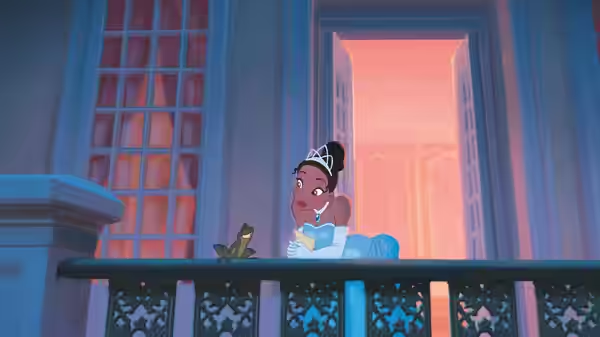
Rose sings Tiana with a warmth the writing does not always give her, because the script by Rob Edwards, Musker and Clements has made her stern; she works two shifts, refuses to dance and lectures a prince about effort. Campos makes Naveen a pleasant idler, and the animators give the frog a looser face and better jokes than the man. The supporting cast get the air. Jennifer Cody’s Charlotte, a rich girl who wants a prince and is kind about it, is the funniest voice in the film. Michael-Leon Wooley’s Louis is an alligator who wants to play trumpet with humans, and Jim Cummings’s Ray is a Cajun firefly in love with a star he calls Evangeline. Ray’s serenade to her, a small waltz over dark water, moved us more than we thought a cartoon insect could manage. Jenifer Lewis turns up late as Mama Odie, blind, brisk and in charge of a gospel number and a gumbo pot.
Randy Newman writes the songs in the idioms of the city, Dixieland, zydeco, gospel, and they are all pleasant and we could not hum you one the next morning. Only Facilier’s and Ray’s stayed with us. Jeff Draheim’s editing is quick in the city; in the swamp it is not. The middle stretch, two frogs bickering in a boat while three hunters chase them, goes on past the point where it is funny, and we found ourselves noticing the time around the hour mark. In a film of 98 minutes that is a cost.
There is also the matter of what Tiana is for. The film gives Disney its first Black princess and writes her as a woman who wants to work, then spends most of its length turning her into a frog so that a man can learn what work is. She is told, more than once, that she wants the wrong thing. We will not say how the film settles the question, only that it settles it the way Disney settles things, and that the settling took some of the pleasure off the ending for us.
Against the directors’ own record this sits below the two films that made their name. The Little Mermaid gave its heroine one want and built everything round it; here the heroine’s want keeps being handed to the sidekicks to comment on. It is still a good evening for a family, at home or in the cinema, and the animation loses nothing on a smaller screen. Go for the city, the shadows and the firefly, and forgive it the frogs.