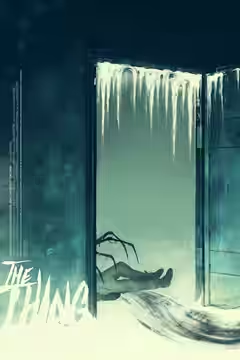
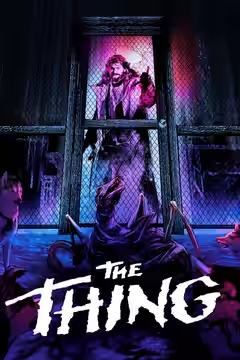
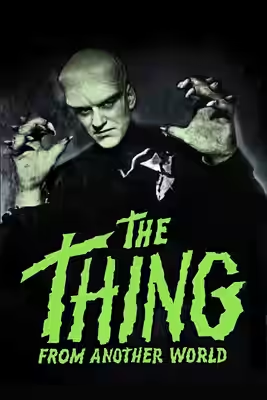
Carpenter’s Antarctic horror is as cold and frightening as it was in 1982, and the effects have aged into something stranger than modern digital work. The men are thin as people, and the middle sags a little. We would still tell you to see it.
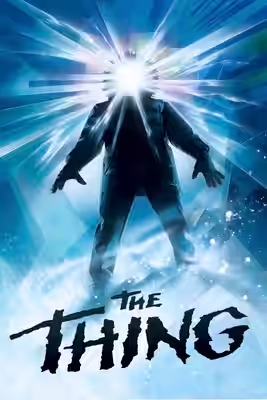
John Carpenter’s The Thing takes a story John W. Campbell Jr. wrote in the 1930s, filmed once before in 1951, and strips it to its cruellest idea: a creature that copies whatever it eats, loose among twelve men who cannot leave. Bill Lancaster’s screenplay wastes nothing. The Norwegians arrive, the dog goes in the kennel, and within half an hour the question the film will ask for the rest of its 109 minutes is on the table: who in this room is still himself. It is a horror film built like a detective story, and it plays fair.
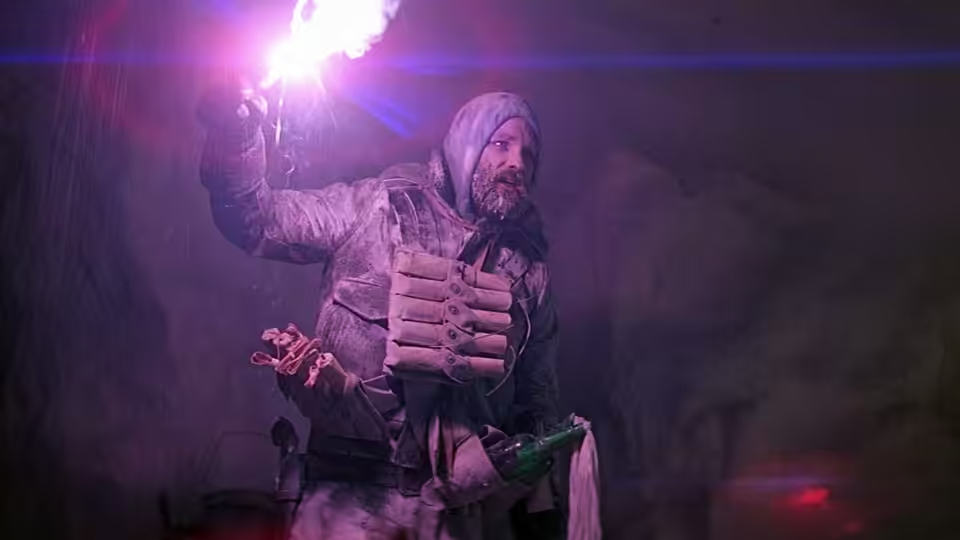
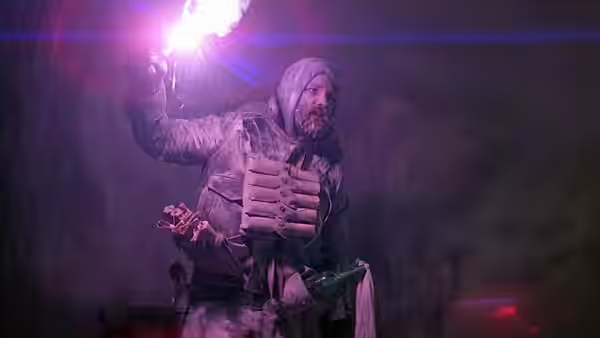
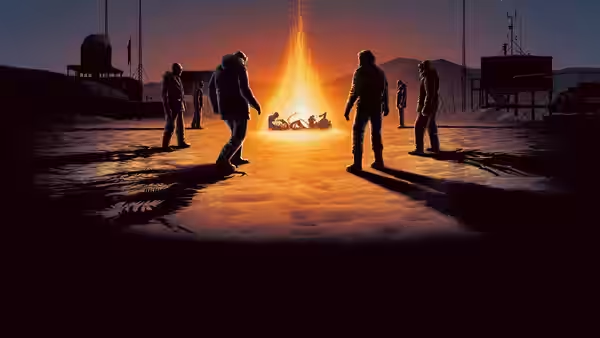
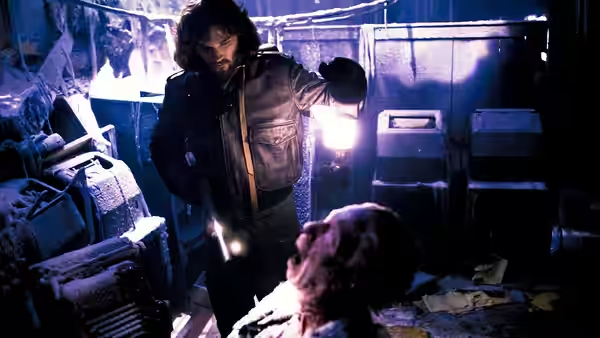
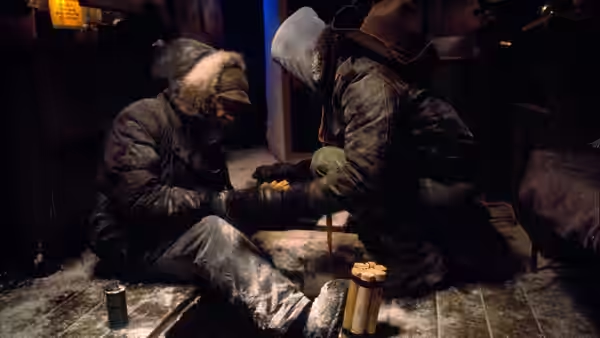
Dean Cundey shoots the wide frame in two colours. Outside is blue-white and endless, the station a few lit windows in it. Inside, John J. Lloyd’s set is plywood corridors, a rec room with a pool table, a generator hut, lit warm and low so the men look flushed even when they are freezing. In the group scenes Cundey sets one man slightly apart in the frame, so we start doing the film’s arithmetic before the characters do. When the lights fail, what is left is a torch beam or the mouth of a flamethrower.
Then there are Rob Bottin’s creatures, which got the film dismissed in 1982. They are built things, latex and cable and fluid, and the camera simply looks at them. The kennel scene frightened us properly, the kind of fright that stays in the shoulders after the scene has ended, and for a plain reason: Carpenter holds the shot while the husky’s skin splits and the other dogs go mad around it, and because the dogs’ panic is real the impossible thing in the middle of the frame borrows their conviction. Todd Ramsay cuts these sequences with patience, long looks broken by a single hard cut, and that restraint keeps the goo from being silly.
Ennio Morricone’s score is barely there, and that is the point. A low two-note pulse, a heartbeat slowed almost to stopping, then long stretches of wind and the hum of the generator. It sounds so like Carpenter’s own electronic work that it is hard to tell where his and Alan Howarth’s credited contributions begin, and the join does not show. When a man walks down a corridor and the pulse stops, we sat forward.
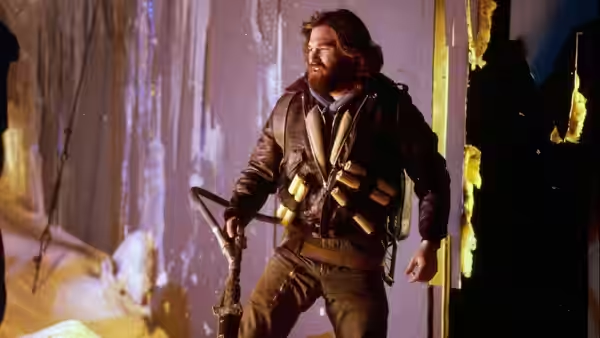
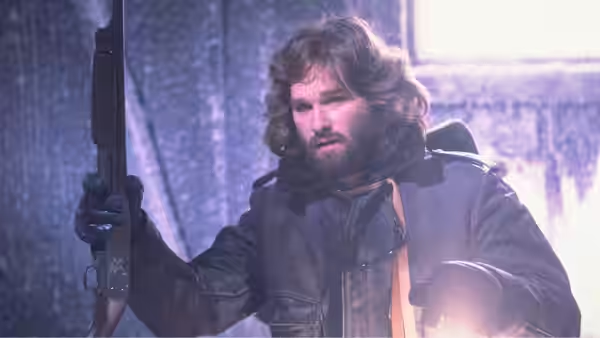
Kurt Russell plays MacReady as a man who did not want the job and takes it anyway, and he says less than anyone else and is believed more. Keith David’s Childs keeps asking why MacReady should be in charge, and the film is honest enough to let the question stand. Wilford Brimley’s Blair, the biologist who does the sums first, has the one scene of pure despair, sitting at a computer while the numbers come up. Donald Moffat’s Garry loses his authority by degrees, and Moffat lets us see each degree. Richard Dysart, T. K. Carter and Richard Masur fill the edges with a few lines apiece.
Which is the caveat. There are twelve men here and by the end we could name perhaps five with confidence. Lancaster gives each of them a job and nothing else, no wife, no past, no opinion beyond the present danger, and when the film asks us to mourn one of them it has not always earned it. The stretch after the kennel, when the men know something is among them and cannot find it, loses some grip; there is a good deal of walking between huts. And one of the later transformations tips towards comedy, and the film knows it, and hands a character a line to say so, which is a small loss of nerve.
The reviews in 1982 called it a gross-out with nobody to care about. Most critics since have reversed that, and we are with them, though the second half of the old complaint has some truth in it. What the first reviewers missed is the shape: this is a film about looking at another man’s face and not knowing, and Carpenter keeps that idea in every frame, including the ones full of latex. Set against his own work, only Halloween (1978) matches it for control.
See it in the dark, with the heating down. The ending is one we will not describe, except to say that it left us colder than any of the creatures did and that we admired it for refusing us what we wanted. It runs 109 minutes and carries an 18, and the 18 is still deserved.