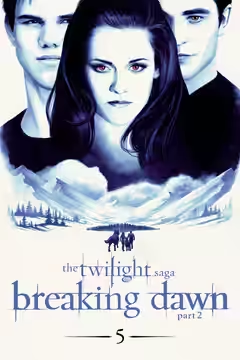
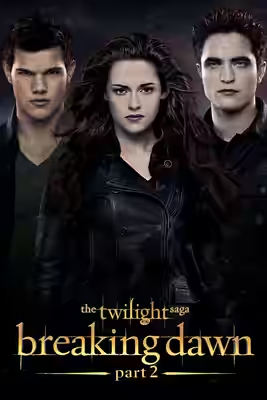
The fifth and last Twilight is the liveliest, because Bella finally gets to do something and the Volturi are allowed to be funny. It is still a long wait for a fight, and the digital baby in the middle of it is a mistake nobody stopped.
Bill Condon closes Stephenie Meyer’s series with the second half of her last book, and the brief is plain: give Bella her reward. After four films of being rescued, Kristen Stewart’s heroine wakes up stronger than everyone in the house, and the film spends its first twenty minutes enjoying that. It is the best stretch of the five, because somebody is at last doing something. The rest is a slow build to a confrontation in the snow, and whether you find the build tolerable depends on how much you already care.
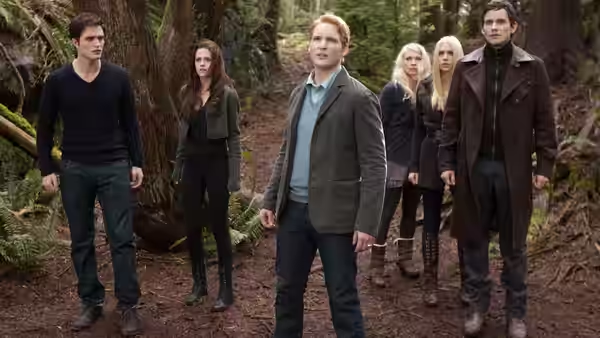
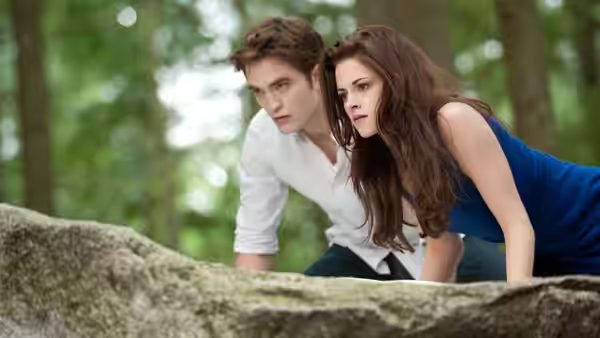
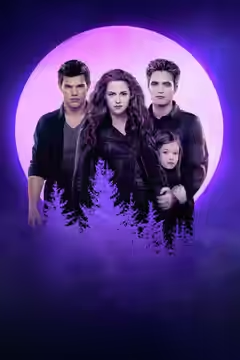
Stewart is the surprise. She has spent the saga biting her lip; here she runs, leaps a river, breaks a mountain lion’s neck and arm-wrestles Kellan Lutz’s Emmett on a boulder, and she looks relieved. Robert Pattinson relaxes with her. Taylor Lautner gets the one properly funny scene, when Jacob undresses in front of Charlie Swan to prove what he is, and Billy Burke’s bewildered patience as Charlie is, as it has been throughout, the thing holding the saga to the ground. The Cullens remain a well-dressed chorus: Elizabeth Reaser, Ashley Greene, Jackson Rathbone and Nikki Reed are given a line each and a direction to stand in.
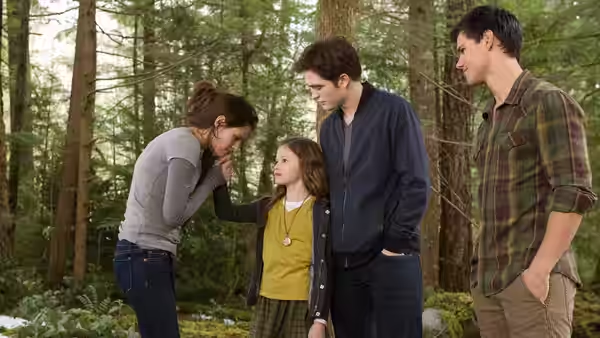
Then there is the child. Renesmee as an infant is a real baby with a digitally altered face laid over it, and the eyes are wrong, and the mouth moves a beat after the sound. We were unsettled by it, and the film wanted us to be moved; every time Bella gazed at her daughter we were looking at the join. It matters because the whole plot turns on this child being loved, and the film cannot make her look alive. Once she is old enough to be played without help the problem goes away, but by then the damage is done.
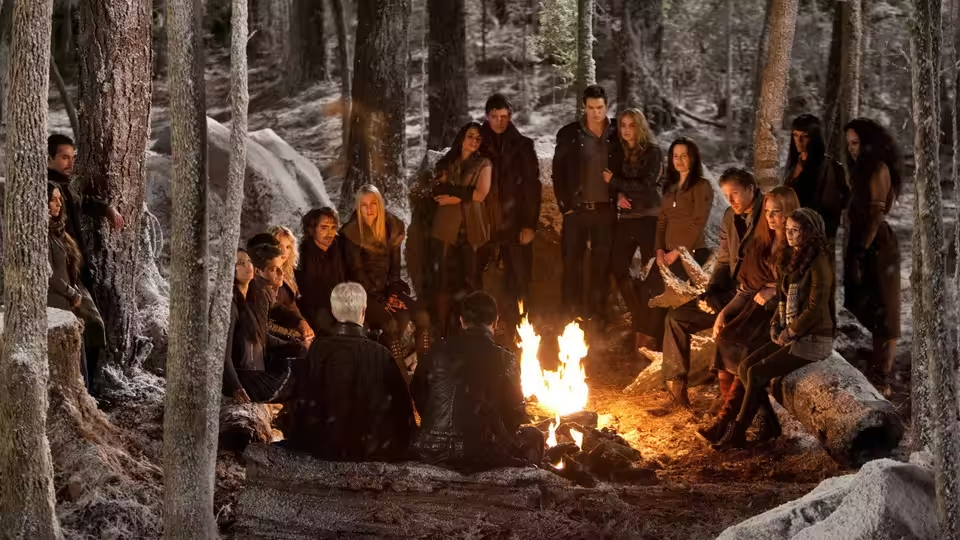
Guillermo Navarro shoots everything cold, in blues and greys and the white of overcast snow, and the clearing where the climax happens is lit flat so that black cloaks and red eyes read clearly against it. Richard Sherman’s cottage in the woods, all stone and candlelight, is the one place in the saga anyone might want to live. Michael Wilkinson puts the Volturi in black robes and the Cullens in creams and camel, and dresses each arriving clan by nation, so the Amazons, the Egyptians and the Romanians can be told apart at a glance, which the script needs because it has no other way of telling them apart. Carter Burwell brings back the piano theme he wrote for the first film and it still works; the rest of the score swells on cue. Virginia Katz and Ian Slater cut the middle hour as a procession of entrances.
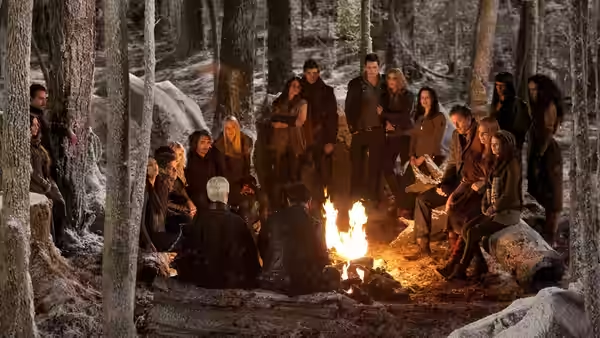
That hour is the problem. Melissa Rosenberg’s screenplay has to introduce perhaps twenty vampires who will stand as witnesses, and it does so one at a time, each with a name, a power and a sentence of attitude, like a set of trading cards being laid out on a table. Nothing happens to any of them until the end. Dakota Fanning’s Jane glares. Jamie Campbell Bower’s Caius sneers. The leader of the Volturi is the only performer who has grasped that this is a comedy, and his high, delighted laugh on first seeing the child got the biggest laugh of our evening too, from us and from the audience around us, and it was the right response.
The second half takes a turn we will not describe. What we can say is that the film holds back nearly all of its action for the last twenty minutes, and that readers of the book will be pleased with how it is handled. We were not, and that is as far as we will go.
Condon made Gods and Monsters (1998), about a man who built monsters for a studio and knew exactly what they were worth. He knows what this one is worth too: a finale that ends the story, gives the faithful what they came for, and asks nothing further of anyone. It runs 115 minutes and carries a 12A, and if you have sat through the previous four you should sit through this one, if only to see Bella stand up straight. If you have not, start somewhere else, or do not start.