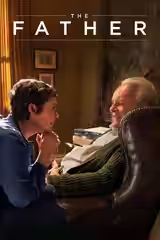
Brendan Fraser is tender and precise as a dying man in a flat, and Hong Chau is better still. Around them Darren Aronofsky has made a filmed play in which everyone shouts and the camera cannot stop staring at him.
Darren Aronofsky has spent his career on people wrecking their own bodies: the addicts of Requiem for a Dream, the wrestler, the ballerina. The Whale gives him his most literal case. Charlie (Brendan Fraser) is severely obese, teaches writing online with his camera switched off, and has been told by the one person who checks on him that his heart will give out within the week. Samuel D. Hunter has adapted his own stage play and the film keeps the play’s shape: one flat, a handful of visitors, a week of knocks at the door. It is sincere, it is often clumsy, and it has in Fraser and Hong Chau two performances better than the film around them.
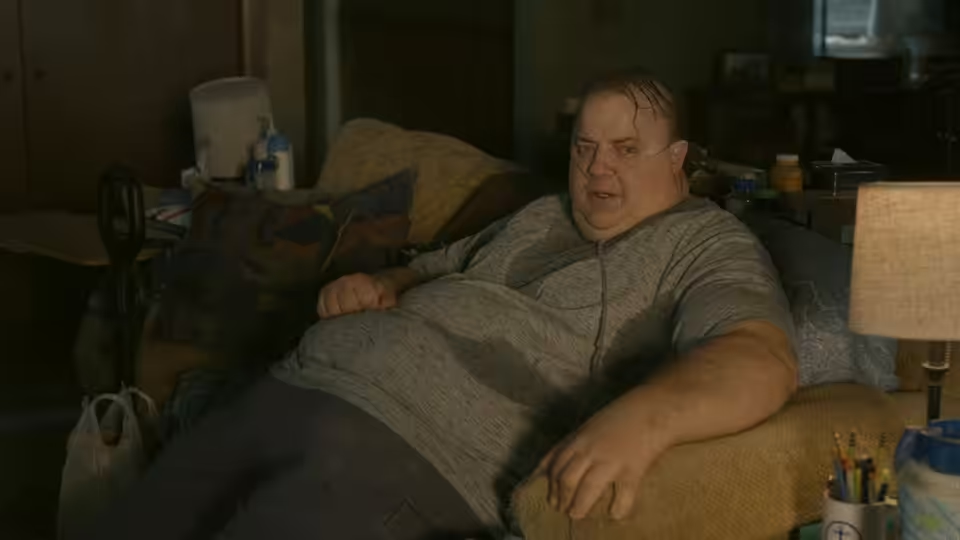
Fraser works under prosthetics that cover him to the neck, so what he has left is the eyes, the voice and a breath that catches before he tries to stand. He plays Charlie as a man who apologises for existing and means it every time. When Ellie (Sadie Sink), the daughter he has not seen in years, tells him he is disgusting, he agrees with her mildly, and it is not a bid for pity; he thinks she is right. The performance is small, patient and kind, and the kindness is the film’s one real idea. Fraser carries it more or less alone, and he does most of it from the sofa.
Chau’s Liz, the nurse who brings a sandwich and a blood-pressure cuff in the same visit, is the only person in the flat who behaves as somebody would. Chau plays her as furious and practical, a woman who has watched this before and has stopped pretending otherwise. Whenever she leaves, the film gets louder and worse. Her scenes with Fraser have the rhythm of old friends who ran out of tactful things to say years ago.
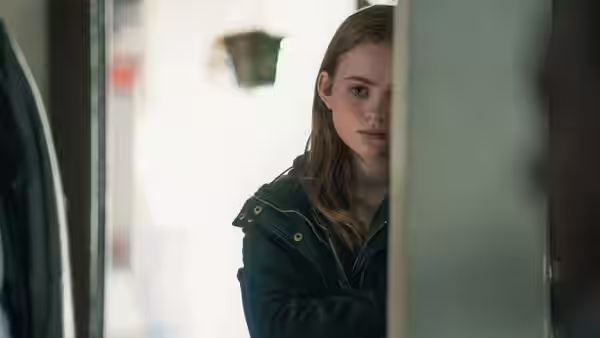
The trouble is the writing. Hunter’s script has come from the stage with its habits intact, so everybody arrives with a position and states it. Thomas (Ty Simpkins), the young missionary, is there to be argued with about God. Ellie is written as a monster whose cruelty the film insists is honesty; Sink plays what is on the page and has nowhere else to go. Samantha Morton’s Mary, Charlie’s ex-wife, gets one scene late on, and it is the best-written stretch in the film, two people who hurt each other talking about it quietly over a drink. It moved us more than we expected, because for ten minutes nobody was making a speech. Then the door goes again.
Matthew Libatique shoots in a nearly square frame, so the flat is always cramped and Charlie fills most of it, and he keeps the light low and grey with rain on the windows for most of the week. Robert Pyzocha and Mark Friedberg fill the flat with the detail of a place nobody has left in years: takeaway boxes, a walking frame, a grab rail by the sofa, books in every corner. Danny Glicker keeps Charlie in the same grey sweatshirt all week and puts Thomas in a white shirt too clean for the flat. This is careful work, and Aronofsky undoes much of it whenever Charlie eats. He shoots the meals with the lurching close-ups and thudding sound he used for heroin in Requiem for a Dream, and we flinched, and then noticed that the flinch was what the shot was for. We felt got at, and not in a way we respected. The camera pushes in on his mouth and stays there.
Rob Simonsen’s score swells under each confession to tell us how to feel, as though the actors had not already done it. Andrew Weisblum cuts the middle hour patiently, which suits the play. We will not describe the ending. We will say that it reaches for something the previous hundred minutes had not earned, and that we sat through it dry-eyed and slightly embarrassed on the film’s behalf. The last minutes are cut and scored like a hymn, and Simonsen’s strings are at their loudest there.
The Wrestler (2008) let Mickey Rourke’s battered body make its own case while the camera kept a respectful distance. Here the camera cannot stay back, and the film is worse for it. See it for Fraser, who has waited a long time for a part like this and does not waste it, and for Chau, who is the one person on screen you would want at your bedside. It runs 117 minutes and carries a 15.