Sebastián Lelio’s adaptation of Emma Donoghue’s novel is beautifully shot and anchored by Florence Pugh. It is also wrapped in a framing device that keeps tapping us on the shoulder, and the last half hour gives away much of what the first hour built.
The film opens not in Ireland but on a soundstage: scaffolding, lamps, plywood, and a woman’s voice (Niamh Algar) telling us that this is a film called The Wonder and that its people believe their stories completely. Then the camera finds a ship’s hold and a woman eating her dinner. It is a bold way in, and it tells you what Sebastián Lelio thinks his film is about: not whether a girl is eating but why a village needs her not to be. It is also a mistake.
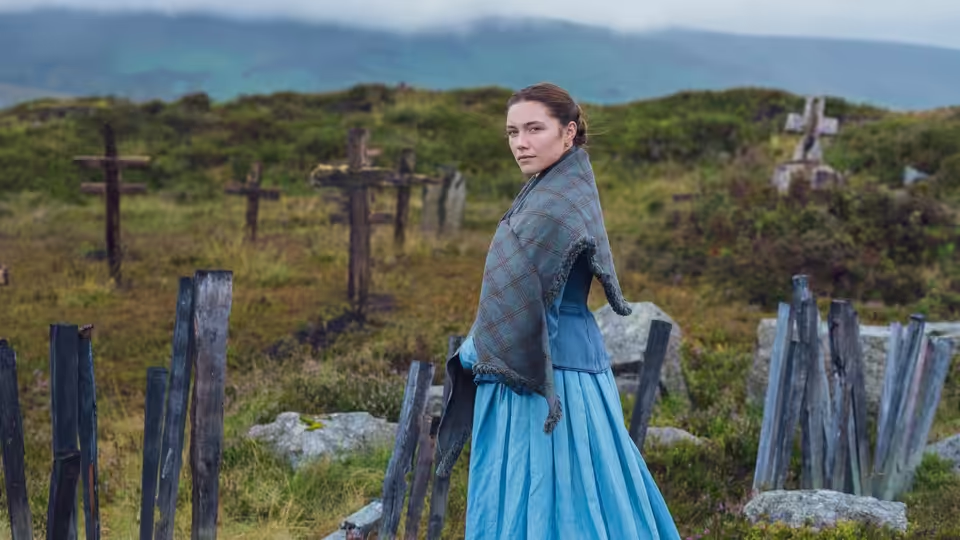
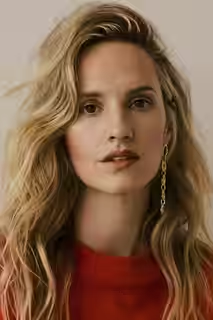
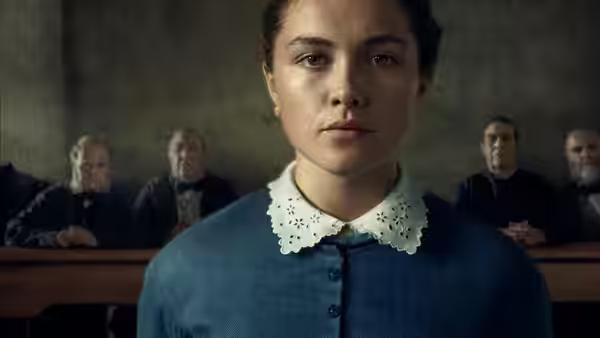
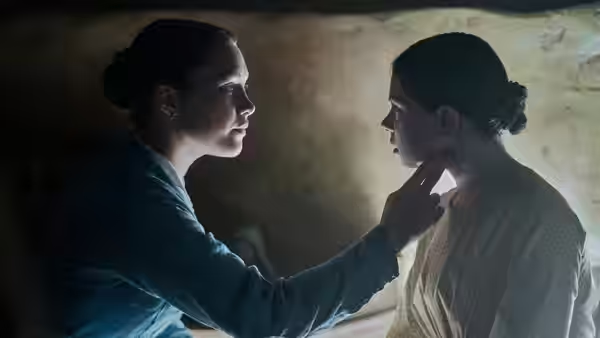
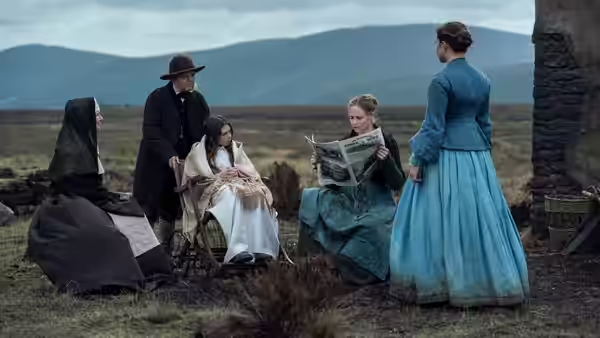
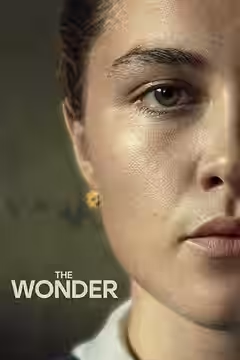
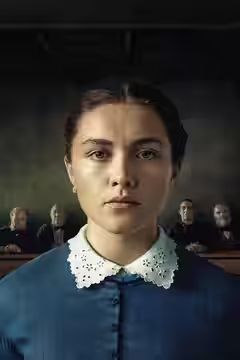
What follows for an hour is fine, cold, patient storytelling. It is 1862, the Irish Midlands, thirteen years after the famine, and Lib Wright (Florence Pugh), an English nurse, is hired to watch an eleven-year-old, Anna O’Donnell (Kíla Lord Cassidy), who says she has not eaten in four months. Pugh plays Lib with her chin set and her eyes doing the work. She trusts what she can measure, and Pugh shows how much of that is armour: alone at the inn she counts out drops of laudanum, pricks her finger with a needle, and eats. Cassidy is uncanny without effort, a child who recites her prayers as if they were a comfort nobody else in the house has.
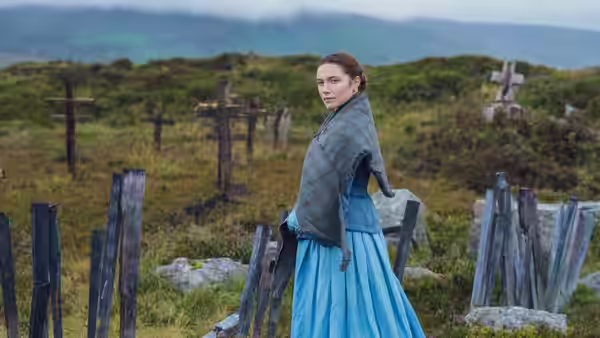
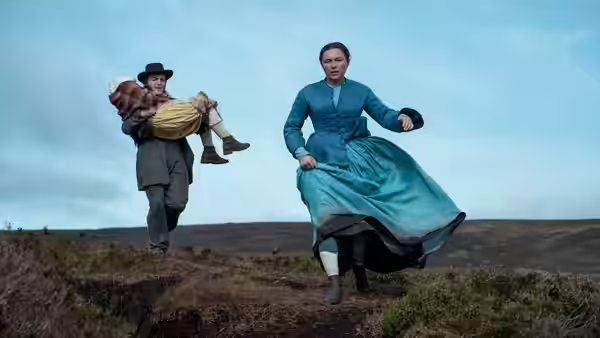
Ari Wegner shoots the bog and the sky in one flat, greenish grey, so that Lib’s deep blue dress is the only strong colour in the county. Grant Montgomery gives the O’Donnell cottage low ceilings and one small window, and the committee a long table with the men ranged along one side. Matthew Herbert’s score is mostly voices, breath and hums and a wordless choir that does not sound like church music, and it unsettles more than any image. Kristina Hetherington cuts the watching slowly and the meals sharply.
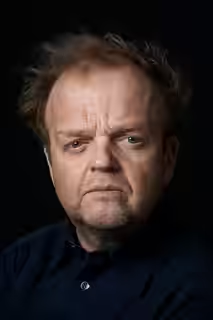
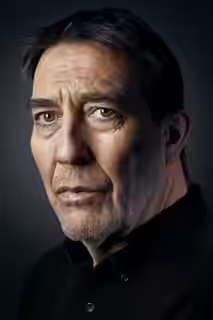
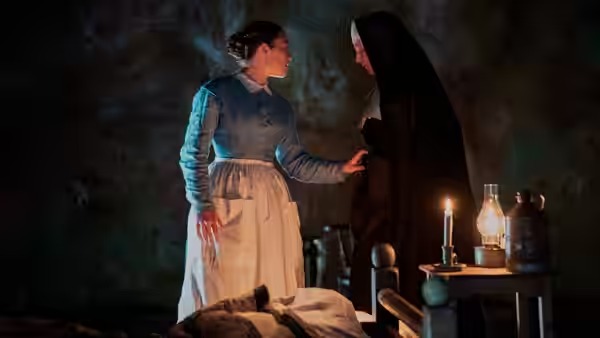
Around the two women, Lelio, Donoghue and Alice Birch have arranged a village. Toby Jones’s doctor wants the girl to be a scientific marvel and Ciarán Hinds’s priest wants her to be a saint, and neither will say so. Elaine Cassidy, as Anna’s mother Rosaleen, is the hardest figure to read, a woman whose love for her daughter and her faith in God look the same from outside. Tom Burke plays the journalist Will Byrne rumpled, clever and a little too pleased with both. Josie Walker’s Sister Michael takes the other shift and says almost nothing.
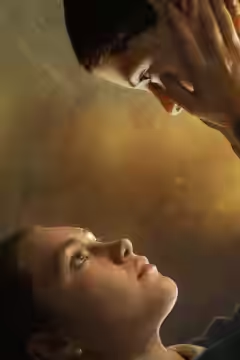
For most of that first hour we were properly gripped. We watched Anna as Lib watched her: the bedclothes, the mother’s kiss, the hands. Later, when Lib draws a conclusion and acts on it, the consequence is shown on Anna’s face and body, and Cassidy’s work in those scenes is the best thing in the film. It frightened us. The evidence arrives, and then the question is what a decent person does with it.
Then the framing device comes back. The film pauses more than once to remind us that we are watching a story, and each time the stillness it has worked for drains away. What was meant to say that everyone in this village lives inside a story reads instead as hedging, as if Lelio did not trust the plain version to carry the weight. The last half hour, which we will not describe, settles the mystery and the moral problem together, and we said, oh come on. The critics who have called it preposterous have a case; we would put it at convenient.
Two smaller caveats. The famine is present as a fact and an ache, but the film is not much interested in who caused it, and an English nurse arriving to talk sense to the Irish is a shape some viewers will find harder to swallow than the film realises. At 108 minutes it counts the days, and there are more days than there is incident.
It is worth your evening if Pugh is your reason, and she should be; this and Lady Macbeth (2016) are her best work. Watch it at home with the lights off, where Herbert’s voices come close and the soundstage matters less. Do not expect a wonder. Expect a good hour of watching, and then an argument.