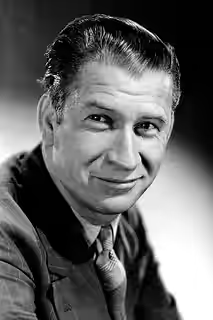
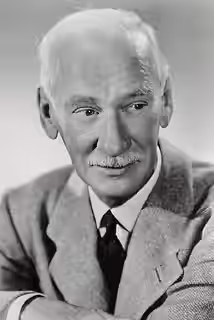
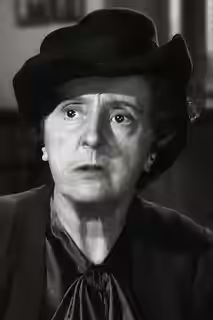
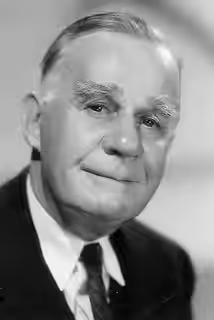
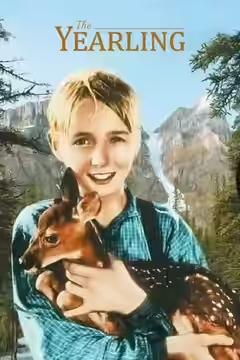
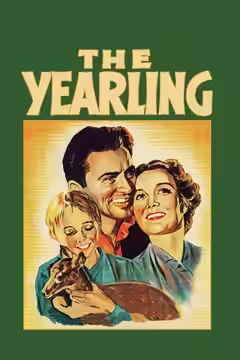
Clarence Brown’s film of Marjorie Kinnan Rawlings’s novel about a boy and a fawn in the Florida scrub is patient, handsomely shot and better acted than its reputation for tears suggests. Herbert Stothart’s score does not trust you to feel anything unaided.
Clarence Brown’s film of Marjorie Kinnan Rawlings’s novel covers roughly a year in a clearing in the Florida scrub, and it is about what that year costs. Ezra “Penny” Baxter (Gregory Peck) has brought his family out here to be left alone. His wife Orry (Jane Wyman) has buried children in the yard and does not intend to love anything else she might lose. Their son Jody (Claude Jarman Jr.) wants a pet. That is the whole engine, and Paul Osborn’s screenplay has the sense not to bolt on another.
It is good, and better than the reputation it has picked up as a weepie about a boy and a deer. The deer does not arrive for a long while. Before it does, Brown gives us the work of the place: Penny tracking the bear that has torn open his hog pen, the two of them hunting with dogs that are not much use, a trip to the store, a fight in the road. This is where the film is strongest, and it is also where you learn that the 128 minutes will not hurry for you.
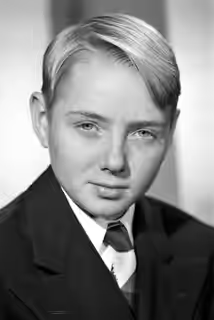
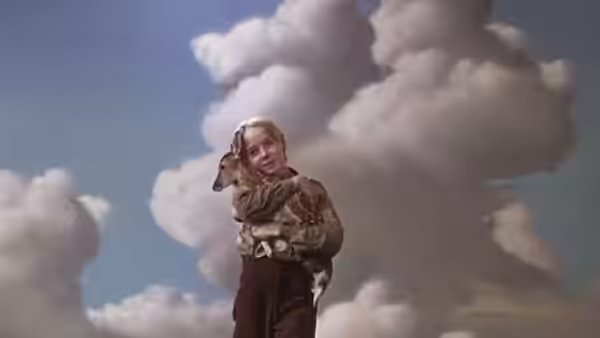
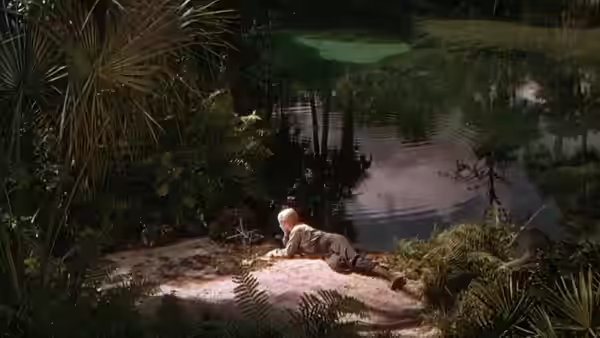
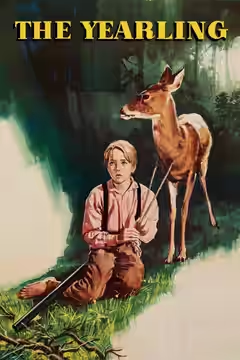
Jarman is the reason to see it. He does not act like a trained child actor, and we mean that as praise: he listens to Peck as if hearing the words for the first time, and when he is happy his whole body goes loose. There is a shot of him lying in the palmettos beside the fawn, talking to it, that Brown holds long past the point another director would have cut, and nothing in it is pushed. Some critics at the time thought the boy-and-fawn scenes edged into sentiment, and one or two do, but the fault is in what surrounds Jarman, never in him.
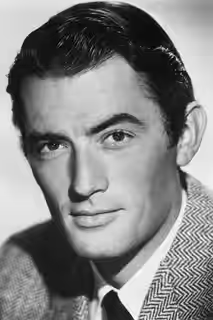
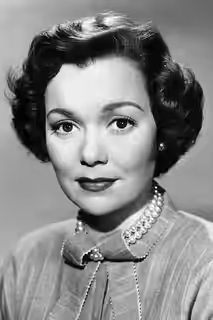
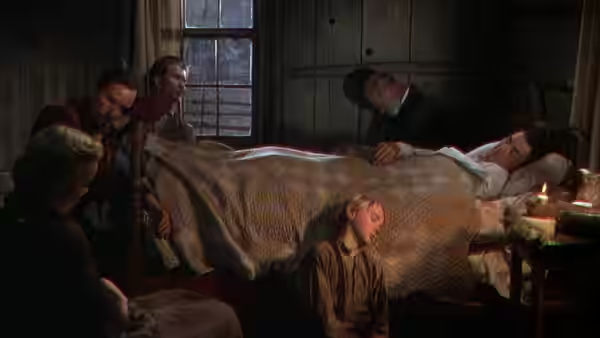
Peck plays Penny quiet and a little stooped, a small man’s part in a tall man’s body, and he is at his best when he is explaining something to his son and choosing which half of the truth to leave out. What we did not expect was to be got at by Wyman. Orry is written hard, all pursed lips and a ladle, and Wyman keeps her hard until a scene late in the first hour where she is asked to give an inch and does. What moved us was how frightened she looked doing it. The film is usually described as a father-and-son story. It is at least as much about the woman at the stove.
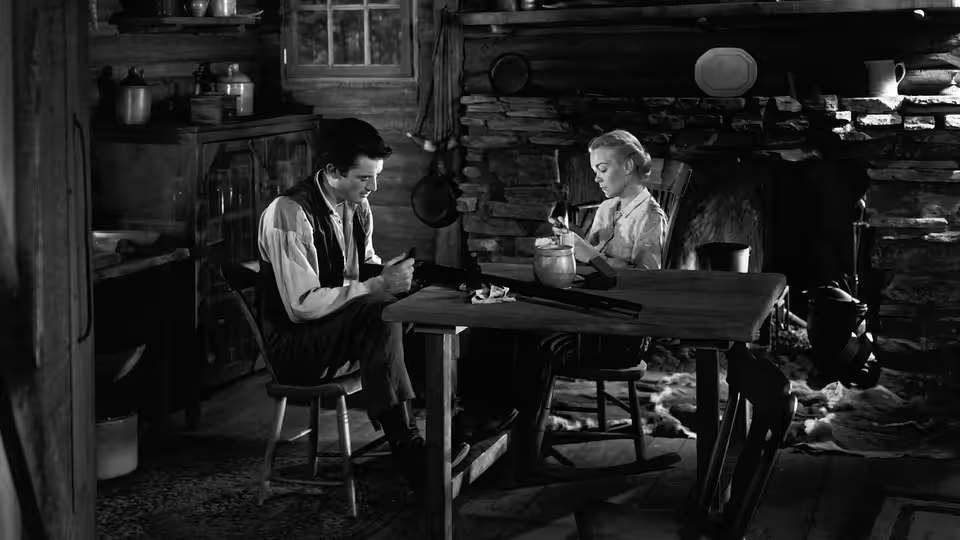
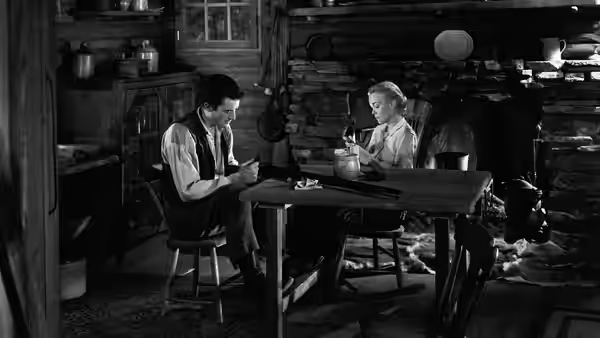
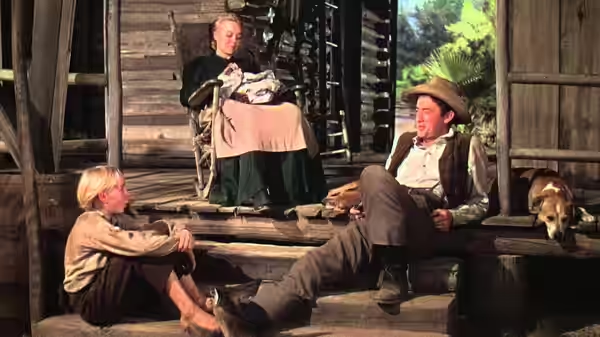
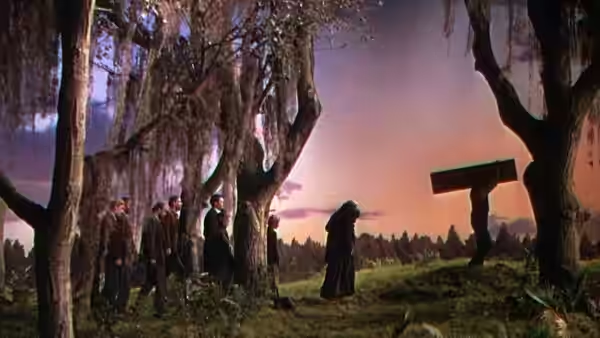
Three cinematographers are credited, Charles Rosher, Leonard Smith and Arthur E. Arling, and between them they shoot the scrub in a colour that is mostly sand and dusty green with the light coming in low, so the Baxters’ cabin always looks like late afternoon. The animals are photographed at their own pace, the fawn allowed to wander, the bear in real undergrowth. Arlington Valles keeps everyone in faded homespun and Penny in the same hat throughout, which is right for people who own one of everything. Harold F. Kress cuts the hunting sequences so you always know where the dogs are.
Herbert Stothart’s score is the film’s real flaw, and it is a large one. It swells under every tender look, turns each of Jody’s small delights into a choir, and in the scenes with the fawn it does the crying for you before you have decided whether to cry. Imagine the same scenes silent and they play as plain and true. We were irritated, and then we were irritated at being irritated by a film that was otherwise treating us like adults.
The Forresters up the road, Chill Wills, Forrest Tucker and Clem Bevans among them, with Margaret Wycherly as Ma, supply the rough comedy: a house full of large men who drink, sing and take offence. Donn Gift, as the frail boy Fodderwing who names the fawn, gives the film its second real child performance. Henry Travers has a scene or two as the storekeeper. The second half turns hard in a way we will not describe, except to say that Brown, who made National Velvet two years earlier, does not this time let the story off lightly.
Watch it with a child if you like, but do not leave them alone with the last half hour. They may have questions, and Stothart will not answer them for you.