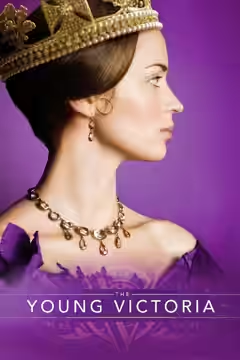
Emily Blunt and Rupert Friend make this royal courtship worth an evening. The family quarrels have some bite, but the politics and supporting characters are too neatly managed to trouble an otherwise pleasing romance.
Jean-Marc Vallée’s The Young Victoria is an agreeable royal romance, carried by Emily Blunt and Rupert Friend, and rather less persuasive when it asks us to worry about power. Julian Fellowes gives Victoria plenty of people to resist, but the film is reluctant to let that resistance become seriously uncomfortable. There is pleasure in watching a young woman insist on her own wishes. The romance deserves the attention it gets; some of the other characters could have used a little more.
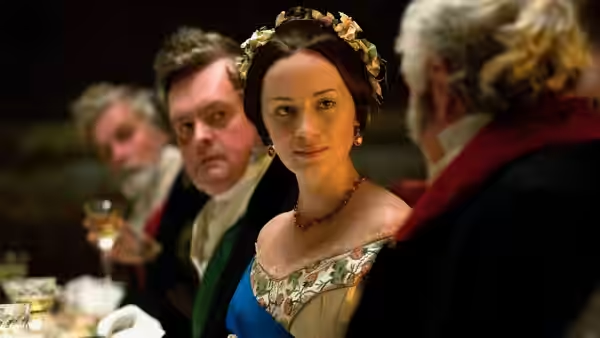
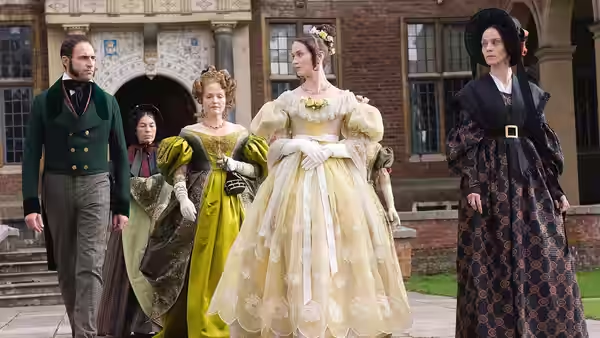
Emily Blunt supplies the necessary stubbornness without making Queen Victoria seem ready-made for the throne. Her restraint works because it suggests effort: this is a young woman trying to keep her impatience presentable. We felt angry on her behalf during the conflicts with her mother and Sir John Conroy, whose pressure leaves so little room for her own wishes. Miranda Richardson and Mark Strong give her something definite to resist, and these family quarrels are among Julian Fellowes’s most effective material.
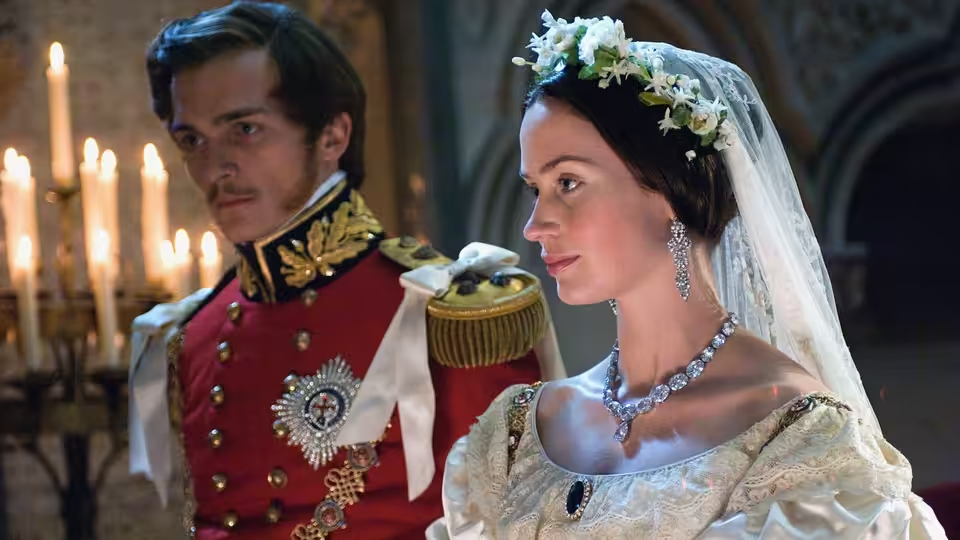
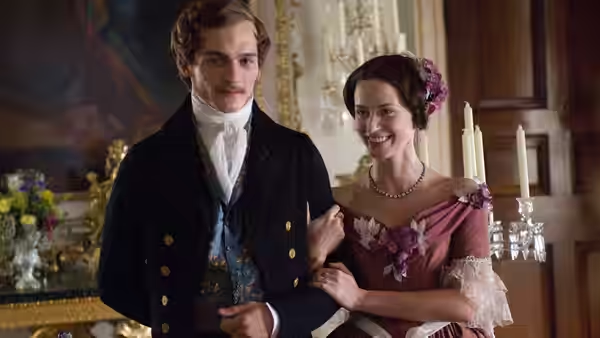
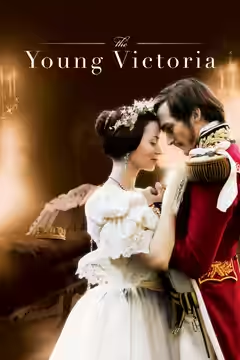
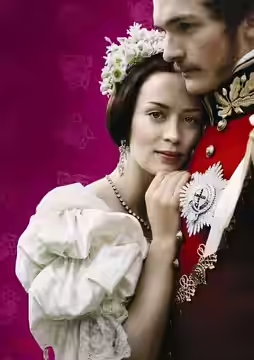
With Prince Albert, the film becomes easier company. Rupert Friend makes the attraction to Emily Blunt believable without straining for a grand passion that would leave everyone else looking underemployed. Their mutual interest feels persuasive, and the formality does not prevent warmth from coming through. Julian Fellowes gives Albert less room to develop than Victoria, however, and a change in his manner feels imposed by the script rather than earned by what we have seen. That unevenness matters because the romance asks us to take both people seriously.
Paul Bettany gives Lord Melbourne a welcome suggestion of calculation, making his intelligence attractive and faintly suspect. He makes us curious about what Melbourne wants, which is more than some of the supporting characters manage. Elsewhere, Julian Fellowes is too willing to let a person be understood at a glance. There are competing wishes here, but the writing seldom allows them to become as interesting as Victoria’s courtship.
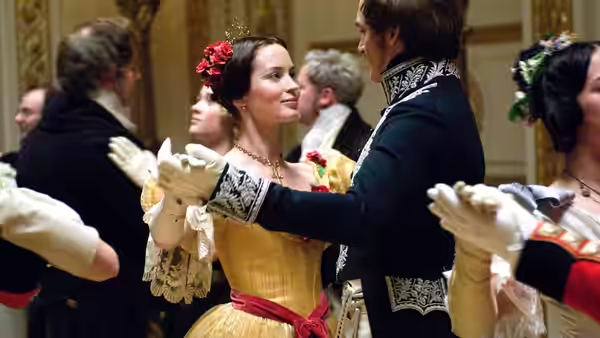
Hagen Bogdanski’s framing helps keep Emily Blunt visible as a person rather than a royal portrait. The images have the requisite formality, but the faces remain worth watching amid the finery. Patrice Vermette’s production design makes privilege look comfortable, perhaps more comfortable than this story needs. Sandy Powell’s costumes contribute to the sense of propriety the actors must work through, although Jean-Marc Vallée sometimes seems too content to let the clothes and surroundings hold our attention when the drama slackens.
Editors Matt Garner and Jill Bilcock keep the story manageable within 105 minutes, though the supporting characters suffer from how quickly their business is settled. A little more time with them might have made the court feel less conveniently arranged around its heroine. Ilan Eshkeri’s music gives the romance welcome warmth, but occasionally makes the intended response too obvious. The attraction between Emily Blunt and Rupert Friend is strong enough to need less encouragement.
A costume romance does not have to embarrass its characters to make their feelings believable. Emily Blunt and Rupert Friend are persuasive within the film’s reserve, and we would gladly have spent longer with them. Choose it for the couple, and do not expect the politics to keep pace.