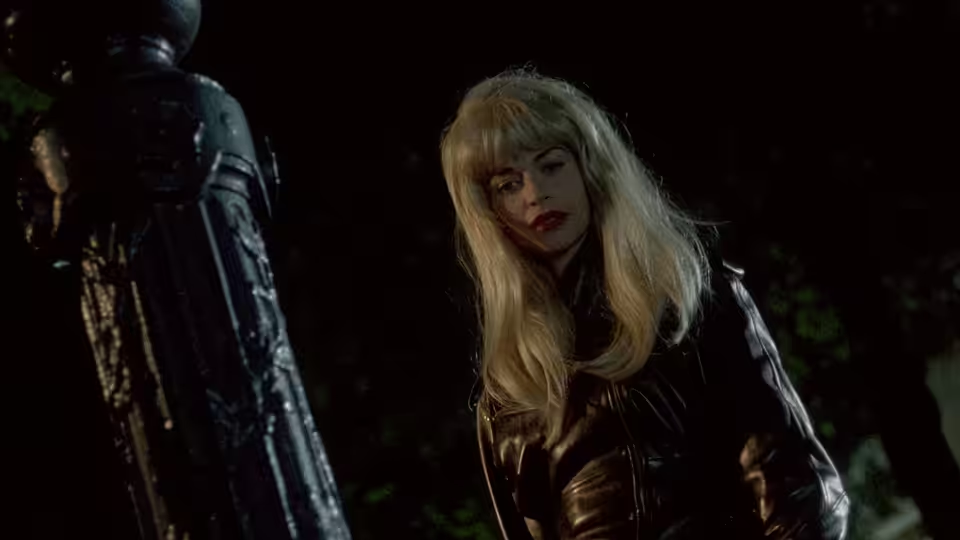
Raúl Ruiz’s comedy of shifting identities gives Marcello Mastroianni four roles and plenty of room to be funny. It is an inviting puzzle with a playful lead, though 123 minutes gives its complications more time than they need.
Three Lives and Only One Death is good, peculiar entertainment, provided an evening of uncertainty sounds appealing. Raúl Ruiz mixes comedy, crime, fantasy and mystery, with Marcello Mastroianni taking four roles and giving us good reason to follow him through the complications. It is funny and approachable, although it asks for more time than its pleasures quite justify. The chief reason to stay is Mastroianni, who treats the strangeness with an appealing lack of fuss.
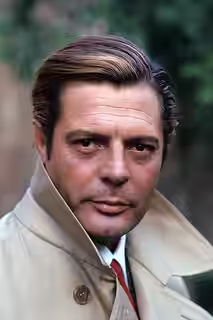
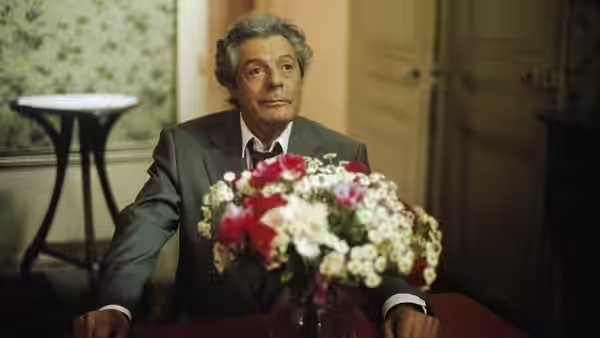
Mastroianni plays Mateo Strano, Georges Vickers, Butler and Luc Allamand, and the performance could easily have become an exercise in displaying his versatility. Instead, the pleasure comes from his bemused composure as the roles and realities shift. We laughed at how little he seems to need our agreement that any of this is reasonable. His playful approach gives us someone to enjoy watching, and keeps the effort of following the film from becoming the only thing we notice.
Ruiz writes with Pascal Bonitzer, and their mixture of genres leaves room for uncertainty about how seriously to take what we are watching. A crime film ordinarily makes us attentive to connections; a fantasy can make that same attention feel slightly foolish. Here, the uncertainty is often funny, particularly because Mastroianni seems so comfortable within it. Ruiz is good at inviting curiosity without making the whole enterprise feel like a test, although curiosity alone cannot carry every minute of a feature.
Laurent Machuel handles the cinematography, Luc Chalon the production design and Jorge Arriagada the music. Our attention keeps returning to Mastroianni, whose manner gives us something consistent to follow amid the shifting roles. That emphasis suits the comedy, though it also means that the film depends heavily on how much pleasure we take in watching him work. Once his bemusement becomes familiar, the surrounding intricacy has to provide more of the entertainment.
The reservation is length. At 123 minutes, the film gives us ample opportunity to appreciate its ingenuity, and then rather more opportunity to keep appreciating it. Rudolfo Wedeles’s editing does not quite prevent that pleasure from thinning as we become accustomed to the changes of identity. We wanted a firmer sense of selection, particularly when the enjoyment of Mastroianni’s performance began giving way to an awareness of how long we had been watching it.
For a mystery, this puts considerable weight on our willingness to follow a performer without continually checking our understanding of the story. The approach makes it worth seeking out for Mastroianni’s playfulness, with the warning that an appetite for tidy plotting is unlikely to help. Its humour makes the wandering enjoyable, but some of that wandering could have been spared without losing what makes the film distinctive. Choose it when four Mastroianni roles sound more attractive than the prospect of getting everything straight.