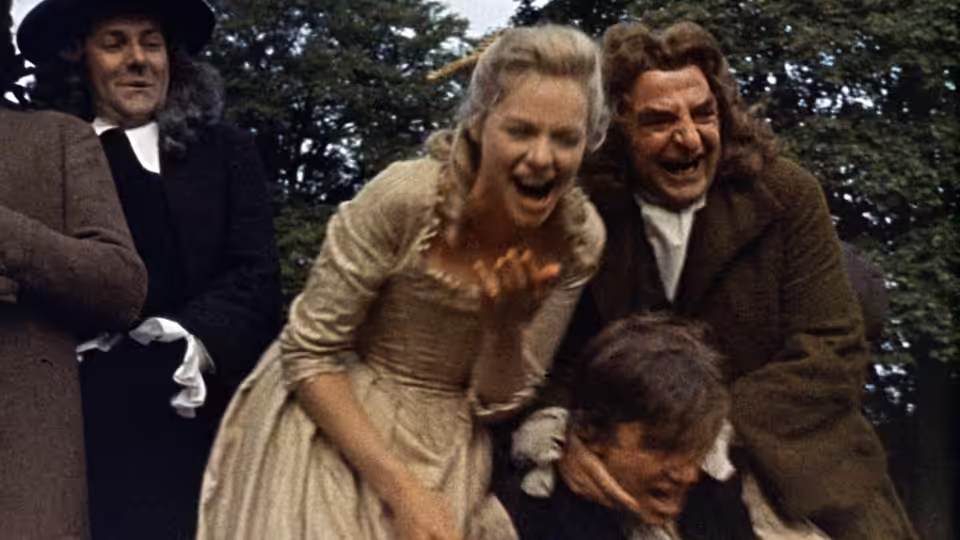
Tony Richardson takes Fielding’s 1749 novel and films it as though the eighteenth century were a party he had just crashed. It is lively, often funny and beautifully lit by Walter Lassally, and it runs out of puff in London.
Tony Richardson had spent four years filming bedsits: Look Back in Anger, A Taste of Honey, The Loneliness of the Long Distance Runner. Then he and John Osborne, who wrote the angriest of those plays, took Henry Fielding’s 1749 novel about a foundling who cannot keep out of other people’s beds and made the noisiest costume film of its decade. It is a good one. It is funny, handsome and full of life for ninety minutes, and then it goes to London and slows to a walk, so that 128 minutes feel like rather more.
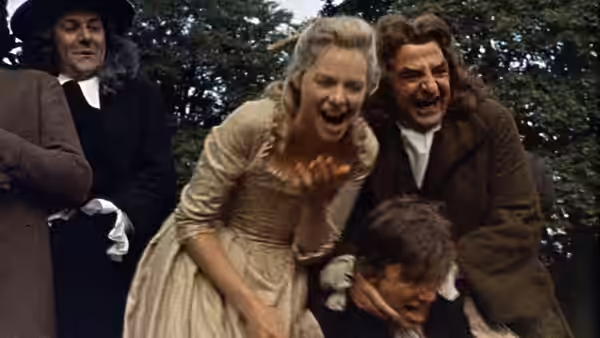
The idea is to film the eighteenth century as if nobody had told the cast it was over. Richardson opens with a silent-comedy prologue, intertitles and all, with John Addison’s harpsichord rattling underneath. After that come wipes, freeze frames, chases run at double speed and a narrator who keeps interrupting. Albert Finney turns to the camera to complain about a woman, and at one point puts his hat over the lens. Antony Gibbs cuts it fast and loose. For an hour this is a pleasure, because the book is a shaggy, digressive thing and the film has found a way to be shaggy back. After that it is a habit.
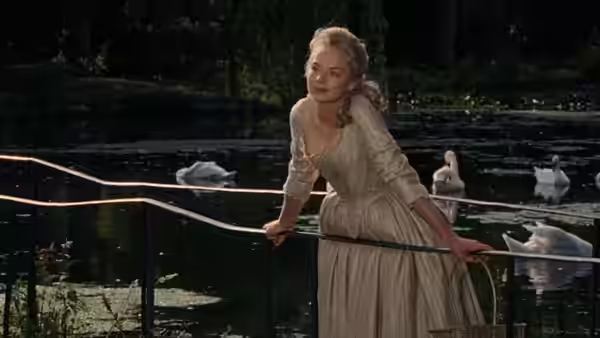
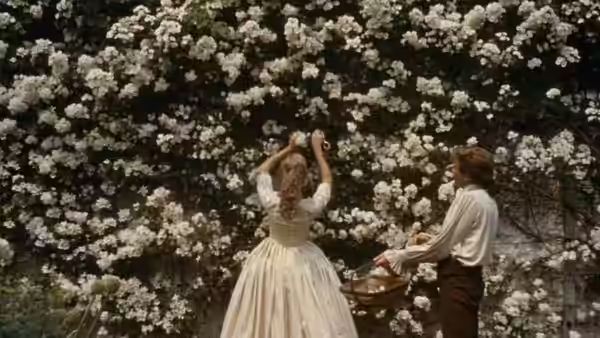
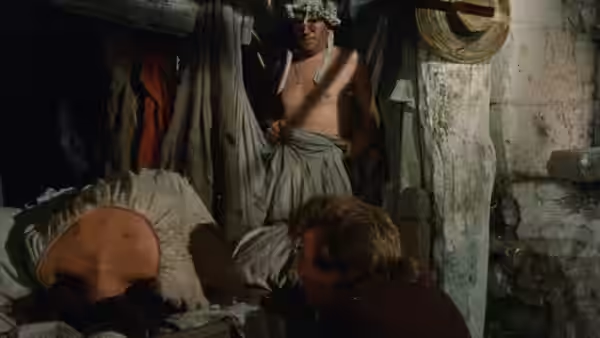
Walter Lassally is the reason it is not merely a stunt. He shoots real Somerset houses in what looks like real daylight, so the rooms are dim, the fields are muddy and the colour sits somewhere between a watercolour and a wet dog. Ralph W. Brinton’s production design leaves the dirt in, and John McCorry’s wigs sit crooked on hot heads. Then comes the hunt, shot from horseback with a hand-held camera, hounds and horses and men going flat out across the country and a stag brought down at the end of it. We were shaken, and we did not see it coming. The comedy stops for five minutes and the century looks like what it was, cruel and loud and enjoying itself.
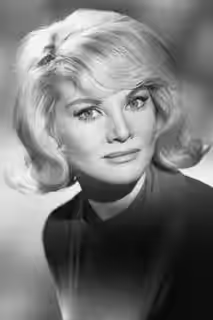
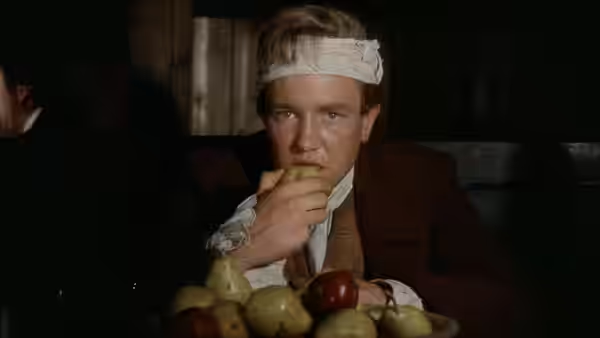
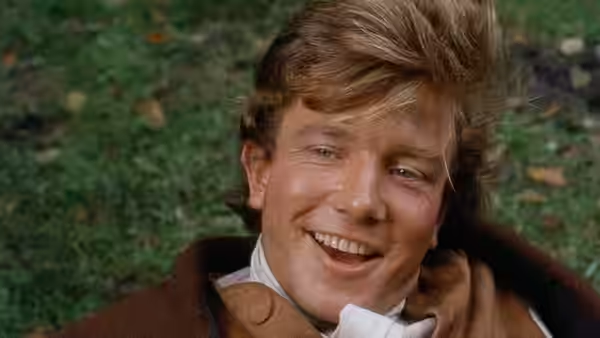
Finney plays Tom as a man who means well every single time, and he is so likeable that the film never has to argue his case. His best scene is at the inn at Upton, where he and Joyce Redman’s Mrs. Waters sit across a table and eat at each other: oysters, a chicken leg, a pear, no dialogue, faces doing all of it. Richardson, for once, stops cutting and lets it run. We laughed out loud, then laughed again at how long it went on. Diane Cilento’s Molly Seagrim is warm and dirty-kneed early on, and Lynn Redgrave gets a good few minutes as a maid at the same inn.
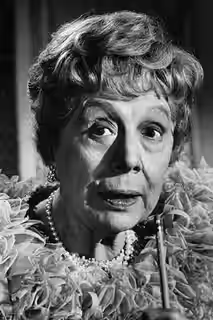
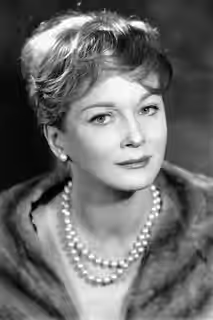
Around Finney the cast know exactly how big to play. Hugh Griffith’s Squire Western is the largest: purple, drunk, roaring at his dogs and falling off things. Edith Evans, as his sister, purses her lips at the whole county and gets a laugh every time she opens her mouth. Susannah York has the hardest job, playing the one sane person, and does it with a straight back and a good deal of patience. David Warner’s Blifil is a thin, pious sneak, and Joan Greenwood arrives late as Lady Bellaston and purrs every line.
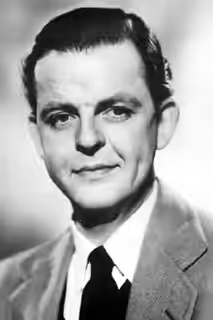
London is where it goes wrong. Fielding’s last third is thick with plot, and Osborne keeps most of it: Lady Bellaston, David Tomlinson’s Lord Fellamar, a masquerade and a duel. A film that had been leaping from field to field now has to explain things, and the tricks that carried the country scenes cannot carry exposition. Some critics writing since have called the film dated. We would put it another way: the jokes have held up and the camera has not. A speeded-up chase was daring once; now it is the part you sit through.
Beside Richardson’s own kitchen-sink films this is the one with the most life in it, and beside most costume pictures it is one of the few where anyone looks as if they might sweat. Watch it for the first hour and a half and forgive what follows. And do not eat first.