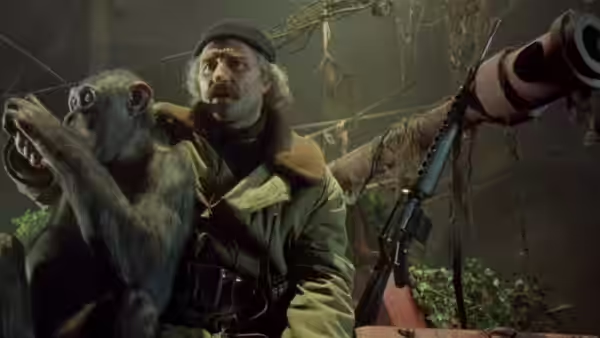
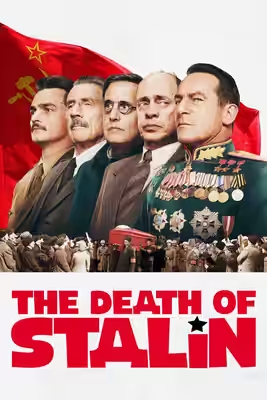
a man in a beret with a monkey on his shoulder beside a large gun
Film review

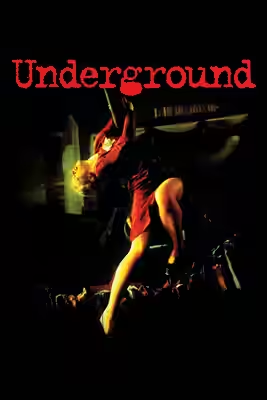
Underground

1995 · Directed by Emir Kusturica · 2h 50m

In a sentenceThe slapstick earns its laughs, but 170 minutes is a long time to be shouted at

Underground follows Marko Dren (Predrag ‘Miki’ Manojlović), Petar ‘Crni’ Popara (Lazar Ristovski) and Natalija Zovkov (Mirjana Joković) across decades of Yugoslavian history. War and political deception shape a story in which ideas of heroism meet slapstick, black comedy and suffering. Slavko Štimac plays Ivan Dren, with Ernst Stötzner as Franz and Mirjana Karanović as Vera. Emir Kusturica directs from a screenplay co-written with Dušan Kovačević. The film moves between comedy and war drama as it considers the lies people accept and the damage they do.

Plays from YouTube when you press play; nothing loads from them until then.

Fi1m review

Emir Kusturica’s Underground has enough black comedy and forceful staging to reward a patient viewer. Its 170 minutes also contain too much repetition, and its people often struggle to matter as much as its spectacle.

Emir Kusturica’s Underground asks how people live with political lies, and how readily they help to keep them going. It approaches decades of Yugoslavian history through war, black comedy and absurdity, with little interest in behaving like a sober historical account. We recommend it cautiously, for the humour and the elaborate staging rather than any particular clarity about the history. At 170 minutes, it asks for more patience than its story always earns.

The screenplay by Dušan Kovačević and Kusturica is strongest in its black-comic subplots, where deceit produces situations worth watching rather than merely condemning. Slapstick gives the film a useful way of making heroic behaviour look ridiculous. We laughed at the broad physical comedy, then grew weary of how insistently the film returned to the same pitch. A joke can remain funny while the sequence containing it begins to drag, and that happens too often here.

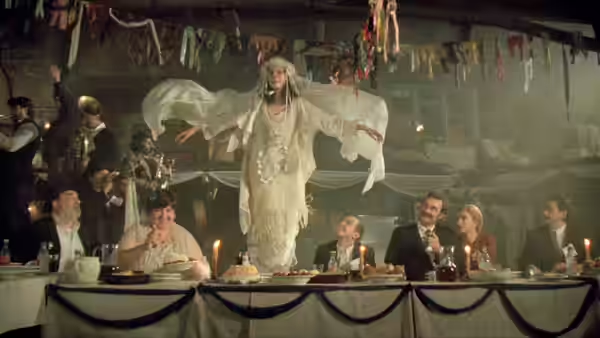
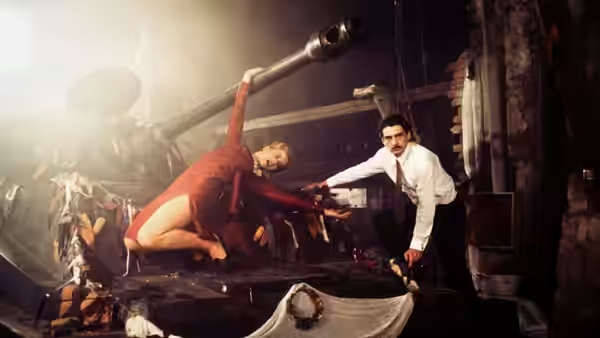
Vilko Filač’s cinematography helps make the elaborately staged action absorbing even when the wider story is difficult to follow. There is pleasure in watching so much activity organised within an image, and Kusturica has the confidence to sustain these crowded passages. Miljen ‘Kreka’ Kljaković’s production design supports the action on a scale that suits the director’s appetite for excess. The trouble comes when looking at everything becomes more rewarding than following what anyone is doing, which is a recurring problem rather than an occasional distraction.

Branka Čeperac’s editing faces the difficult task of managing that much incident across a long running time. Individual passages have momentum, but their accumulation does not give the whole film a satisfying pace. Goran Bregović’s music suits the boisterousness, although its contribution is less helpful when we need some distance from the commotion. There are stretches when another surge of energy is precisely what the film does not need, and the editing gives us too little relief between them.

The cruel jokes make human weakness recognisable, and their ugliness sometimes makes the suffering harder to dismiss. Those moments give the comedy a seriousness that its noisy delivery can initially disguise. Elsewhere, the people become difficult to care about because they are being pushed through so much exaggerated behaviour. Kovačević and Kusturica keep political delusion in view more reliably than they sustain our interest in the individuals caught up in it.

War comedy does not owe us good taste, and we would not want this one tidied into respectable solemnity. Kusturica’s willingness to risk being abrasive is part of what makes the film worth considering, particularly when the humour makes heroism look foolish. What we want is a sharper sense of when a joke has done its work and when a person needs something beyond another grotesque flourish. Several of the longer passages would benefit from stopping before their energy turns into repetition.

Give Underground an evening of its own rather than trying to fit it around something else. The caveat is not simply its length: an appetite for unruly comedy matters more than a willingness to sit still. If the attraction is a clear account of Yugoslavian history, choose another film.

Critical consensus AI synthesised

71
Positive
6
Mixed
2
Negative
2

Most critics like Underground, and the praise gathers around the same things: the scale and energy of Kusturica’s staging, the circus-like set-pieces, and the way lowbrow slapstick sits beside an allegory about Yugoslavia’s political self-deception. Several describe it as sprawling and feverish, a comedy with real pain underneath, and more than one singles out the final sequence as the point where the humour and the sorrow finally meet.

The reservations cluster around length and purpose. Even admirers concede that three hours leave the viewer worn out, and the sceptics go further. Empire finds it rambling and increasingly hard to follow after a strong opening, Time Out cannot work out what the allegory is for, and The Independent calls it wilful and short on feeling for its people. The spread is wide, from wholehearted enthusiasm to outright irritation, and the sharpest dissent comes largely from the British press.

Los Angeles Times
30 January 1998
90*

The critic finds it a sprawling, rowdy, vital film laced with outrageous absurdist dark humor and unspeakable pain, a dazzling epic allegory that sustains passion and sorrow across decades of Yugoslavian history.

Read the full review →
Slant Magazine
21 December 2003 · Ed Gonzalez
90*

The critic hails the film as the most important of the last 25 years and a sweltering, morally inquisitive work of political fiction that laments humanity’s propensity for self-destruction. He singles out its deliriously metaphorical blend of lowbrow slapstick, sophisticated war commentary, and magical realist elements for particular praise.

Read the full review →
The New York Times
20 June 1997 · Janet Maslin
90*

The critic describes a wild, sprawling feverish whimsical allegory with a devastating central idea about political delusion and the fate of Yugoslavia, praising its robust tale, bursts of humor, and magnificent ending that melds tragedy with optimism.

Read the full review →
The Times
25 March 2016 · ★★★★☆ · Kate Muir
90*

The critic hails Kusturica’s film as his masterpiece, a hallucinogenic comic romp through Yugoslavia’s troubled history. She singles out its surreal, circus-like portrayal of the repetitive insanity of conflict for particular note.

Read the full review →
Variety
30 May 1995 · festival review · Deborah Young
70*

The critic calls it a three-hour steamroller circus that leaves the viewer dazed and exhausted but mightily impressed, with energy and a condemnation of communism and war making it emotionally engaging at Cannes.

Read the full review →
The AV Club
29 March 2002 · Joshua Klein
60*

The critic calls the film a bizarre, often repellent anti-war parable that takes too long to state the obvious but hits scattered high notes along the way. He singles out the surreal atmosphere and Lubitsch-like black comedy subplots for praise while criticizing the shrill tone, annoying characters, and excessive length.

Read the full review →

Straight answers AI written, from our review

Is Underground worth watching?
Underground is worth watching for anyone with an appetite for unruly black comedy and elaborate staging, and we scored it 66. Emir Kusturica's slapstick earns its laughs and the crowded action is absorbing, but 170 minutes brings too much repetition, and the people matter less than the spectacle. Anyone wanting a clear account of Yugoslavian history should choose another film.
How long is Underground, and what is it rated?
Underground runs 2h 50m. It is a comedy and drama film.
Where can I watch Underground in Chile?
Underground is not on any streaming or rental service in Chile at the moment. It is available in 3 other countries; change your country at the top of the page to see where. Availability is checked daily.
How violent or frightening is Underground, and is it suitable for children?
Underground carries a UK 15 certificate and is not suitable for children. It is a war comedy that deals in cruel jokes, political deceit and suffering, and its grotesque humour is deliberately abrasive rather than gentle. Older teenagers who can take black comedy about war will manage; the squeamish and anyone expecting good taste may find it hard going.
How does Underground compare to To Be or Not to Be?
Underground and To Be or Not to Be both find wartime comedy in deception, but Ernst Lubitsch's film is the tighter and better controlled of the two. Kusturica's is louder, longer and more excessive, and its people struggle to matter as much as its staging. Choose the Lubitsch for sharp farce and the Kusturica for sprawling, abrasive black comedy.
What should I watch after Underground?
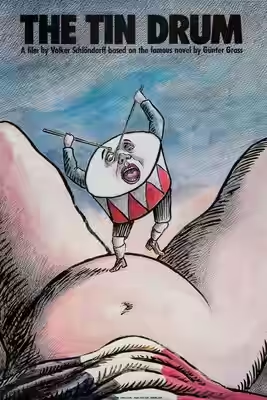
After Underground, try The Tin Drum (1979, Fi1m 78): Another unruly wartime satire, with grotesque comedy and an awkward historical conscience. Then To Be or Not to Be (1942, Fi1m 87): Actors confront wartime danger through deception, with far tighter control of the farce; and The Death of Stalin (2017, Fi1m 83): Political terror and personal vanity make vicious comedy, without the sprawling running time.

Cast

Awards

International Submission to the Academy Awards, 1996

Nominated
International Submission to the Academy Awards

Lumière Award for Best Foreign Film, 1996

Won
Lumière Award for Best Foreign Film

Cannes Film Festival, 1995

Won
Palme d'Or

If you liked this, try…

  1. The Tin Drum (1979, Fi1m 78)Another unruly wartime satire, with grotesque comedy and an awkward historical conscience.

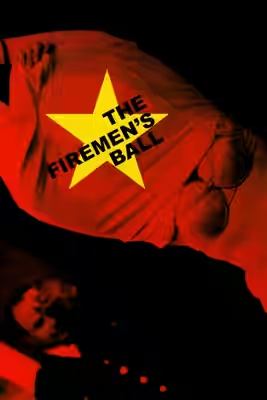
  2. The Firemen's Ball (1967) · not reviewed yetA smaller, drier political farce in which collective incompetence becomes painfully funny.

  3. To Be or Not to Be (1942, Fi1m 87)Actors confront wartime danger through deception, with far tighter control of the farce.

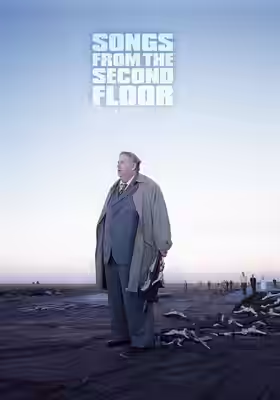
  4. Songs from the Second Floor (2000) · not reviewed yetFor more surreal social despair, delivered through stillness rather than constant commotion.

  5. The Death of Stalin (2017, Fi1m 83)Political terror and personal vanity make vicious comedy, without the sprawling running time.

Free account

Know what to watch tonight

Two lists that know where things are streaming, collections you can share, your own score beside ours, and Discover that remembers what you have seen.

  • Want to see, sorted by what is streaming now
  • Seen, with your score out of ten
  • No adverts, ever