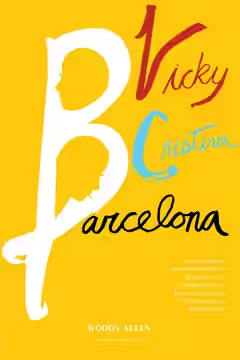
Woody Allen’s Spanish holiday is pleasant, sunlit and a little lazy, a film that tells us its characters’ feelings in voiceover rather than staging them. Then Penélope Cruz walks in, shouting, and for half an hour it is properly alive.
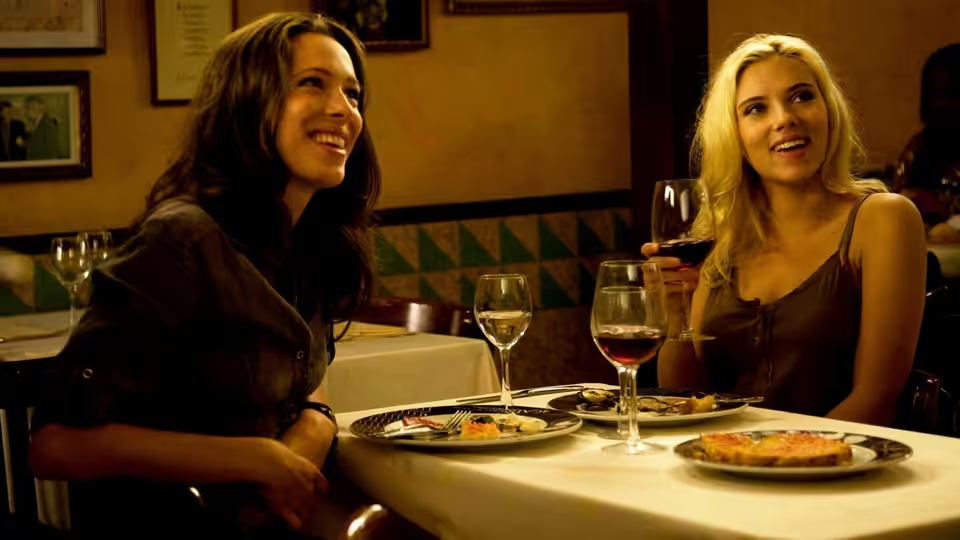
Two young American women land in Barcelona for the summer. Vicky (Rebecca Hall) is engaged, orderly and writing a thesis on Catalan identity; Cristina (Scarlett Johansson) has just finished a short film she despises and wants something she cannot put a name to. A painter, Juan Antonio Gonzalo (Javier Bardem), crosses a restaurant to invite them both to Oviedo for the weekend, to see the sights, eat well and, he hopes, share a bed. Woody Allen’s film is about what each woman does with that invitation. The consensus is that it is a pleasant, sunlit, slightly lazy 96 minutes that comes alive when Penélope Cruz is on screen and coasts when she is not.
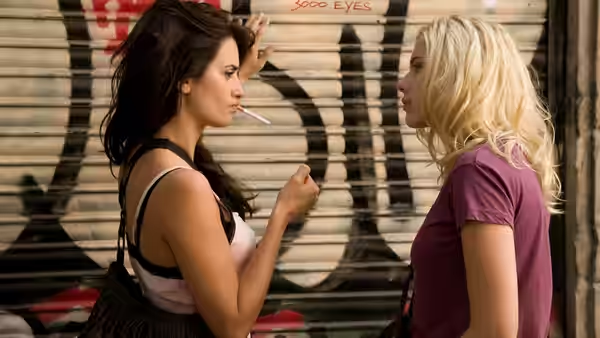
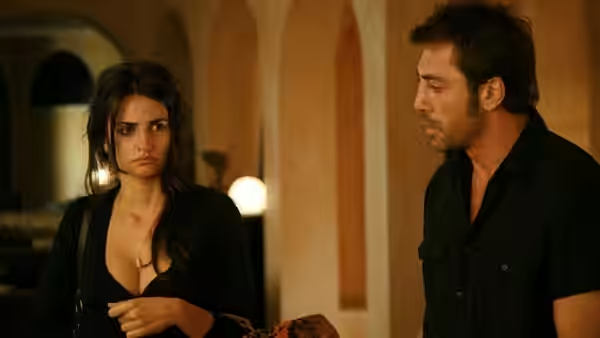
Bardem plays Juan Antonio as a man who has decided that saying exactly what he wants is a form of good manners, and he makes his proposal in the voice most men use to order wine. His ex-wife María Elena (Cruz) is spoken of long before she is seen, and a knife is usually part of the story. When she arrives, dropped into his house in the middle of the night and furious in two languages, we sat up. We had settled into the film as something warm to have on; from that scene we were awake, and we stayed awake. Cruz plays contempt and adoration in the same breath, switches into English mid-sentence whenever she wants to be understood, and pays Johansson compliments that are plainly meant to wound.
Hall is the best of the Americans. Vicky is written as the sensible one, and Hall shows a woman arguing with herself and losing, in small movements of the jaw while Juan Antonio talks and she pretends not to listen. Johansson has the harder job and less to work with. Cristina is defined entirely by what she does not want, and the script never gives her wanting a shape, so she spends the film looking lovely and waiting for something to happen to her. Chris Messina’s Doug, the fiancé, is a punchline in golf clothes. Patricia Clarkson, as the hostess Judy Nash, gets one good scene about her own marriage and plays it with more regret than the film knows what to do with.
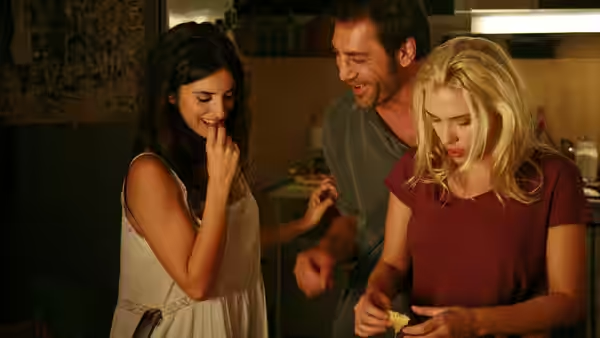
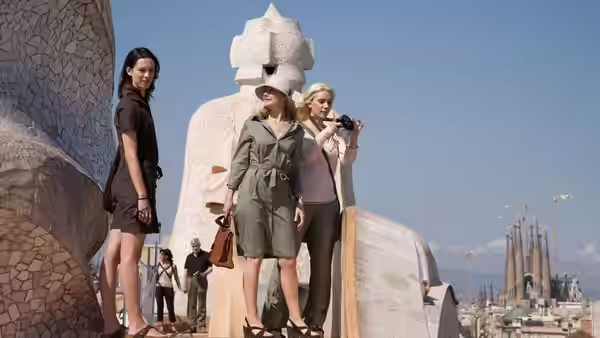
Javier Aguirresarobe shoots Barcelona in amber, as if it were always the last hour before dinner. The Gaudí facades glow and the city looks like the brochure Vicky is pretending to study. Alain Bainée gives Juan Antonio a house of stacked canvases, paint-crusted tables and a kitchen big enough to fight in. Sonia Grande puts Cristina in loose cotton that keeps sliding off one shoulder, Vicky in things with belts and buttons, and María Elena in a man’s shirt with paint down the front. Alisa Lepselter cuts it brisk, each scene ending on its line, so the film never sits still long enough to be dull.
Then there is the narrator. Christopher Evan Welch reads Allen’s prose in a flat, faintly amused voice, and he tells us everything: that Vicky was troubled, that Cristina was unsatisfied, that the weeks went by. Hall has already shown us Vicky is troubled; the voice arrives a second later to confirm it. We were irritated, and then the irritation turned into suspicion, because the narration is also doing the work of scenes Allen did not want to write. A month of a love affair passes in voiceover over shots of bicycles. The hard conversation, the one where somebody has to say something difficult to a face, is summarised and skipped.
The film’s ideas about love are all said aloud. Juan Antonio’s father refuses to publish his poems because the world does not deserve them; Cristina explains that she knows only what she does not want. And the women are types, the sensible one, the restless one and the mad one, arranged around a man who is never asked to change. After a run of films in London, Allen is funnier here than he has been for some time, and the sun agrees with him. It is still a long way from Annie Hall (1977), where the neurosis was his own and the jokes drew blood.
Watch it on a summer evening with a bottle open and the windows up. It will give you ninety minutes of good company, one great performance and a couple of ideas you have already had yourself. Ask it for more and the narrator will explain, at length, why you should not have.