Spielberg’s First World War film is superbly made and twice, in the charge and in the wire, it is as good as anything he has done. The rest is a handsome, episodic picture book with the music turned up too loud.
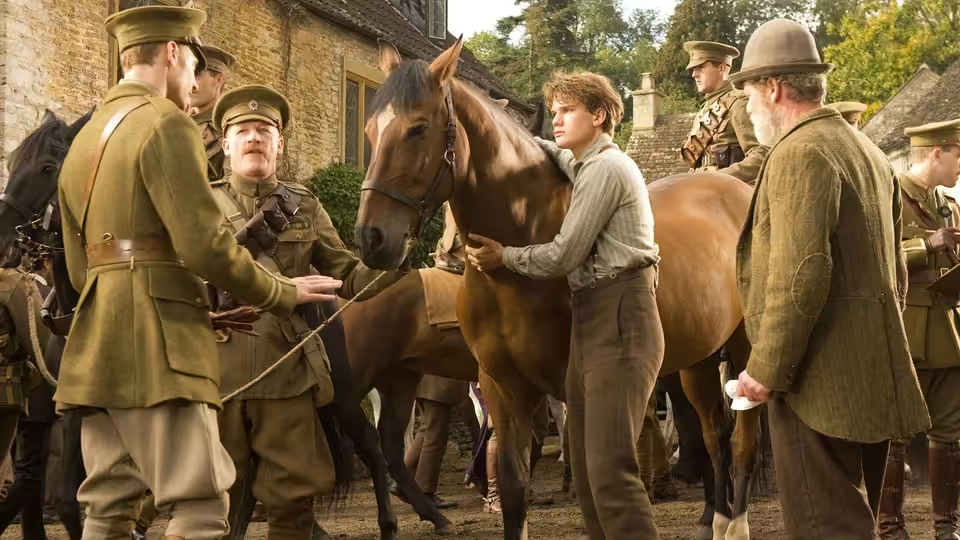
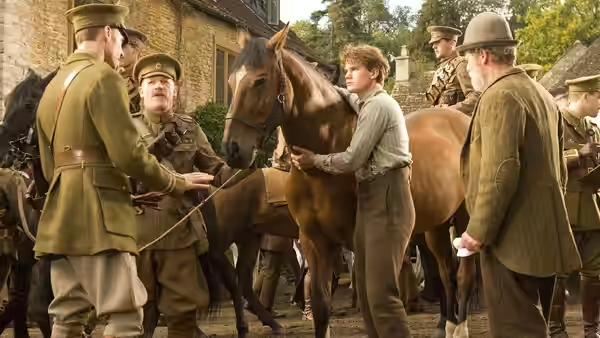
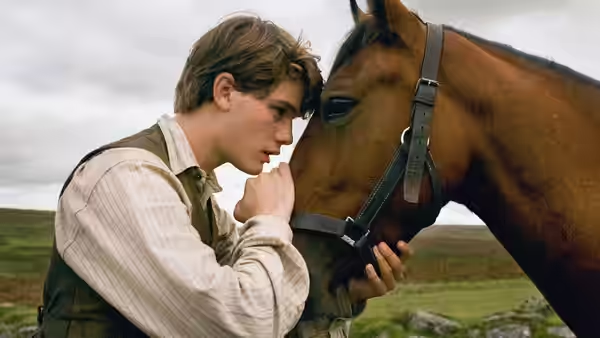
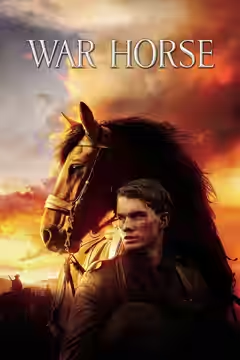
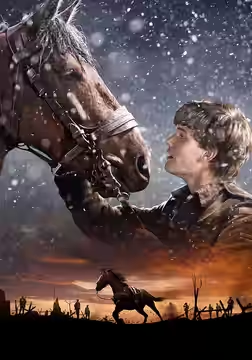
Steven Spielberg has taken Michael Morpurgo’s children’s novel, already a stage hit with puppet horses, and made it the old way, with a real horse, real mud and a studio orchestra. Joey is bought at a Devon auction, taught to plough by Albert Narracott (Jeremy Irvine), sold to the cavalry when war comes, and passed from hand to hand across France while Albert tries to find him. It runs 146 minutes. Two of its sequences are as good as anything Spielberg has made, and most of the rest is handsome, episodic and forever telling you what to feel.
The Devon hour is the weakest. Janusz Kamiński shoots the moor in the deep greens and lit clouds of a bread advert, and Lee Hall and Richard Curtis’s script has everyone say exactly what they feel, the moment they feel it. Peter Mullan is good as Ted, whose limp and drinking have a history the film mentions and then drops. Emily Watson, as Rose, stands in doorways being right. David Thewlis’s landlord Lyons exists to want the rent. Irvine has an open face and an honest manner, and Albert has one want and no doubts, so there is little left for him to play once he has said it.
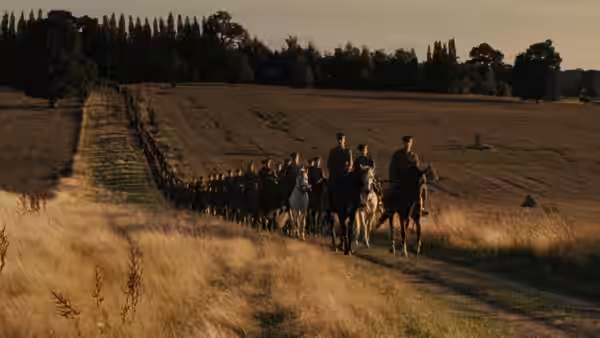
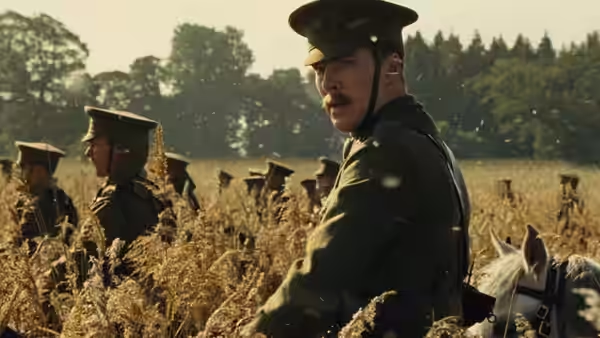
Then the horse goes to war and the film wakes up. Tom Hiddleston’s Captain Nicholls, Benedict Cumberbatch’s Major Stewart and Patrick Kennedy’s Lieutenant Waverly lead a cavalry charge on a German camp, and Spielberg stages it as a nineteenth-century idea running into a twentieth-century gun. Sabres come up, horses go flat out through long grass, and then Michael Kahn cuts to the machine guns, and then to the trees, where the horses run on with nobody riding them. Nothing is shown that would trouble a 12A. We were shaken anyway.
The middle is episodes. Two German brothers, Gunther (David Kross) and Michael (Leonard Carow), take Joey and make a decision we will not describe. A French girl, Emilie (Céline Buckens), hides him in the windmill where she and her grandfather make jam. Each chapter ends when the plot needs the horse elsewhere and leaves its people behind, so we are forever being handed to strangers and asked to mind about them. Niels Arestrup, as the grandfather, gives the best human performance in the film, a man who has settled on gentleness as a policy. Rick Carter’s mill and its kitchen look lived in, and Joanna Johnston’s uniforms fade and stain as the war goes on.
Late on, Joey is tangled in barbed wire between the lines, and a Geordie soldier (Toby Kebbell) climbs out under a white flag to cut him free while a German does the same from the other side. For a few minutes there is almost no music, a joke about wire cutters and two frightened men doing a job. It moved us more than we thought possible, because for once nobody was telling us to be moved. It is also the only scene where the film’s idea, that the horse is the one thing both armies can agree on, is shown rather than announced. Then John Williams comes back.
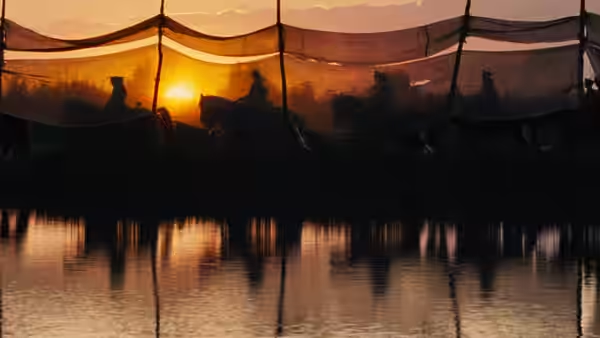
He is rarely away. Williams’s score sits under nearly every scene, strings for Devon, brass for the army, a solo horn whenever Joey looks at a horizon, and it is mixed to lead rather than follow. We resisted it and then resented it, because it kept arriving a beat before the image had finished. Kamiński has the same habit at the close, lighting the final stretch in an orange no English sky has managed. Both men are doing what Spielberg asked.
Against his own record it sits between two films. E.T. (1982) trusted a boy and a creature to carry a picture without a war behind them; Saving Private Ryan (1998) trusted the war to carry itself without a violin. War Horse wants both and keeps propping each up with the other. See it with children, who have not yet learned to distrust a string section and who will remember the charge and the wire. Adults will admire those two scenes and check the time during the jam.