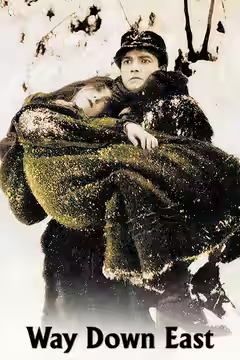
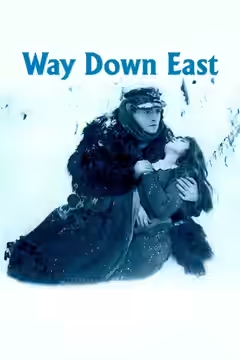
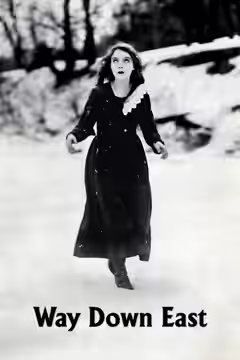
Lillian Gish makes Way Down East worth its considerable demands on our patience. D.W. Griffith’s melodrama is moving when it attends to her face, and cumbersome when it insists on telling us what to think.
At 150 minutes, Way Down East requires patience, and we think Lillian Gish makes it worth finding. D.W. Griffith directs a moving melodrama with an awkward, over-insistent opening and a much firmer command of suspense as it goes on. Its moral instruction can be wearing, particularly when we have already understood what we are being asked to feel. We recommend it to those who enjoy melodrama, with fair warning that the preaching takes up more space than it earns.
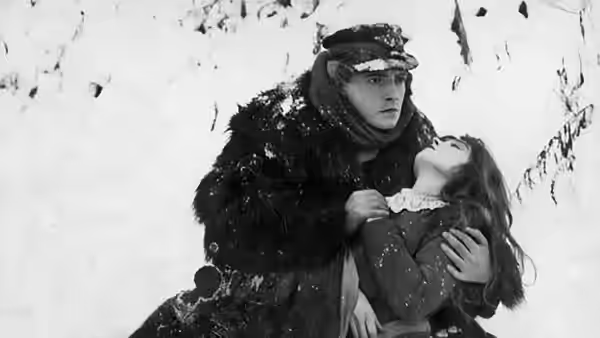
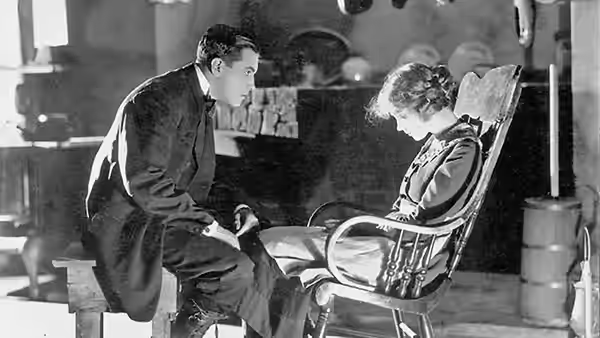
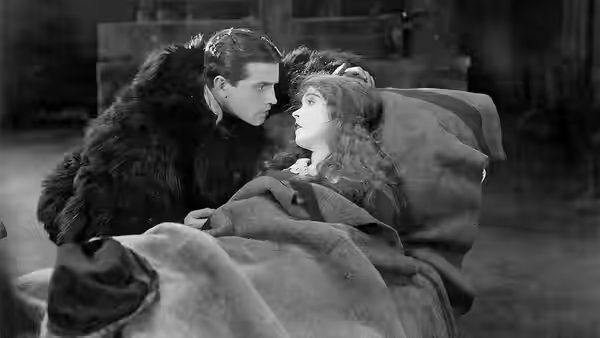
Lillian Gish plays Anna Moore, and the close-ups are the main reason to stay with her. We were moved by the attention given to her face, which makes Anna’s feelings worth considering even when the film seems impatient to deliver its judgement. Her expressiveness gives us something to study beyond the prescribed response. She holds our attention through material that can otherwise leave us waiting for the director to finish explaining himself.
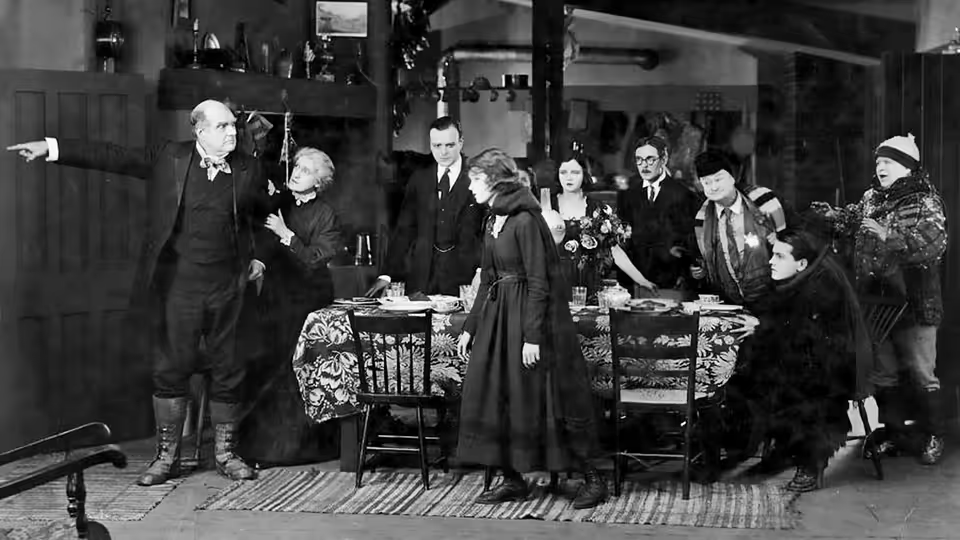
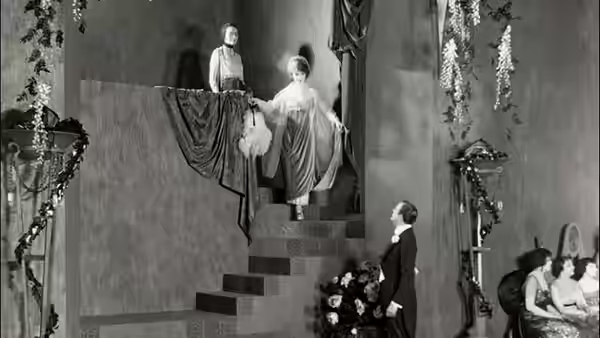
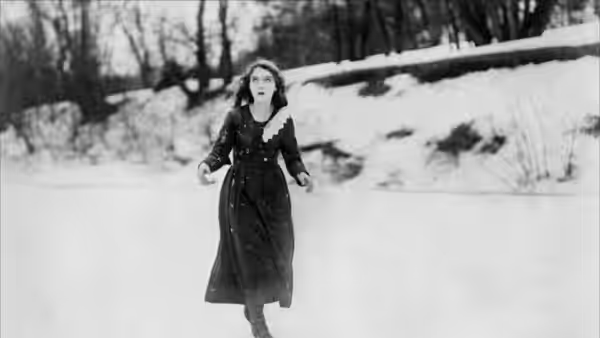
The cinematography is credited to Hendrik Sartov, Billy Bitzer, Paul H. Allen and Charles Downs. The carefully composed landscapes offer welcome space around a drama so intent on guiding our sympathies, and their beauty gives us good reason to look beyond the principal figures. The close-ups reward a more concentrated kind of attention, allowing the performance to occupy us without distraction. The photography provides much of the pleasure during passages when the storytelling is taking its time.
The writing credits pair Anthony Paul Kelly with D.W. Griffith, and the setup is where our reservations lie. There is nothing inherently wrong with a melodrama making its judgements plain, or asking for a strong response to suffering. Here the insistence begins to make the drama feel predetermined, leaving too little room for us to reach our own conclusions. The most enthusiastic reviews seem readier to forgive this; we found the moral instruction tiring well before the story acquired urgency.
James Smith and Rose Smith share the editing credit, and the later cutting brings a welcome increase in urgency. We will leave the particulars of that action alone, but its effectiveness makes the earlier pace harder to excuse. The excitement depends on the attention already paid to Anna, so we would not want the opening simply hurried away. We wanted it handled with greater confidence. Louis Silvers and William Frederick Peters are credited with the music, though we would place most of the emotional force with Lillian Gish and the way she is photographed.
As melodrama, this has the emotional directness the form needs, even when its telling becomes cumbersome. We do not have to excuse clumsy storytelling because a film dates from 1920, and its strongest passages give us no reason to lower our expectations. Lillian Gish makes the case for spending an evening with it. Choose a night when there is time for the lectures as well as the close-ups.