Film review

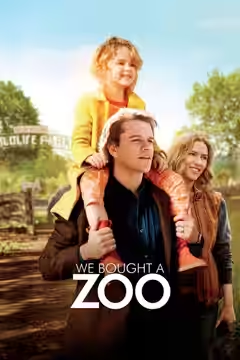
We Bought a Zoo

2011 · Directed by Cameron Crowe · 2h 04m · MPA PG

In a sentenceMatt Damon grieves next to a tiger and the soundtrack grieves louder; the tiger keeps its dignity

DramaComedyFamily

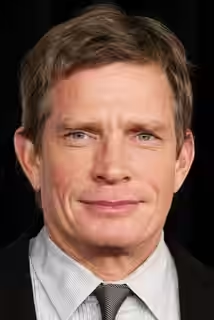
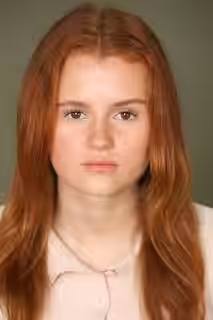
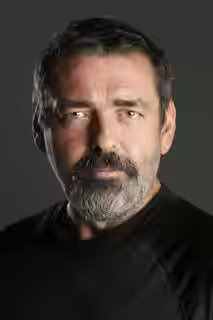
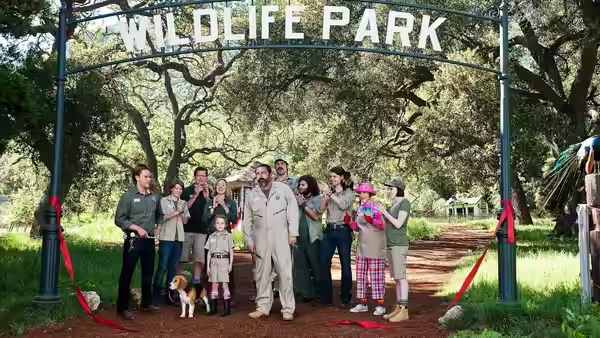
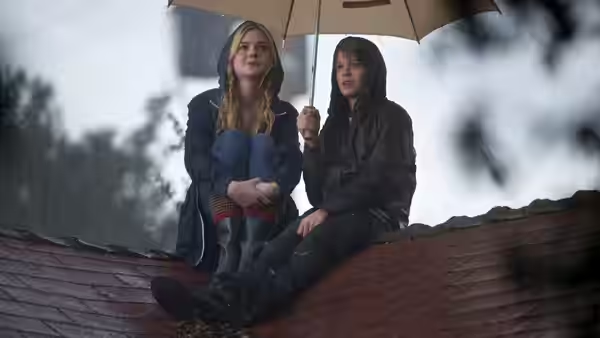
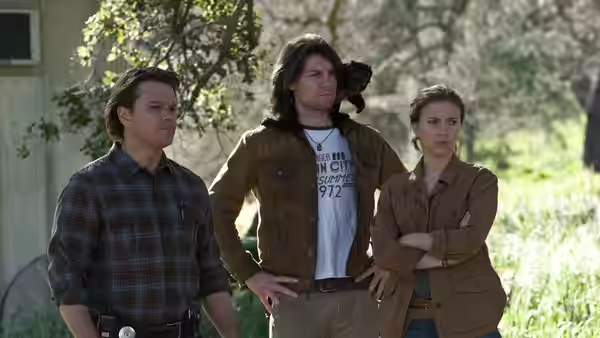
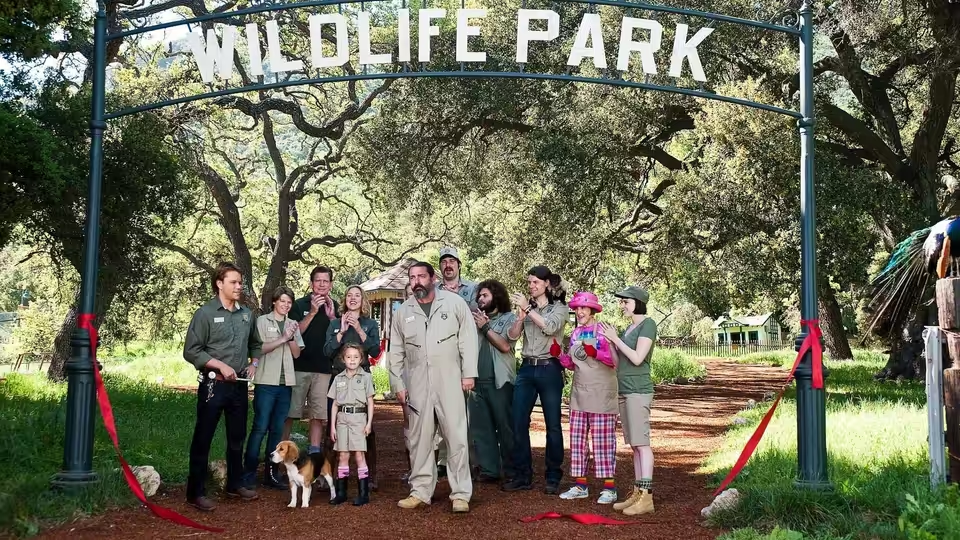
Los Angeles, six months after Katherine Mee (Stephanie Szostak) has died. Her husband Benjamin (Matt Damon), a newspaper writer who once flew into a hurricane for a story, quits his job the same week his fourteen-year-old son Dylan (Colin Ford) is expelled from school. His seven-year-old daughter Rosie (Maggie Elizabeth Jones) packs the lunches. Against the advice of his brother Duncan (Thomas Haden Church), an accountant, Benjamin goes looking for a house a long way from anything and finds one that comes with a closed wildlife park and a staff who have stayed on: head keeper Kelly Foster (Scarlett Johansson), her thirteen-year-old cousin Lily (Elle Fanning), and Peter MacCready (Angus Macfadyen), who builds the enclosures. Benjamin buys it. The zoo must pass an inspection by Walter Ferris (John Michael Higgins) and reopen by early July, and the money is running out.

Fi1m review

Cameron Crowe’s true story of a widower who buys a run-down zoo for his grieving children is warm, decently acted and twenty minutes too long. Matt Damon and Thomas Haden Church keep it honest; the music keeps telling us how to feel.

Cameron Crowe has taken a true story, an English widower who bought a failing zoo with his children, moved it to Southern California and made from it the film you would expect that sentence to produce. We Bought a Zoo is decent, warm and in no hurry to surprise anyone. Matt Damon and Thomas Haden Church keep it honest for two hours; the script and the music keep trying to make it sweeter than it needs to be. We came out fond of it and unable to recommend it without a list of conditions.

Damon is the reason it works as often as it does. He plays Benjamin Mee as a man who has been told he is coping and half believes it, brisk with the children and hopeless with his own grief, and he never once reaches for the tears the material keeps offering him. Church, as the brother who thinks the whole thing is madness, gets the best lines and says them as if they cost him nothing. Their scenes together are dry and quick, and they are the ones in which the film sounds like Crowe rather than like the genre.

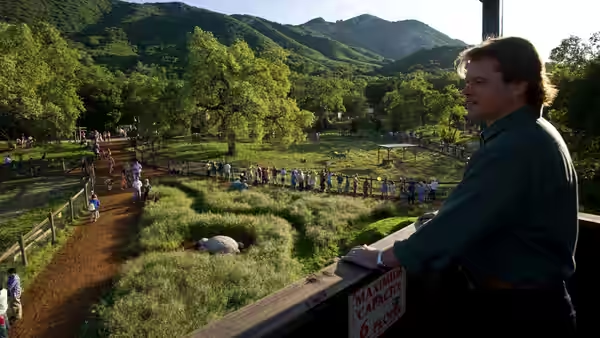
The zoo itself is well made. Clay A. Griffith gives it peeling boards, a snack bar with the shutters down and enclosures that need a fence and a coat of paint, so that when the staff start working we can see what the work is. Rodrigo Prieto shoots it in late-afternoon light, dust in the air and animals half in shadow, and he lets a tiger fill a frame without cutting away to tell us it is impressive. Scarlett Johansson plays the head keeper in Deborah Lynn Scott’s khakis and boots with no make-up to speak of, and she is good at being tired and competent. The romance the film half-heartedly proposes for her is the least interesting thing she does.

There is one scene we will not forget. Benjamin and Dylan (Colin Ford) finally shout at each other in the kitchen, and what comes out is what neither has said since the funeral. Ford, who has spent an hour sulking in his room drawing things nobody wants to see, matches Damon line for line, and for two or three minutes we forgot we were being worked on and simply watched a father and a son. It moved us. Then Rosie (Maggie Elizabeth Jones) arrived with something adorable to say, Jónsi’s score came up under it, and we were back to being told how to feel.

That is the film’s problem. Jónsi’s music, chiming and high and hopeful, is lovely on its own and is used for nearly every scene that has any feeling in it, so we were never allowed to find the feeling first. Crowe’s script, written with Aline Brosh McKenna, solves every difficulty on schedule: a problem is introduced, somebody makes a speech about it, it goes away. John Michael Higgins plays the inspector, Walter Ferris, as a sneering, clipboard-carrying obstacle in a film that otherwise has no villains and does not need one. Mark Livolsi cuts the middle stretch as montage, repair, paint, feeding, more repair, and at 124 minutes the film has a good twenty minutes it could spare.

Against Crowe’s own films it is minor. Jerry Maguire (1996) and Almost Famous (2000) had people who wanted things badly and talked about them well; this has people who want a zoo to open and talk about grief the way films talk about grief. Patrick Fugit, the boy from Almost Famous, is here as a keeper with a monkey on his shoulder, which is a pleasant thing to see and also a measure of how far the ambition has come down. The animals, for a film with this title, are oddly incidental. The old tiger gets a subplot; the rest are scenery.

It carries a PG and it will do the job on a wet Sunday with children who like animals and adults who do not mind being told when to feel something. If that describes your sofa, you will have a nice enough time. If it does not, the good scenes are Damon and Church talking and Damon and Ford shouting, and there are about four of them.

Critical consensus AI synthesised

57
Positive
9
Mixed
6
Negative
6

Most critics take We Bought a Zoo for what it is: a sincere, sweet-natured family film about a widower and his children, and on those terms a fair number find it likeable. The praise clusters on Matt Damon, whose grounded, sympathetic lead performance is singled out even by reviewers who care little for the film around him. Scarlett Johansson and the young cast get warm mentions, and several reviews credit Cameron Crowe with treating grief and hope in earnest rather than by rote.

The reservations are all about sugar. Even the approving reviews call the film sentimental; the disagreement is over how much is bearable. The mixed notices complain of a predictable, overlong story, an over-used soundtrack and a third act of overwrought speeches. The negative ones go further: Slant Magazine and The Independent find it cloying and manipulative, with uplift the film has not earned. The spread is wide, from warm approval to outright dismissal.

Evening Standard
16 March 2012
75*

This is a ruthlessly heartwarming, family-friendly adaptation perfectly suited to an Easter outing, with appealing turns from Matt Damon and Scarlett Johansson and plenty of cute animals and kids. The relocation from the UK source material to California is noted as a minor drawback.

Read the full review →
The Hollywood Reporter
27 November 2011 · David Rooney
75*

Cameron Crowe’s film has some rough edges, but it ultimately delivers thanks to Matt Damon’s moving performance. The uplifting tale has heart, humanity and a warmly empathetic central performance from Matt Damon.

Read the full review →
The New York Times
22 December 2011 · Manohla Dargis
75*

The critic finds Cameron Crowe still a Hollywood romantic whose film offers a likable story of a widower rebuilding his life by reopening a zoo with his family. It praises the blend of family drama, animals, and romance drawn from a true story.

Read the full review →
The Guardian
15 March 2012 · Peter Bradshaw
70*

This is a traditional, sweet-natured family film in which Matt Damon plays a widower who buys a dilapidated zoo in California to help his grieving children. It is a bit sugary but ultimately an easy-going, likable picture that tugs on the heartstrings.

Read the full review →
The New Yorker
9 January 2012 · David Denby
70*

The critic calls it a genial family entertainment about a widower buying a dilapidated zoo, noting Cameron Crowe has regained his commercial touch. Nothing surprises but the film is likable and touching with strong supporting work from Scarlett Johansson.

Read the full review →
The Times
16 March 2012 · Kate Muir
70*

Loosely based on the real story, the California-set film features a fine cast of creatures and locals. It offers something for the whole family with animal encounters and strong performances, especially from the young cast.

Read the full review →

Cast

If you liked this, try…

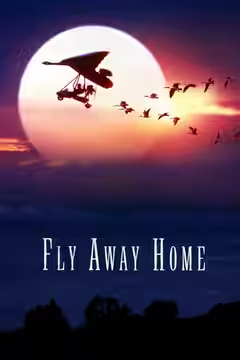
Fly Away Home poster

Fly Away Home

1996 · A grieving girl, a flock of geese and a father who learns to help; far less sugar

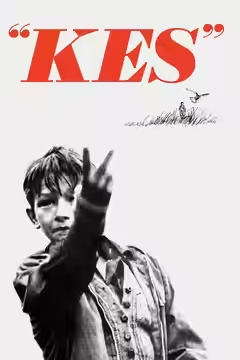
Kes poster88

Kes

1969 · Ken Loach’s boy and his kestrel; the animal film that trusts silence over speeches

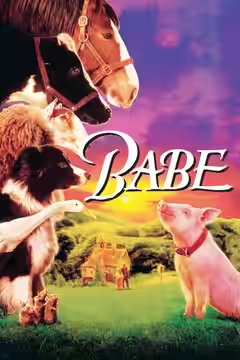
Babe poster88

Babe

1995 · The farmyard family film that gets sentiment right by being strange and exact

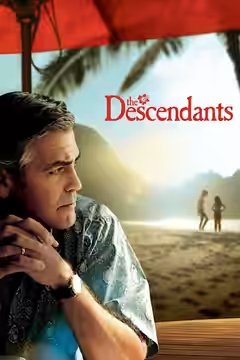
The Descendants poster80

The Descendants

2011 · Another widower, two daughters and a mess to sort; wittier, sadder, more honest

Whale Rider poster

Whale Rider

2002 · A New Zealand child, a stubborn grandfather and the sea; earns every tear it asks for