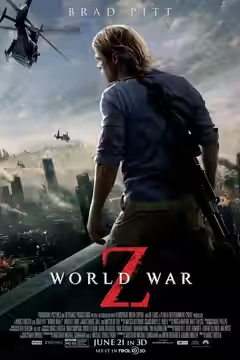
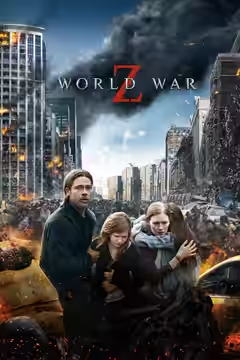
Marc Forster’s zombie film is frightening for its first twenty minutes and impressive from the air for another twenty, and then it runs out of things to do with its enormous hordes. Brad Pitt keeps it watchable; nothing keeps it felt.
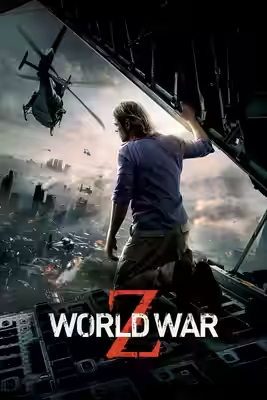
World War Z is a 116-minute attempt to do the zombie film at the scale of a disaster picture, with Brad Pitt flying from city to city as the world falls over behind him. Max Brooks’s novel was a set of interviews gathered after the war; the screenplay, credited to Matthew Michael Carnahan, Drew Goddard and Damon Lindelof, throws that away and gives us one man, one task and a clock. It is a fair trade in principle. Whether the film honours it depends on which half of it you are watching.
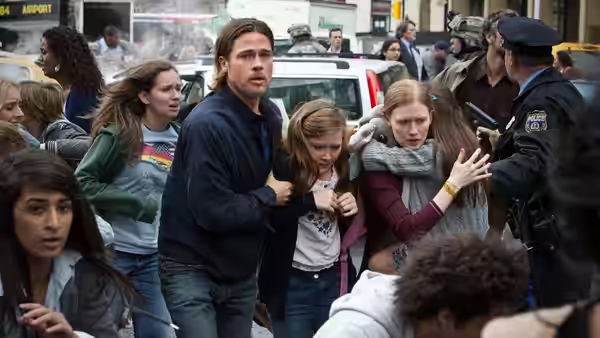
The first twenty minutes are the best thing here, and they frightened us. Marc Forster shoots the Philadelphia outbreak from inside a family car, so that for a long time we see only what Gerry Lane sees: a motorcycle policeman wrenching off a wing mirror, a lorry ploughing through the lane ahead, people running without knowing from what. Ben Seresin keeps the camera low and close, Roger Barton and Matt Chessé cut on movement rather than on faces, and Marco Beltrami’s score is mostly a low pulse under the sound of car alarms. When the first infected man hurls himself headfirst into a windscreen and begins to twitch, and Gerry starts counting under his breath, we were properly scared, which is not a thing this genre manages often any more.
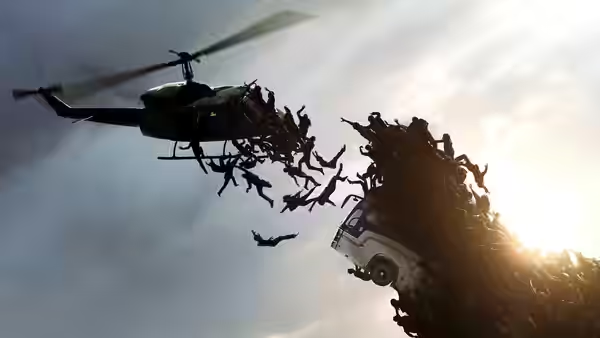
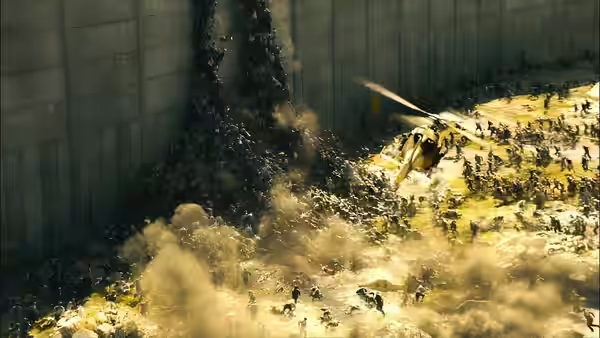
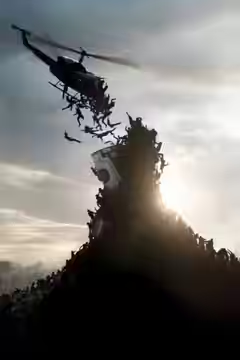
The film has one other image, and it has been in every trailer: the dead pouring against the walls of Jerusalem and climbing one another until the pile is high enough to spill over. Seen from a helicopter it is remarkable, a tide with elbows. Nigel Phelps’s production design gives the wall real weight and the streets below it real clutter, so the scale reads. Then the camera comes down to street level, the crowd becomes a blur of grey digital figures snapping their jaws, and the fear leaks out. Up close these zombies are not frightening. They are busy.
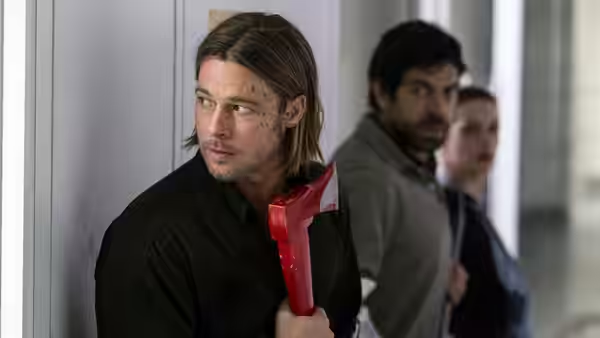
Pitt is doing something careful and it mostly works. He plays Gerry as a man who has seen bad places and learned to move through them quietly, taping magazines round his forearms before he goes out, listening before he opens a door. He never raises his voice. The problem is that the film gives him nothing to be other than competent, and competence does not change over two hours. Mireille Enos, as Karen, is handed a phone and a worried face and left on a ship. Daniella Kertesz, as the Israeli soldier Segen, gets the film’s one scene of real pain and makes it count in about four lines.
The middle sags, in South Korea especially. Forster stages a night-time refuelling on bicycles, in rain, with soldiers hissing at one another not to make a sound, and it ought to be unbearable. Instead it is murky and oddly short, and James Badge Dale’s Captain Speke, the liveliest person in the film, is gone almost as soon as we have placed him. David Morse turns up in a cell with no teeth and a conspiracy theory, delivers it well, and is not seen again.
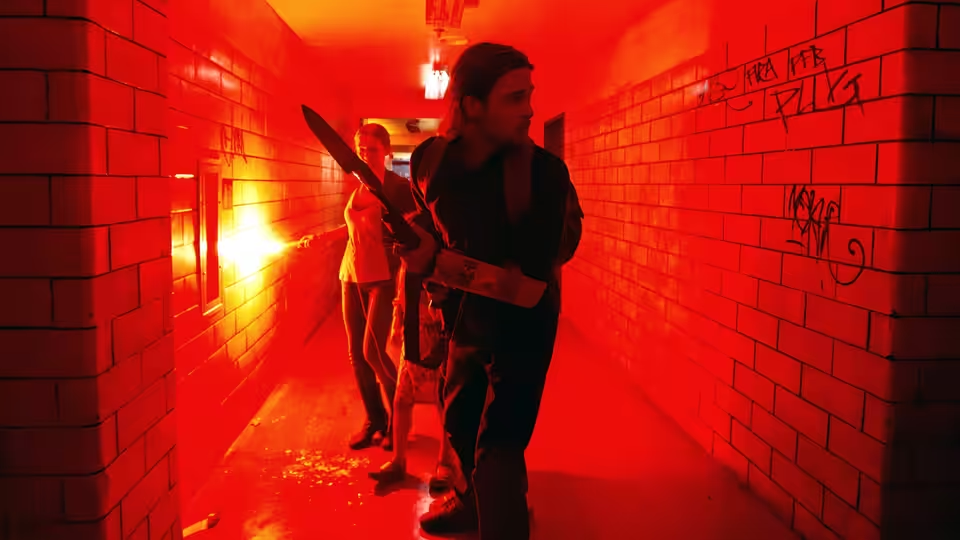
The last half hour takes a turn we will not describe. What we can say is that it moves to a research facility, slows right down, and becomes a stealth sequence in corridors with Peter Capaldi and Pierfrancesco Favino as doctors watching on monitors. Seresin finally holds a shot. Barton and Chessé stop chopping. It is the most tense the film has been since Philadelphia, and it is tense because it is small, which is a strange lesson for a picture that has spent its money on crowds. We also noticed, in this stretch, how little blood there is. The 15 certificate is barely troubled; a film about billions of people being eaten manages to show almost nobody being eaten.
Most critics landed in the middle, and so do we, though we are a shade below the consensus because the two things that work are both over by the halfway mark. Against the genre’s own standards it is bigger than anything before it and scares less than most of them. Against Forster’s own films it is cleaner and more legible than Quantum of Solace, which is faint praise he has earned.
Worth an evening if a city-wide outbreak staged with real skill is enough for you; the opening is one of the better sequences of its kind. Watch it at home with the sound up for the first act, and expect to be checking the time by the time Pitt reaches the plane.