Bryan Singer gives a likeable young cast and Michael Fassbender too little room in an overfilled superhero sequel. A few playful sequences help, but the villain and the plotting make 144 minutes feel generous.
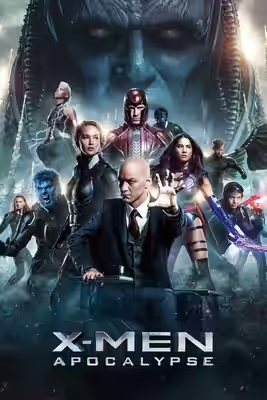
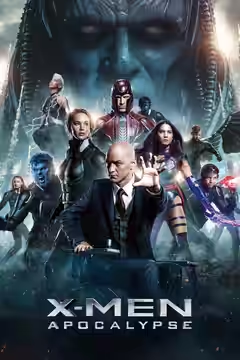
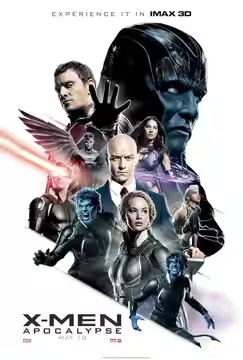
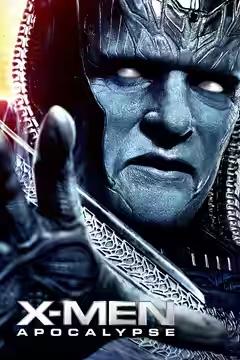
X-Men: Apocalypse has enough appealing mutants for several films, but too little for most of them to do in this one. Bryan Singer aims for a confrontation large enough to accommodate established characters and a younger cast, and repeatedly stops to introduce somebody else. Simon Kinberg’s screenplay gives them plenty of business without much chance to become interesting together. There are pleasures here, some of them substantial, but at 144 minutes this is a disappointing way to spend time with a good ensemble.
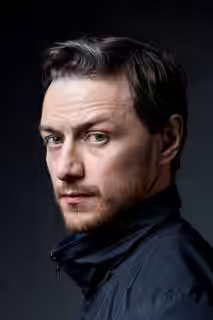
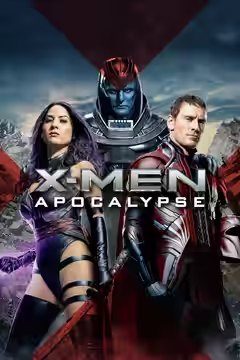
Michael Fassbender provides the strongest reason to stay involved. As Magneto, trying to pass as an ordinary man, he makes the effort of suppressing himself feel exhausting before the film asks for any grander emotion. The smaller scenes allow him to suggest what a normal life might cost someone who can never quite relax into it. James McAvoy brings welcome warmth to Professor Charles Xavier, though the screenplay seldom lets that warmth develop into a sustained exchange between people.
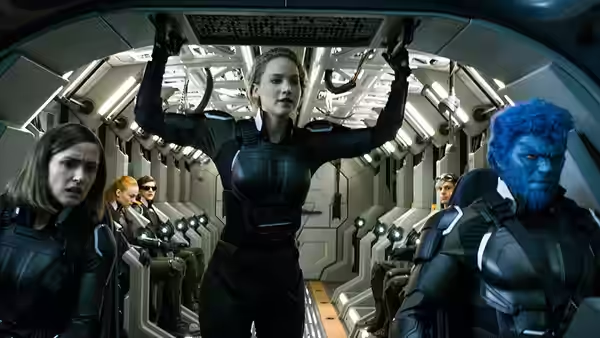
The younger cast are another reason to keep watching. Tye Sheridan gives Cyclops enough awkwardness to suggest a person still getting used to himself, while Kodi Smit-McPhee makes Nightcrawler immediately companionable. Sophie Turner has less opportunity to make Jean Grey equally distinct. Simon Kinberg keeps allocating attention to the next arrival, and the result is a group we might like to know better without the scenes that would let us do so.
The ancient-Egypt opening is more inventive about spectacle. Newton Thomas Sigel’s cinematography gives it a sweep that the later effects-heavy action cannot sustain, and Grant Major’s production design makes the setting more interesting than the villain it introduces. Both help establish a sense of scale without making the images feel anonymous. Once the action grows busier, the variable effects and the shortage of clear character objectives make it harder to follow who is doing what, or why it matters.
We laughed at the Quicksilver sequence, because Evan Peters plays with the difference between his speed and everybody else’s rather than merely demonstrating it. Slow motion becomes a way to build jokes, with time to notice the next one coming and enjoy its arrival. The editors, John Ottman and Michael Louis Hill, find a precision here that the surrounding character-hopping badly needs. The sequence has a clear comic purpose, which makes it easier to follow than much of the larger action.
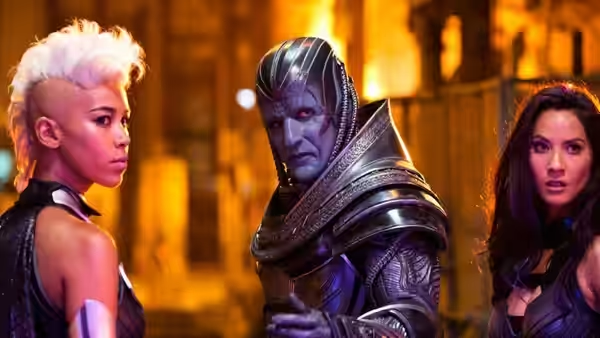
Oscar Isaac has a less rewarding assignment as Apocalypse, whose menace depends on how insistently the film tells us to fear him. There is little curiosity about what makes this particular villain worth opposing beyond the obvious need to stop him. John Ottman’s score supplies weight to the confrontations, but its solemnity often makes already heavy scenes feel heavier. Oscar Isaac needs more to play than a standing invitation for everybody else to look concerned.
Against the superhero genre’s better ensemble stories, this is weak at making personal differences shape the action. The cast can suggest friendships and friction, but Bryan Singer too often abandons those possibilities to manage another mass of effects. A few enjoyable sequences are not enough for us to recommend the whole film. Existing affection for these mutants will have to do quite a lot of the screenplay’s work.