Bryan Singer’s superhero sequel gives its crowded cast room to be interesting, and its opening action is sharply judged. The overextended climax is a nuisance, but the performances make this an easy recommendation.
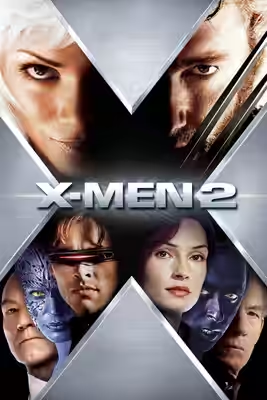
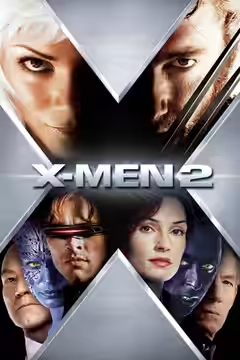
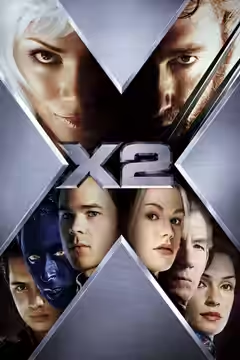
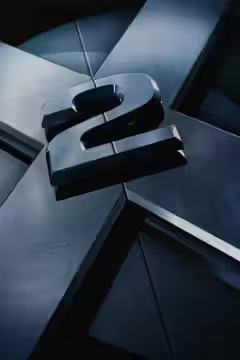
X2 is a good superhero sequel because Bryan Singer makes room for people we want to spend time with, even when they are delivering speeches about humanity. It improves on its predecessor by giving its ensemble more to do and letting Wolverine’s past matter to the action. The prejudice against mutants supplies a clear reason for the conflict, though the film sometimes explains its point after we have understood it. The cast keeps those passages from becoming a lecture.
The opening assault on the White House sets a high standard for the action, making unusual powers exciting without requiring a preliminary lesson in their use. We were gripped by it, because we could follow an attack that ought to be impossible to organise on screen. Newton Thomas Sigel’s cinematography helps us read the movement, while editors John Ottman and Elliot Graham keep it brisk. The cutting allows us to appreciate what these powers can do without losing track of the attack itself.
Guy Hendrix Dyas’s production design gives the White House setting enough solidity for the assault to feel like an intrusion into a recognisable place. That matters when the action depends on abilities that could so easily make the surroundings seem irrelevant. John Ottman’s score is less restrained, supplying plenty of urgency and occasionally more emotional prompting than the performances need. Several of these actors can convey unease without much assistance, and the music could afford to leave them alone more often.
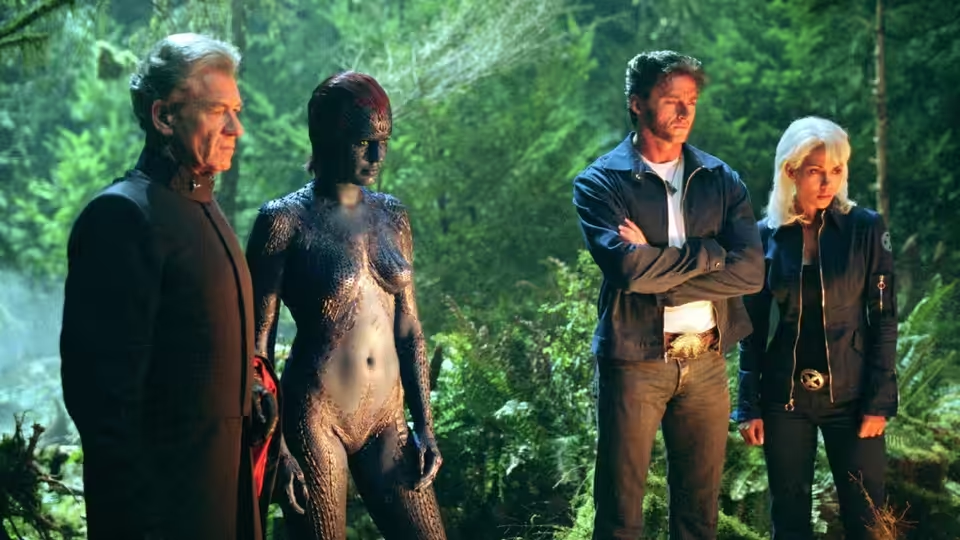
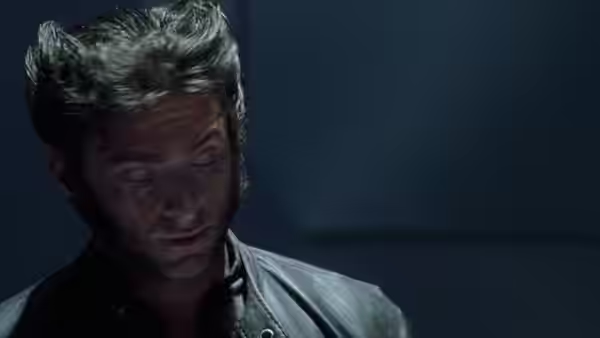
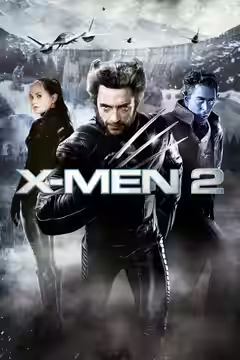
Hugh Jackman gives Logan / Wolverine a welcome streak of dry humour amid the concern about his past. That humour matters as much as his force, making the character worth spending time with between bursts of action. The screenplay by Michael Dougherty, Dan Harris and David Hayter gives his history and relationships enough attention to make us care about more than his abilities. For all the demands of the ensemble, the film finds time for the uncertainty that makes him interesting.
Alan Cumming gives Kurt Wagner / Nightcrawler a vulnerability that makes the tolerance theme feel less rehearsed. His performance brings some feeling to an argument the dialogue can state too insistently. Ian McKellen, as Eric Lehnsherr / Magneto, has the comic assurance to make even grand dialogue sound faintly disreputable, and his evident enjoyment is catching. These performances give us something to anticipate between action sequences, which is where a crowded superhero film can become a lengthy wait for the next demonstration of powers.
The trouble is that Bryan Singer cannot keep that balance through the extended climax. Effects begin to occupy the attention that belonged to the characters, and the action continues after its force has started to diminish. It is a familiar superhero-film failing, but another stretch of spectacle still requires something more than technical competence to justify it. The earlier handling of the ensemble makes this drift frustrating, because the film has already shown how well it can combine action with an interest in people.
At 133 minutes, there is room to shorten that closing stretch without sacrificing the relationships that make the film worth watching. Still, the bluntness of the tolerance message does not cancel the care taken with the people carrying it. We recommend X2 for the performances and the lucid action, with a warning that its final stretch needs patience. Anyone chiefly interested in Hugh Jackman, Alan Cumming and Ian McKellen may find the explosions an occasional interruption.