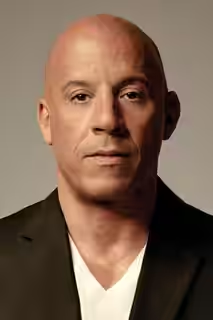
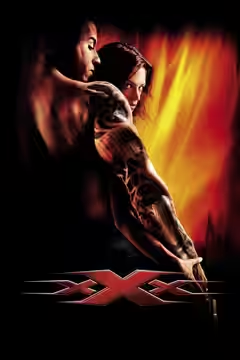
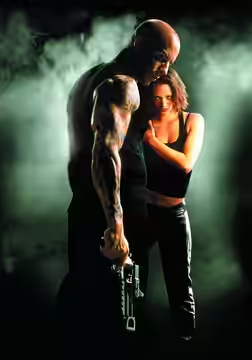
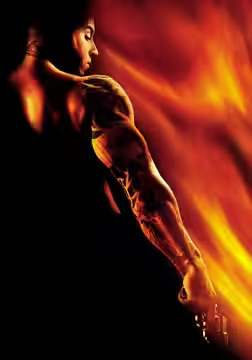
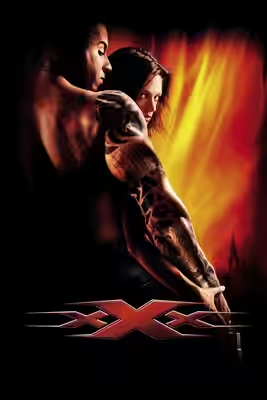
Vin Diesel gives xXx enough physical authority to survive its flimsy story, but only in bursts. Rob Cohen stages some bracing action; strained attitude and restless cutting make the stretches between it a chore.
xXx is intermittently enjoyable action attached to a spy story that cannot make the pauses worthwhile. Rob Cohen builds it around the considerable physical presence of Vin Diesel, and that is a sensible place to start. A hero who looks capable of surviving such punishment helps us accept the film’s sillier ideas. Rich Wilkes’s screenplay then asks attitude to carry far too much of the remaining work, especially whenever the action stops and somebody has to speak.
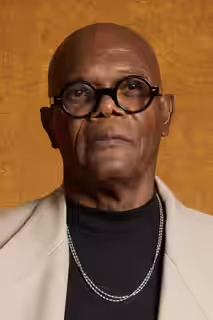
Vin Diesel gives Xander Cage an assurance the film otherwise lacks. His physical confidence is useful amid all the commotion, and we understand why the camera keeps returning to him. But it does not automatically make dialogue funny, and the effort to sound irreverent often becomes tiresome. Samuel L. Jackson, as Agent Augustus Gibbons, provides the familiar figure of the boss, which rather weakens the claim that this is a new kind of secret agent.
We were thrilled by the bridge-and-parachute stunt, because the height and the drop give the danger a scale we can immediately understand. For a moment, the eagerness to show off feels welcome. Dean Semler’s cinematography makes that drop feel more consequential than anything in the dialogue. The stunt has a clear appeal that the story struggles to match, and it briefly makes the surrounding espionage feel like unnecessary administration.
The cutting is less helpful. Editors Paul Rubell, Chris Lebenzon and Joel Negron keep pressing for excitement, but the constant hurry makes too much of the film feel alike. There is little room for a joke to settle or for anticipation to build before the next burst of activity. Randy Edelman’s music contributes to the same insistence, and we wanted more contrast from the soundtrack rather than another reminder that this is supposed to be exciting.
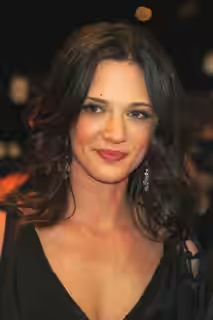
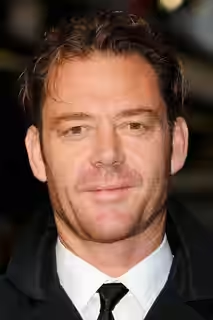
Prague is a more persuasive attraction than most of the plotting. Gavin Bocquet’s production design gets fewer chances to register, since the cutting rarely encourages us to take an interest in the spaces around the characters. Asia Argento gives Yelena a welcome sharpness, enough to suggest how much lighter the dialogue might have played with less strenuous posing elsewhere. Marton Csokas has less to work with as Yorgi, whose villainy feels thoroughly familiar.
The James Bond similarities are not a problem in themselves. A spy film is allowed a commanding boss, an extravagant villain and an implausibly capable hero; these can still be useful characters when their relationships have some wit. Here the dialogue works so hard at sounding disrespectful that the jokes become laboured. Rich Wilkes finds occasional crude amusement, but the script is too disjointed to keep the story moving through 124 minutes.
The reasonable defence is that none of this matters when the action gets going, and there are stretches when we accept it. The trouble is how often we are left waiting for another stunt while the film insists on its own coolness. There is enough effort here to rule out indifference, and enough physical skill to make the disappointments irritating. A taste for Vin Diesel and falls from great heights will need to do most of the work.