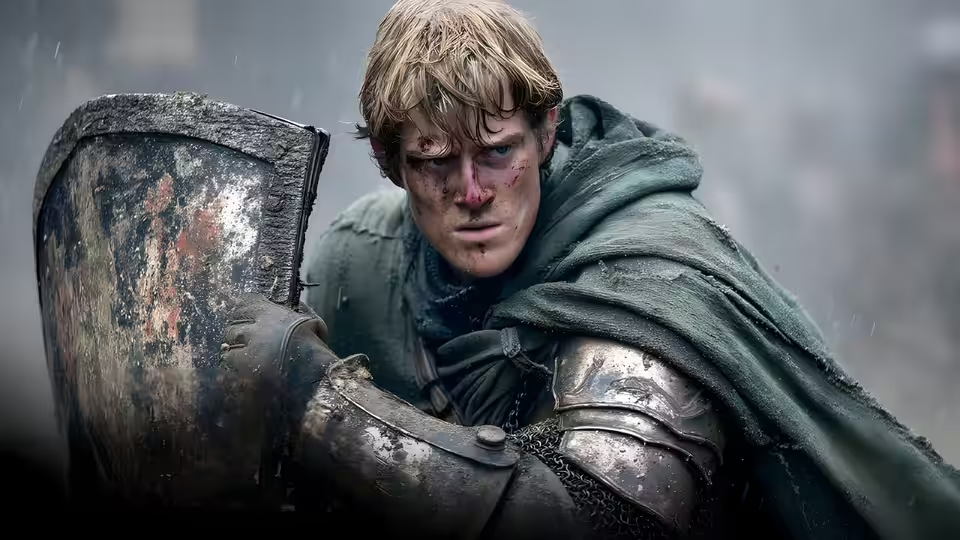
Peter Claffey and Dexter Sol Ansell make this small-scale fantasy good company. The friendship is worth following, even when the story stretches thin and the humour turns needlessly coarse.
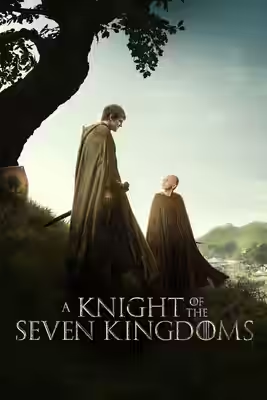
A Knight of the Seven Kingdoms is an enjoyable fantasy, though its small story sometimes feels stretched. Dunk and Egg give us a way into it that requires no appetite for grand political manoeuvring. The series is interested in what it takes to behave honourably when decency offers little protection, and it approaches that question with more humour than solemnity. Within a genre that can confuse complicated family histories with interesting people, this is a sensible place to start.
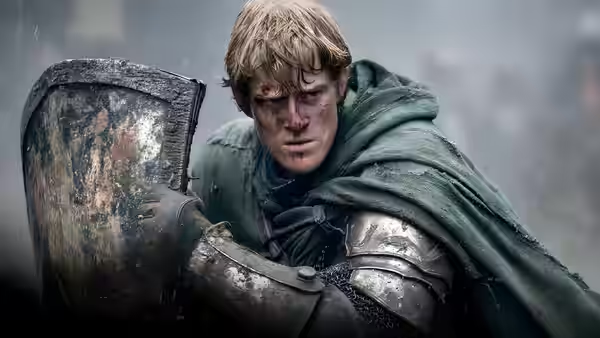
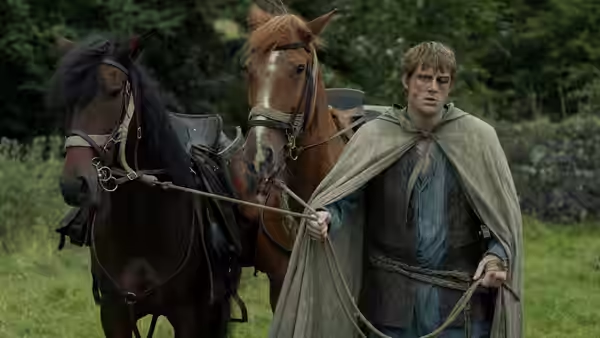
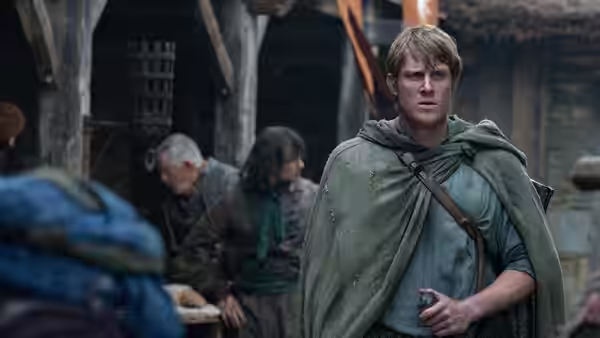
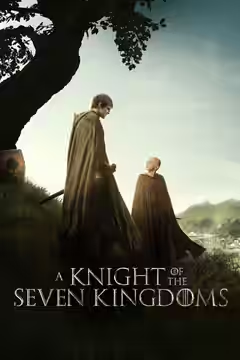
Peter Claffey plays Ser Duncan ‘Dunk’ the Tall with an earnestness that could easily become dull, but he makes Dunk’s wish to do right worth taking seriously. Dexter Sol Ansell’s Egg provides the livelier half of the partnership, and their exchanges have the ease that a comic pairing needs. We grew fond of them sooner than we expected, because Claffey lets Dunk’s decency survive the jokes at his expense. Their affection gives the comedy somewhere to go once the initial mismatch has been established.
Gustav Danielsson and Federico Cesca’s photography keeps the emphasis on the pair, allowing their rapport to carry scenes that have little else happening. Tom McCullagh’s production design gives their surroundings a lived-in quality, so this feels like somewhere people have to get on with ordinary life. That is a useful choice for a fantasy concerned with people who have little control over the larger world. Dan Romer’s score is most welcome as support for the lighter mood; the actors have already made the relationship worth caring about.
The writers, including Ira Parker, are less sure about how far to push the coarseness. Bodily-fluid jokes keep intruding on a relationship that is already funny without them, and their insistence becomes tiresome. We do not need Dunk made ridiculous quite so emphatically to understand that he is no grand, polished hero. The humour works better when the pair have to accommodate each other; repeated crudeness starts to feel like a substitute for finding something else for them to do.
Paulo Pandolpho’s editing allows the pairing time to work, but cannot disguise the shortage of incident. Even across a six-episode first series, there are passages that seem to be waiting for the next worthwhile exchange. The limited scale need not be a problem: a small disagreement can sustain a scene if it tells us something new about the people involved. Here the writing sometimes settles for reminding us why we already like them, and liking them does not quite fill the gap.
Directors Sarah Adina Smith and Owen Harris keep the central relationship convincing when the mood becomes darker, even if some of the early pleasure diminishes. The programme is right to test its characters’ decency, and it does not need to become a refuge from everything unpleasant to justify its warmer approach. Its modest ambitions leave room for two performances that deserve the attention. If fantasy is your sort of evening, try it for Claffey and Ansell, with a reasonable tolerance for toilet humour.