Erin Doherty is the chief pleasure of this absorbing period crime drama, with Malachi Kirby and Stephen Graham close behind. We recommend it, though the crowded plotting and explanatory dialogue sometimes keep the actors waiting.
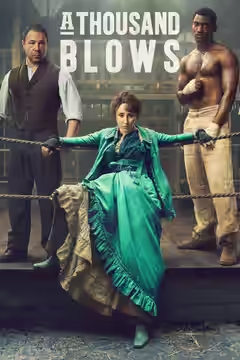
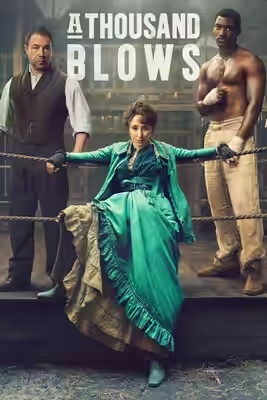
A Thousand Blows is an absorbing period drama that sometimes gets tangled in its competing stories. Set in 1880s London, it brings Jamaican immigrants, bare-knuckle fighters and the Forty Elephants gang into a struggle for money and status. Almost everyone wants more than their circumstances seem likely to allow, which gives the series plenty of reasons to keep moving. With Steven Knight among the writers, it has a taste for forceful dialogue, and the actors make the threats worth listening to.
Malachi Kirby gives Hezekiah Moscow the attention that a crowded drama needs at its centre. He makes the character’s ambition understandable without making every decision seem wise, which matters in a story so interested in survival. We keep wanting to know how Hezekiah will manage among people competing for power. The series is easier to follow whenever it gives Kirby room, because his performance keeps the personal stakes clear through the changes of storyline.
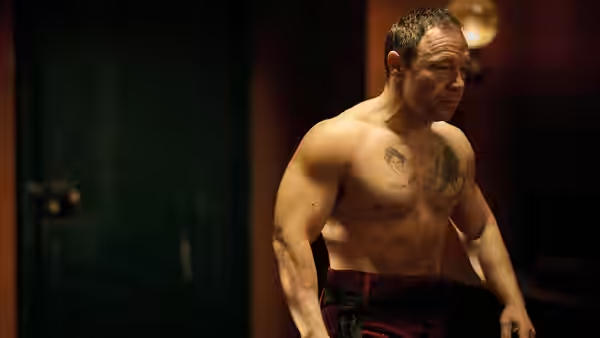
Stephen Graham, as Henry ‘Sugar’ Goodson, makes the boxing difficult to enjoy without some discomfort. His forcefulness suits a drama in which violence can bring money and standing, and he does not let the fighting become a harmless exhibition. We flinched at the bare-knuckle blows; the punishment makes the prospect of earning a living this way feel appalling. The fights are exciting, but Graham keeps us aware that the men involved have to live with what happens to them.
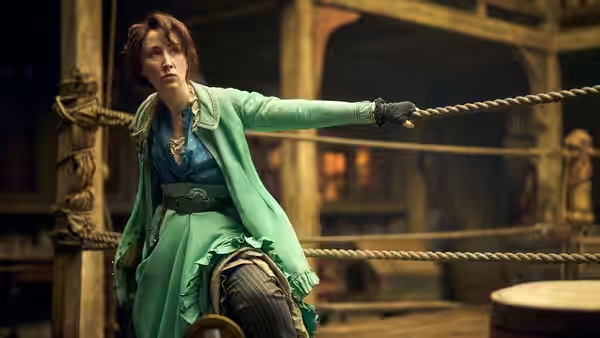
Erin Doherty’s Mary Carr gives the series its most reliable source of pleasure. Leading the Forty Elephants, she has the authority to make a conversation about criminal business as absorbing as a fight. Doherty handles the assertive dialogue without sounding as though she is waiting for approval after each line. We believe that other people would follow her, including when following her looks unwise, and that credibility carries the gang story through some of its less convincing writing.
Maja Meschede’s costume design gives the period setting much of its detail, with clothes that keep differences in status visible. The wider production gives the criminal activity a convincing place to happen, and the fights have the roughness the story needs. There is pleasure in how fully this London accommodates the different characters and their ambitions. The shifts between boxing and gang business can be lively, although the series sometimes moves on before a supporting story has had enough attention.
The writing is less sure when it explains the connections between class, race and gender. Knight and his fellow writers sometimes state what the unequal opportunities have already made clear, slowing a drama that otherwise likes to move. The competing stories compound that problem, because returning to a neglected character can require another stretch of explanation. We wanted the series to trust its cast more: Kirby, Doherty and Graham can make the struggle for money and control understandable without quite so much help.
As a boxing drama, A Thousand Blows has the sense to remain interested in what happens outside the fighting. The characters’ access to money and standing matters enough that a bout can carry more than the immediate question of who wins. That broader interest earns the space given to crime and social climbing, even when the divisions between stories need firmer handling. Stay with the cast when the explanations slow things down.