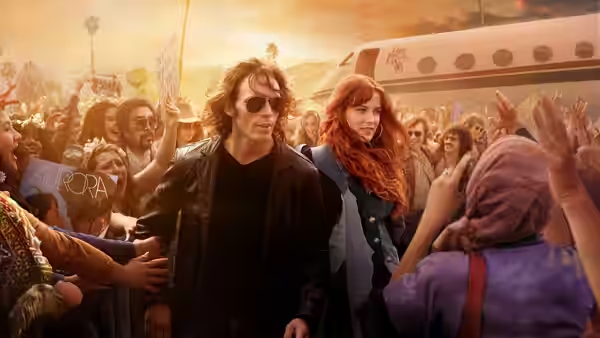
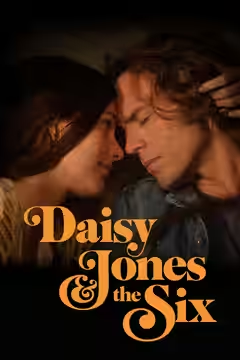
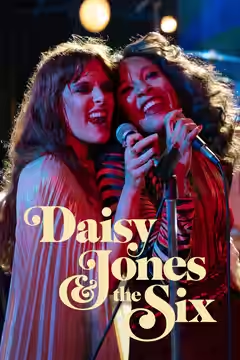
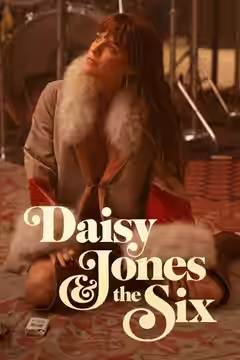
Riley Keough, Sam Claflin and the songs make Daisy Jones & the Six an appealing but overextended band drama. The performances deserve attention; the thin supporting characters and awkward interview scenes demand patience.
Daisy Jones & the Six is a fitfully engaging band drama stretched beyond what its characters can sustain. Creators Scott Neustadter and Michael H. Weber adapt Taylor Jenkins Reid’s novel into ten episodes, giving the attraction between Daisy Jones and Billy Dunne more attention than the rest of the group. That is understandable once Riley Keough and Sam Claflin start performing together. It is less helpful when the series asks us to care about musicians it has barely allowed to develop.
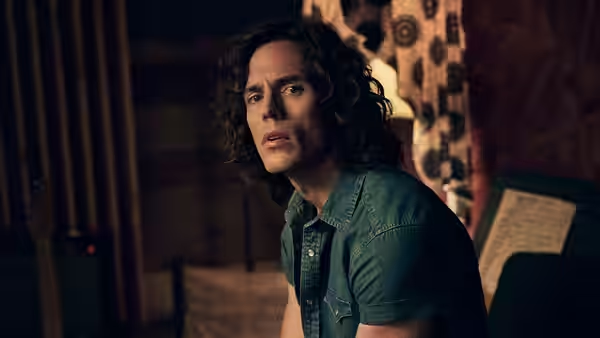
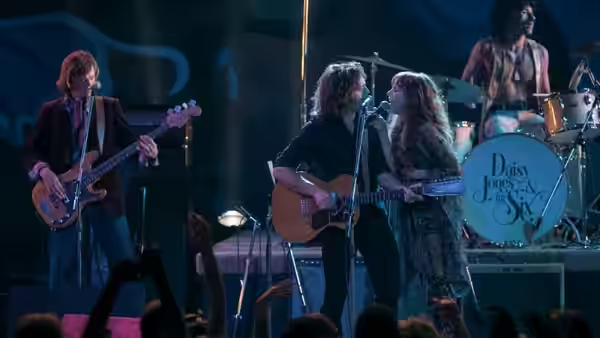
Riley Keough makes Daisy’s wish to be heard feel urgent even when the script is taking its time. Her singing gives the character a force that the familiar romantic complications cannot supply on their own, and Sam Claflin is a persuasive musical partner. We felt a real lift when they sang together, because their pleasure in making music briefly made the band’s success seem worth caring about. The musical performances give both actors room to communicate without another explanation of their feelings.
The guitar-heavy songs are catchy enough to justify the time spent hearing them take shape. Watching musicians work out what belongs in a song gives the group something to do beyond managing its romantic entanglements, and these scenes are welcome whenever they arrive. Tom Howe’s score is less distinctive, supplying atmosphere without adding much urgency to the surrounding drama. We would happily have traded some of the relationship explanations for more of the musical work.
The romance is not without interest. Camila Morrone’s Camila Dunne makes the central triangle feel as though more than two people’s wishes deserve consideration, and the series improves when it gives her that space. But Suki Waterhouse’s Karen Sirko and Will Harrison’s Graham Dunne struggle to become equally substantial presences. The writing returns to Daisy and Billy so insistently that the band’s other lives come to seem optional. Across ten episodes, that unevenness becomes difficult to excuse.
Jessica Kender’s production design and Denise Wingate’s costumes make the 1970s setting easy to enjoy looking at. The clothes help the actors look convincing as performers, while the band’s surroundings have been prepared with conspicuous care. The finish is also a problem: too little looks used, awkward or capable of getting in anyone’s way. For a drama asking us to believe in the disorder of a rock band’s private life, everything remains distractingly clean.
Amelia Allwarden’s editing is most effective around the music, where the series briefly acquires some momentum. The documentary-style interviews keep interrupting it, asking the performers to explain relationships that the dramatic scenes have already made clear. We can see the attraction of letting bandmates revisit their shared past, but these passages seldom produce enough disagreement between their accounts. They occupy time that the supporting characters could have used.
Rock dramas need not find an unfamiliar story every time, but they do need to make the people telling it seem worth knowing. This one gives us enough in its central partnership to explain the appeal, without doing enough to justify its length. Musical melodrama enthusiasts will have more reason to persist than anyone looking for a fully convincing band portrait. Give it an episode before surrendering a weekend.