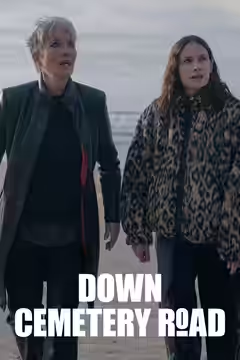
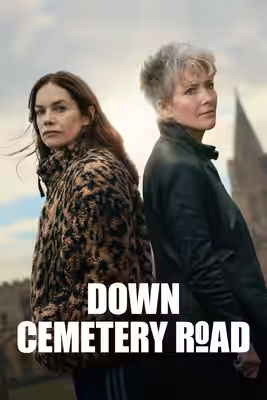
Emma Thompson and Ruth Wilson make Down Cemetery Road worth the occasional wait. This conspiracy thriller is sharpest when its two leads are irritating each other, though the plotting sometimes dawdles.
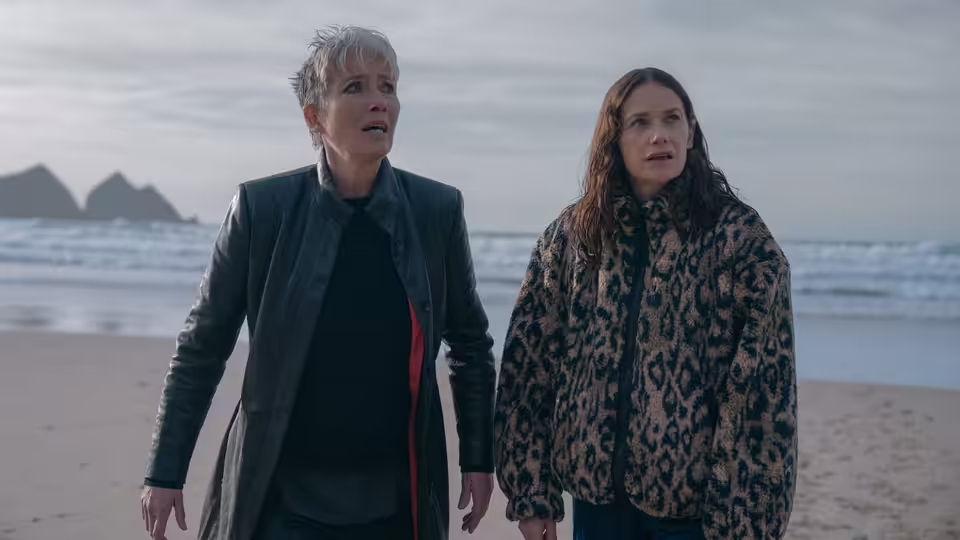
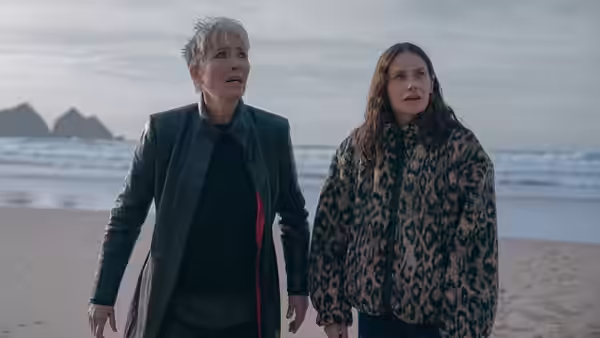
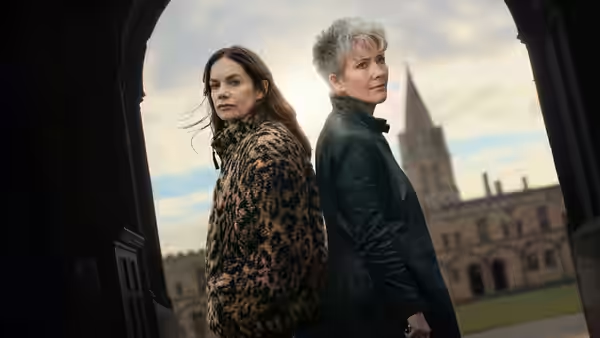
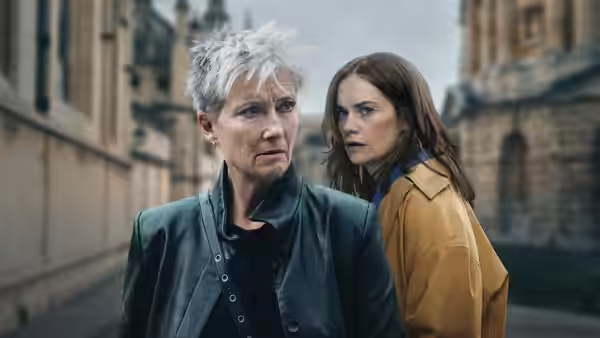
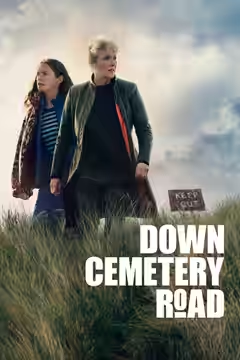
Emma Thompson and Ruth Wilson make Down Cemetery Road a rewarding conspiracy thriller, despite some slow stretches. Thompson plays private investigator Zoë Boehm, with Wilson as Sarah Trafford, in an Oxford-set mystery adapted from Mick Herron’s novel. The series makes room for impatience, irritation and jokes alongside the business of finding out what powerful people are doing. That can be an excuse for treating danger lightly; here, the humour helps us care about the people caught up in it.
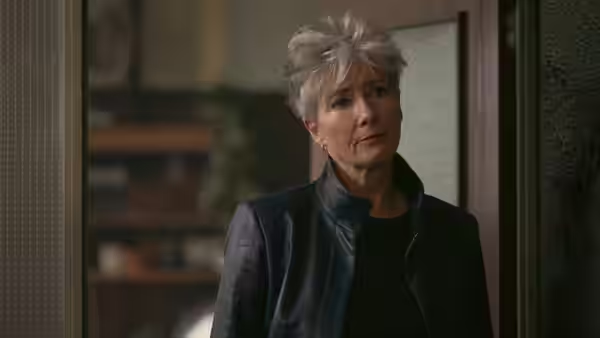
Thompson’s no-nonsense manner is the most immediate pleasure, but Wilson prevents the pairing from becoming a one-woman performance with someone available to listen. Their friction gives the exchanges an awkwardness that neatly delivered jokes would lose. We laughed at Thompson’s bluntness, then found ourselves watching Wilson for the response. It is the mutual irritation that makes this enjoyable: both women have enough force to resist becoming the other’s comic assistant.
Morwenna Banks shares the writing credits with Emily Marcuson, Rose Heiney, Andy Riley and Kevin Cecil, and the dialogue earns its prominence. The dark humour makes exasperation part of the investigation, so that the characters can be funny without appearing immune to what is happening around them. There is enough moral uncertainty to keep their reactions worth watching. The conspiracy matters because it troubles people whose company we have come to enjoy, and the writing generally remembers that.
Directors Natalie Bailey, Börkur Sigthorsson and Sam Donovan handle the move into action with confidence, allowing the thriller to become forceful without losing its dry humour. Once the plot gathers speed, the suspense is persuasive. Getting there can take longer than it should. The first series runs for eight episodes, and there are stretches in which we are ready for the next development before the programme is. The delay is noticeable because the performances stay alert even when the story is making slower progress.
Paul Cross’s production design gives the Oxford setting a lived-in feel, keeping the investigation close to recognisable surroundings. It is a useful choice for a story in which the scale of the threat could easily swamp the people involved. Laura Karpman’s music supports the unease without competing too hard with the dialogue. The comic rhythm belongs to the performers, and the series works best when it leaves enough room for their responses.
There is an understandable resemblance to Slow Horses in the combination of conspiracy and sour humour. That comparison need not become a test this series has to pass. Thompson and Wilson make the odd-couple relationship substantial enough to sustain a thriller around it, and their company remains appealing through the slower passages. Anyone drawn to mysteries chiefly for the people asking the questions should get on well with this one.