Sam Levinson’s series about a suburban American high school looks like nothing else on television, and Zendaya’s Rue, a seventeen-year-old addict just out of rehab, is the real thing. Around her, the show keeps mistaking shock for insight.
Rue Bennett (Zendaya) is seventeen, back from rehab after an overdose, and has no intention of staying clean. She tells us so in the first minutes, in a voice so flat you could set a glass on it. Sam Levinson created the series and wrote and directed most of it, with Augustine Frizzell, Pippa Bianco and Jennifer Morrison taking episodes; Ron Leshem and Daphna Levin share the writing credit. It began on 16 June 2019 and now runs to three seasons of eight episodes each. It is the first eight we keep coming back to, and the first eight we are judging here.
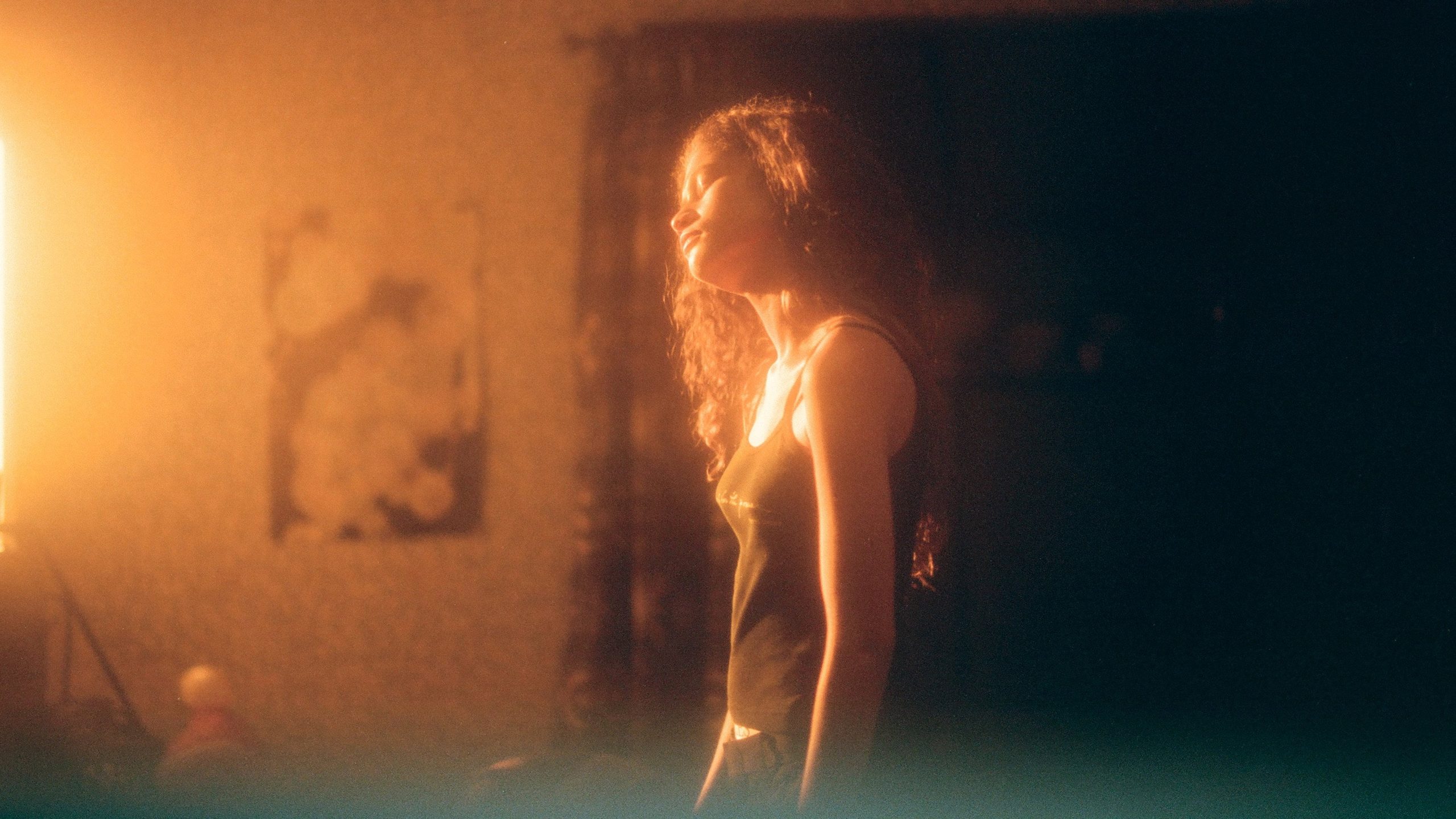
Nothing else on television looks like it. Marcell Rév, one of five credited cinematographers, lights a house party in violets and pinks, puts glitter under every eye and sends the camera on long gliding walks through rooms full of people who do not know where to put their hands. A school corridor is lit like a nightclub, a bathroom like a chapel. Heidi Bivens’s costumes do half the character work, Maddy Perez (Alexa Demie) in sheer two-pieces, Jules Vaughn (Hunter Schafer) in colours nobody else in the building would risk. Labrinth’s music does the other half, choirs and synthesiser swelling under scenes that would be small without it. Jason Baldwin Stewart and the design team give every family a house as clean as a showroom.
Zendaya holds it together. The scenes that count are the small ones at home, a drug test waiting on the bathroom counter, an argument in a kitchen, and she plays them without a trace of the pop star she was before this. What got at us was simpler than any of the set pieces. Rue explains, in narration, that she did not take the pills to die; she took them because for a moment everything went quiet. She says it as a fact, not a plea, and it is the most honest line in the series. We believed her and we were frightened for her, which is more than most television about addiction manages.
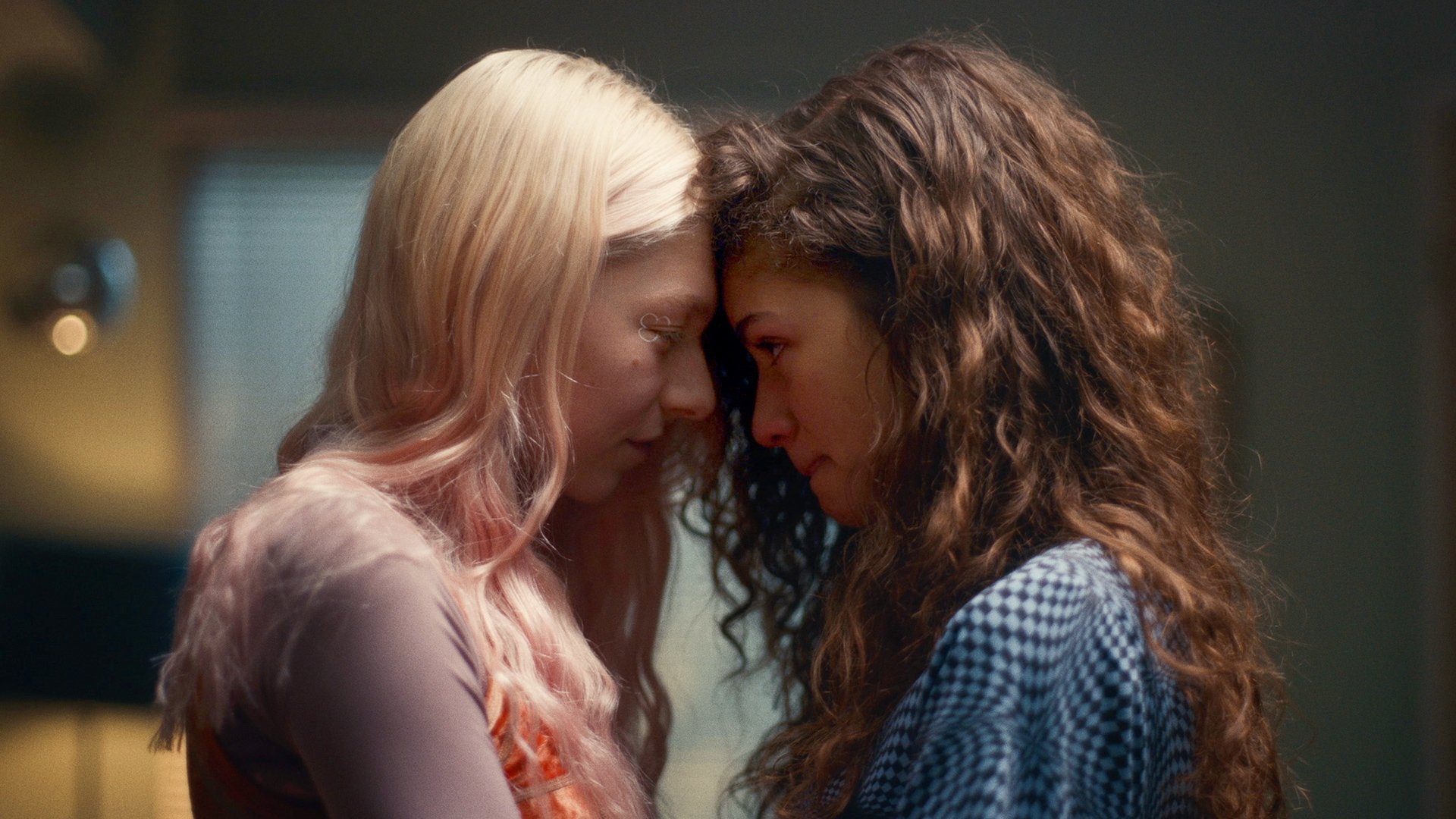
Around her the cast is stronger than the writing. Schafer’s Jules is the one person Rue looks at rather than through, and their scenes lying on a bed talking about nothing are the best in the show. Angus Cloud’s Fezco O’Neill, a dealer who worries about his customer, has a slow, mumbled decency no script could have invented. Javon Walton’s Ashtray is a child who deals drugs with the manner of a shopkeeper. Jacob Elordi plays Nate Jacobs, the quarterback, as something coiled, and Eric Dane as his father Cal Jacobs makes clear where the coil came from. Demie is the funniest thing in it and knows it.
Then there is the telling. Every episode opens with Rue reading us a biography of one character, childhood to present, so that by the time they speak we already know what they mean. Levinson does not trust a face to do the work; he reads us the notes. The locker-room nudity, the phone screens and the dozens of bodies at the party are there to prove the show is unflinching, and it has proved it by the third episode and keeps proving it for five more. Kat Hernandez (Barbie Ferreira) gets the strand that most wants credit for honesty and least earns it, and Cassie Howard (Sydney Sweeney) is written as the girl things happen to. Eight editors are credited, and some episodes drift while others race.
Teenage television has been here before, and the good versions understood that the audience was the age of the characters. This one is not for them; the 18 certificate is not a formality. It is for adults who want to be alarmed, and it gives them what they want with a skill that sometimes tips into salesmanship. We were exhausted by the sixth episode and, once or twice, angry at being exhausted. Then Rue and Jules would cycle home in the dark, Rév’s camera hanging back, Labrinth quiet for once, and we forgave it.
Watch the first episode alone, at night, without your phone. If it has not got to you by the party, the other seven will not either.