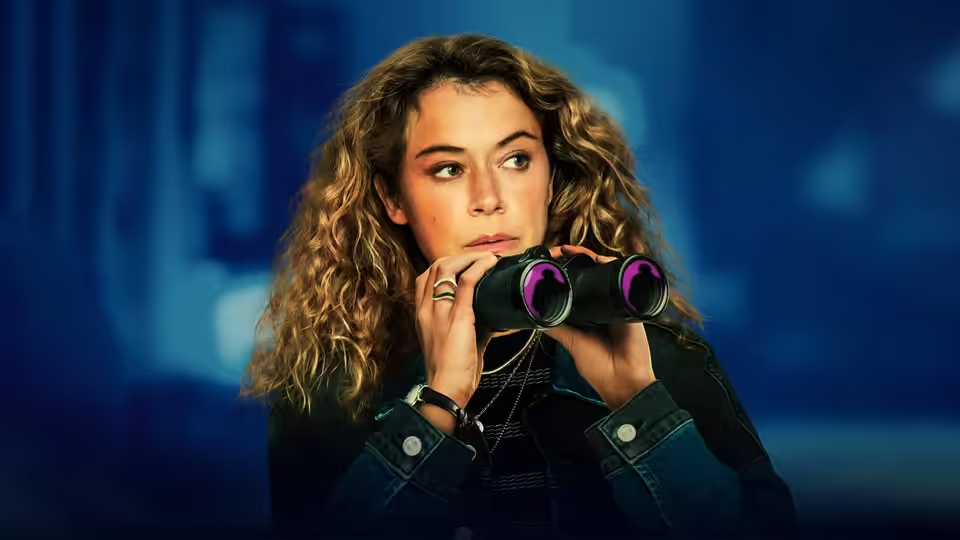
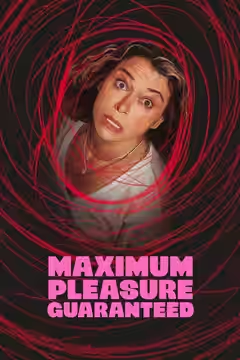
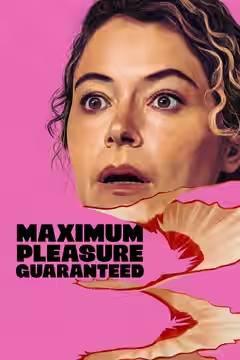
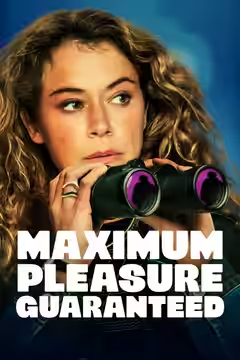
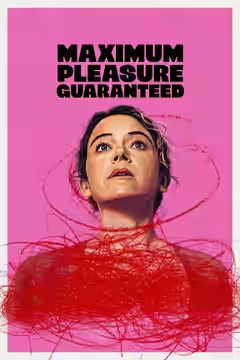
Tatiana Maslany gives this comic thriller warmth and a reason to keep watching. Its brisk succession of crises makes good entertainment, though an overcomplicated mystery sometimes gets in the way of a more interesting woman.
Maximum Pleasure Guaranteed is a good comic thriller with a central performance strong enough to carry a plot that sometimes needs carrying. It puts divorce, blackmail and the demands of parenthood into the same life, then keeps increasing the difficulty of managing any of them. The family difficulties give the criminal complications some weight, and Paula is interesting enough to hold our attention between them. We recommend it to those who like their domestic comedy interrupted by crime, with a warning about the complications.
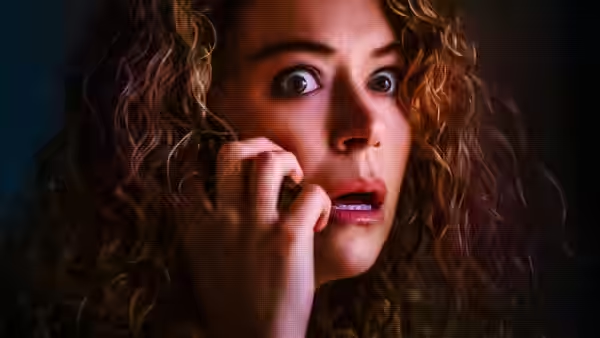
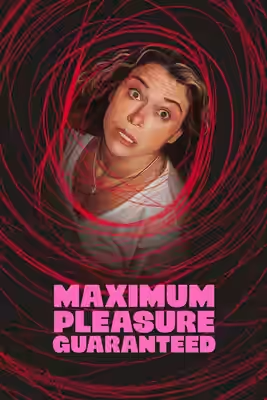
Tatiana Maslany plays Paula Sanders, and her performance supplies much of the humour. Paula can be chaotic and self-destructive, but Maslany never treats those qualities as sufficient explanation for a person. We found ourselves caring about her, even when her choices were exhausting. The performance keeps the strain of divorce and custody present beneath the comedy, so that Paula’s mistakes remain consequential even when they are funny.
The writing has a welcome interest in what an ordinary person might actually know how to do. Paula’s professional skills contribute to the crime-solving, giving her something more useful than a sudden gift for detection. That is a sound way to make a domestic thriller convincing: let the central character bring an existing competence to unfamiliar trouble. The writers, including Tami Sagher, Miki Johnson and David Rosen, are strongest when they preserve that connection to ordinary life.
Editors Skip Macdonald, Jeff Seibenick and Alex Minnick keep the succession of crises moving briskly, which helps the jokes and makes another episode tempting. There is pleasure in a programme that understands how quickly curiosity can go stale. Here, fresh trouble generally arrives before the previous difficulty has become tiresome. The risk is that speed also makes a convenient excuse for leaving gaps, and the plotting sometimes relies on coincidence when it needs a firmer connection.
Mark Schwartzbard and Joe Anderson provide the cinematography, Matthew Munn the production design, and Wynne Bennett the music. The presentation is stylish, and the combination of mystery and comedy feels confident enough to accommodate Paula’s messiness. Yet the programme’s most persuasive detail remains human: an ordinary skill turning out to matter, or a family worry surviving the distraction of a criminal crisis. The polish is welcome, but it cannot make a weak connection between events any more convincing.
The chief disappointment in the writing is how the cam-boy premise loses importance as the mystery becomes more elaborate. That starting point has enough potential embarrassment and uncertainty to sustain interest without quite so many further complications. Instead, the series sometimes appears reluctant to trust the problems it already has, adding another crisis when Paula herself would be enough. Maslany remains engaging through this, but there are passages where the effort of tracking the plot competes with our interest in her.
This is a good choice when a conventional whodunnit sounds too solemn and a domestic comedy sounds too safe. Expect to enjoy Paula’s company without endorsing all her decisions, and to forgive a mystery that does not always repay close inspection. Those who need every turn to withstand questioning should probably choose something tighter. Choose it for Paula, and allow the plotting a little leeway