Series review

Rivals

2024 · Directed by Elliot Hegarty, Alexandra Brodski, Jamie Jay Johnson, Dee Koppang O'Leary · Series · 18

In a sentenceThe naked tennis looks almost sensible once the fully dressed people start talking

Drama

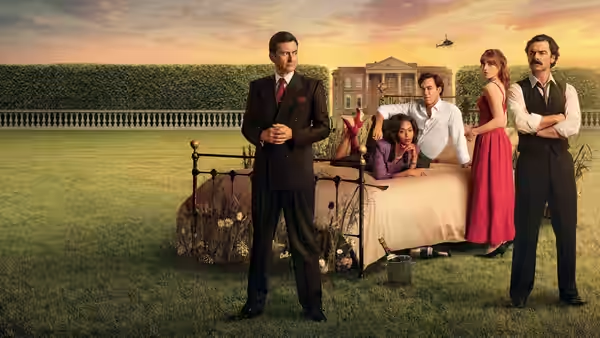
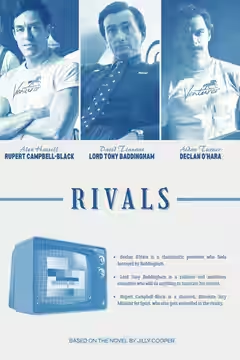
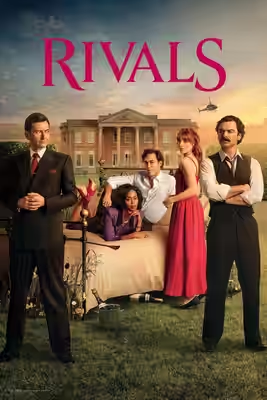
In the 1980s, television work, sex and the pursuit of power bring an ensemble of competing personalities into one another’s lives. David Tennant plays Tony Baddingham, Aidan Turner is Declan O’Hara and Alex Hassell is Rupert Campbell-Black in this series adapted from Jilly Cooper’s novel. Around them are Cameron Cook (Nafessa Williams), Taggie O’Hara (Bella Maclean) and Lizzie Vereker (Katherine Parkinson), alongside Freddie Jones (Danny Dyer). Professional ambitions and private desires overlap as relationships become entangled with questions of status and control.

Plays from YouTube when you press play; nothing loads from them until then.

Fi1m review

Rivals is a funny, unabashedly adult soap, carried by actors who understand how seriously to take its nonsense. The crowded plotting sometimes gets tiresome, but David Tennant and the ensemble make the indulgence worthwhile.

Rivals is an entertaining, cheerfully indecent soap that occasionally lets its crowded plot get in the way of its pleasures. The adaptation of Jilly Cooper’s novel understands that sex, social advantage and professional ambition can occupy the same conversation, and that none becomes more interesting merely by being treated solemnly. Its television-business setting gives the characters plenty of reasons to compete. We recommend it for the performances and the willingness to be ridiculous, with a warning that the plotting can become a chore.

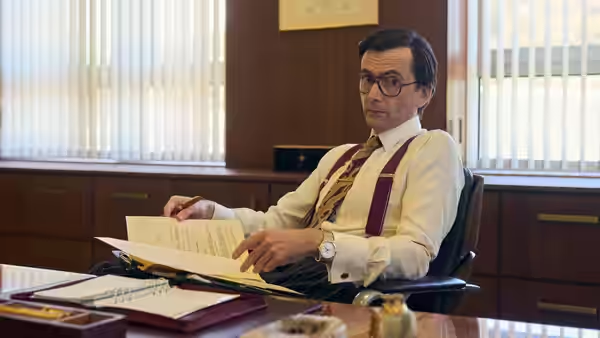
David Tennant’s Tony Baddingham is the strongest reason to stay: his villainy is funny without becoming harmless. Tennant makes the excess feel purposeful, so that a broad performance still carries a threat. Aidan Turner, as Declan O’Hara, gives him substantial competition for our attention, while Alex Hassell’s Rupert Campbell-Black supplies the sort of charm this material needs to keep dubious behaviour watchable. None needs the programme to stop and explain why we are watching them.

The women are given motives and tempers of their own. Katherine Parkinson’s Lizzie Vereker, Nafessa Williams’s Cameron Cook and Bella Maclean’s Taggie O’Hara help make the emotional stakes worth following amid the commotion. We wanted the programme to spend longer with them, rather than keep finding another strand to service. There is room here for irritation, vanity and hurt, as well as the obvious opportunities to flirt.

Dominic Hyman’s production design makes the 1980s conspicuous and inviting. Ashley Barron’s cinematography gives that display a glossy finish; the glamour helps explain why anyone would stay in such disagreeable company. The music by Jack Halama and Natalie Holt suits the scale of the performances, supporting emotions that are seldom expressed discreetly. These choices work for a soap whose characters feel everything strongly and would prefer everyone else to notice.

We laughed at the naked tennis, because the scene treats a plainly absurd combination of sport and nudity as something worth committing to. The joke survives being played out, without an embarrassed rush to move on to something more respectable. Directors Alexandra Brodski, Elliot Hegarty, Jamie Jay Johnson and Dee Koppang O’Leary deserve credit for sustaining that confidence across the series. The sexual comedy gives the actors room to play broadly, and the programme is generally happier when it lets them.

The difficulties come when the television-production drama, the sexual escapades and the more serious treatment of power all demand attention at once. Writers including Laura Wade and Dominic Treadwell-Collins have plenty to work with, but some stretches feel overstocked with people and short of a clear priority. The editing does not always help us feel which thread matters most. Our attention wandered when another shift of emphasis interrupted something already worth watching, and the performers then had to win it back.

If soaps usually exhaust our patience, this is unlikely to convert us. Its pleasure depends on enjoying people who behave excessively and being willing to follow them through the occasional unnecessary complication. We think the cast earns that latitude. Give it an evening when a naked tennis match sounds like a reasonable place to start


Critical consensus AI synthesised

74
Positive
7
Mixed
1
Negative
1

Most critics find Rivals an entertaining embrace of 1980s soap excess, with praise clustering around its ensemble, period production and willingness to take sex and pleasure seriously enough to make them funny. David Tennant draws particular notice, while the female characters and the wider cast give the glamour something to work with. The favourable reviews broadly agree that the camp tone is confident rather than apologetic, and that the mix of lust, money and power sustains the fun.

Reservations concern focus and consistency: some find the competing plots distracting or the opening slow. The spread is wide, though approval predominates. The AV Club finds the series caught between soap, television-industry drama and sexual escapades; The i Paper is more firmly opposed, arguing that the overcrowded plotting and uneven tone prevent it from committing fully to its trashier pleasures. Even these sceptical reviews acknowledge the performances.

Empire
16 October 2024 · David Opie
85*

The critic calls the series a supremely confident and endlessly enjoyable 1980s time capsule of soapy excess and hedonistic fun. They single out the self-aware tone, lavish production, and strong ensemble cast performances, especially from David Tennant and Aidan Turner.

Read the full review →
Radio Times
9 October 2024 · Morgan Cormack
80*

The critic praises the series as a gloriously fun, glamorous and soapy reminder of how entertaining TV can be, embracing its raucous roots while touching on themes like power and misogyny. They single out the strong ensemble of complex female characters and David Tennant's villainous performance.

Read the full review →
Vulture
20 December 2024
80*

The critic recommends the show as a fun, horny '80s romp full of sex and pleasure, praising its earnest embrace of campy entertainment and 1980s aesthetics.

Read the full review →
The AV Club
15 October 2024 · C+ · Caroline Siede
63

The series struggles to settle on a consistent tone, blending soap opera elements with TV production drama and steamy escapades but not fully committing to any. It is redeemed somewhat by strong performances and handsome production values from the British cast and crew.

Read the full review →
The i Paper
18 October 2024 · Julia Raeside
40*

The critic views it as a campy bonk-fest that's pure panto with fun performances, but criticizes the tonal inconsistency due to Disney's influence, overcrowded plot, and lack of focus, suggesting it should have been more trashy.

Read the full review →
The Guardian
18 October 2024

The critic praises the Disney+ adaptation for preserving the sex, excess and rambunctious joy of Jilly Cooper’s 1980s bonkbuster without sanitising it. They single out that even the naked tennis scene works perfectly.

Read the full review →

Cast

Stills

If you liked this, try…

Abigail's Party poster

Abigail's Party

1977 · For social climbing, sexual resentment and a gathering nobody should have agreed to attend.

The Player poster

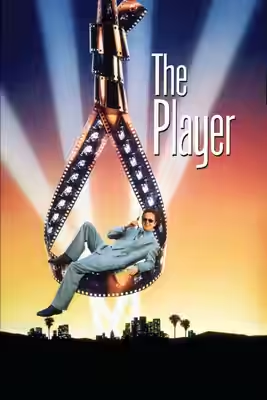
The Player

1992 · Another entertainment business full of appetites, with rather more efficient plotting.

The Rules of the Game poster

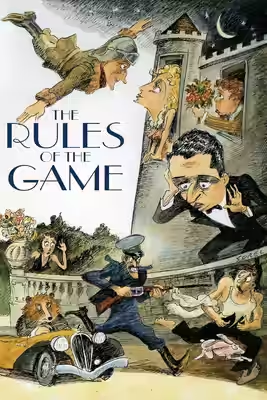
The Rules of the Game

1939 · Country-house desire and class manners, handled with rather less forgiveness.

Women on the Verge of a Nervous Breakdown poster

Women on the Verge of a Nervous Breakdown

1988 · For desire, deceit and a farce that keeps its crowded cast moving.

The Hour poster

The Hour

2011 · Television work and private entanglements, with sharper attention to the broadcasting itself.