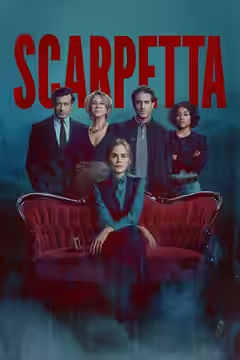
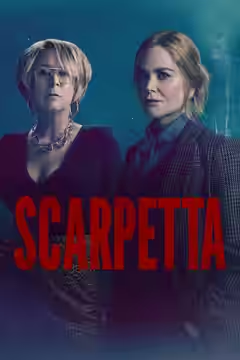
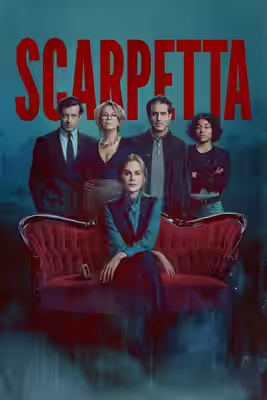
Nicole Kidman and Jamie Lee Curtis bicker their way through eight episodes and are the only reason to stay. Around them the two timelines, the gore and an unaccountable chatbot pull in different directions, and the series never settles on what it is for.
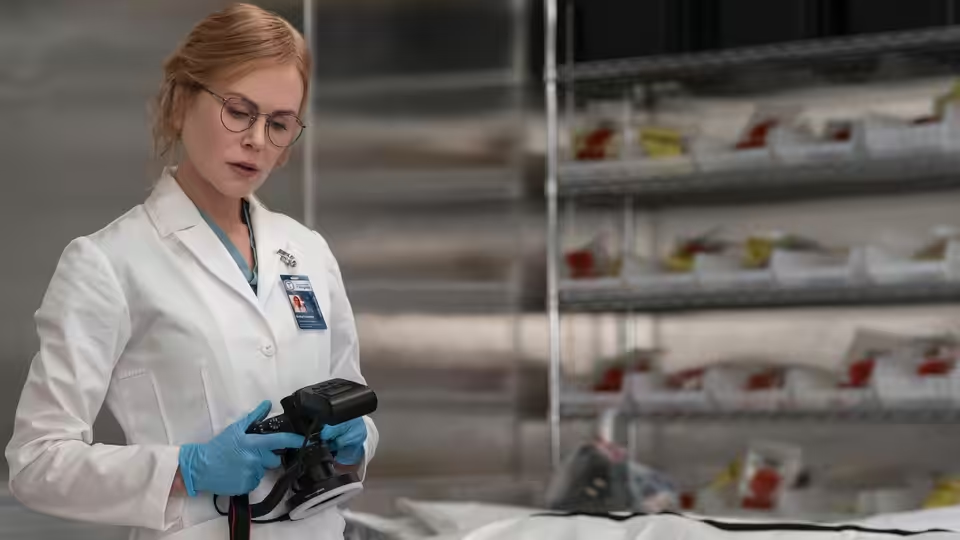
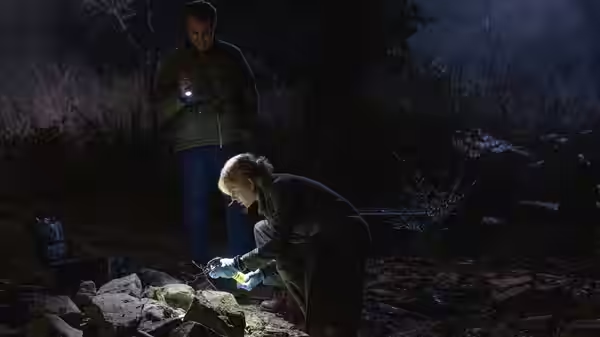
Patricia Cornwell has been writing about Kay Scarpetta since 1990, and television has waited a long time to have a go at her. Nicole Kidman plays the pathologist across eight episodes, in a present-day timeline that keeps cutting back to a younger Kay (Rosy McEwen) at the start of her career. It is a sound idea for a series about a woman who has spent her working life looking at what people do to each other, and it lets the show ask what a career of that does to a person. The trouble is that the six credited writers have packed in a great deal else, and the answer gets lost under it.
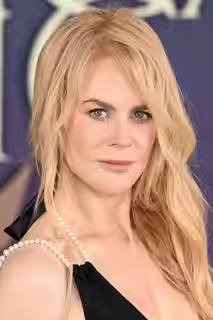
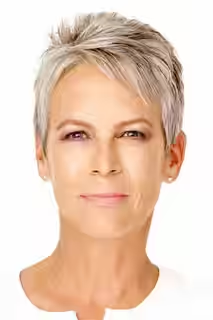
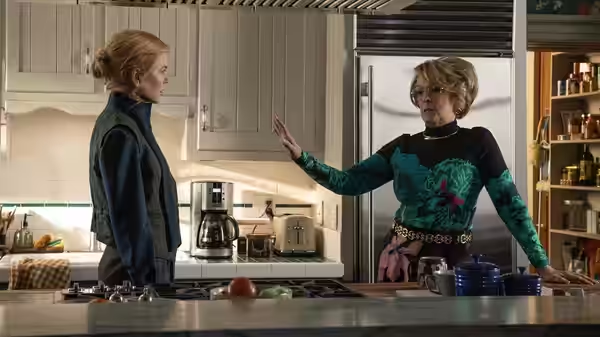
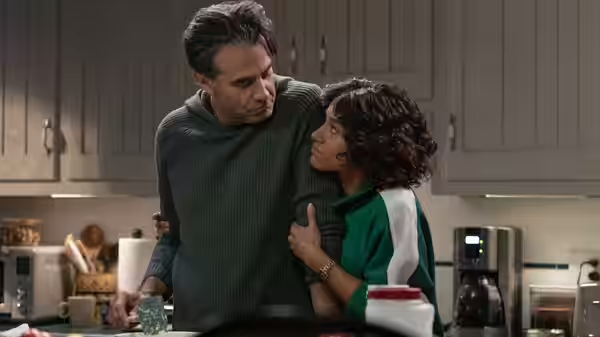
Kidman and Jamie Lee Curtis are the reason to stay. Kidman plays Kay as a woman who has not slept properly in some time, precise at the table and short with everybody away from it, and it is a better performance than the writing around it. Curtis plays her sister Dorothy at full volume, a woman who arrives in a room already aggrieved and leaves it having said the one thing she should not have. The scenes between them are the only ones in which the dialogue sounds like it was spoken before it was typed. We laughed at them more than once, and each time the show cut back to a body we resented it a little.
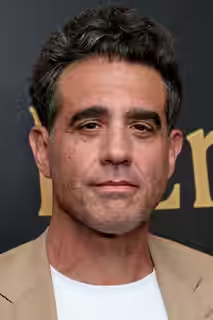
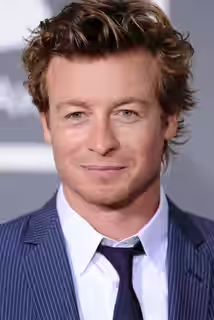
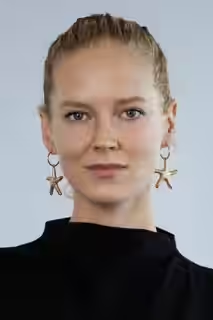
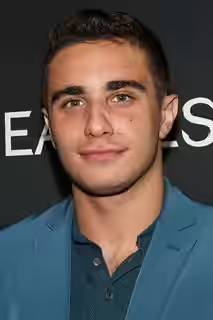
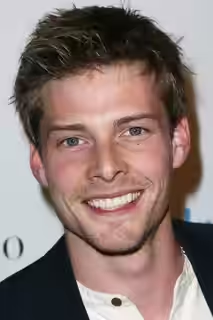
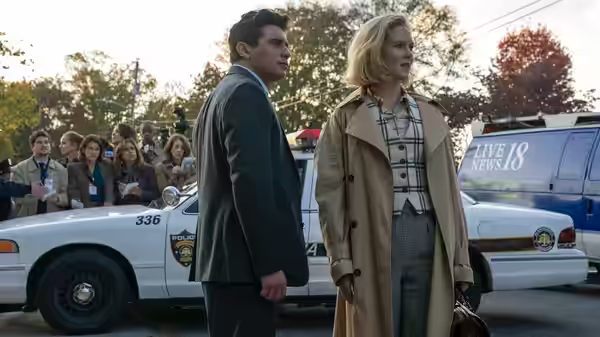
The younger cast do what they can. McEwen gives the early Kay a stiffness that reads as somebody deciding how to be taken seriously in rooms full of men, and it lines up with Kidman’s later brittleness well enough that you believe they are the same person. Jake Cannavale plays the young Pete Marino to Bobby Cannavale’s older one, and the resemblance does half the work. Hunter Parrish is the young Benton Wesley to Simon Baker’s and gets less to do. JoAnne Yarrow, Cecily Rhett, Colin Patton and Andrew Wesman share the editing, and the joins between the two periods are sometimes matched on a gesture and more often just a cut, so that you check the hairstyles to work out when you are.
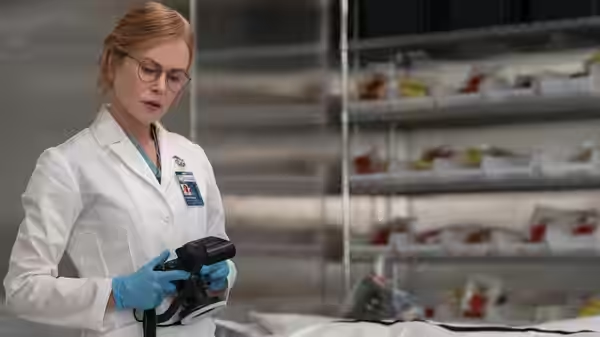
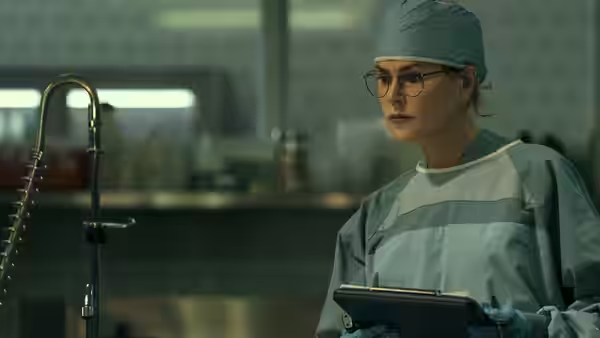
Then there are the bodies. The series is about murdered women, and Matthew Munn’s morgue is built to show them: steel, pale tile, hard light from above. John Brawley, Michael Simmonds and Eliot Rockett share the photography, and whoever is holding the camera, it stays on the table longer than it needs to. We flinched at the first autopsy, as we were meant to. By the third we had stopped flinching, and that is the failure, because a show whose tagline promises a voice for the voiceless spends a good part of its running time looking at them rather than listening. The 15 certificate is doing a lot of work.
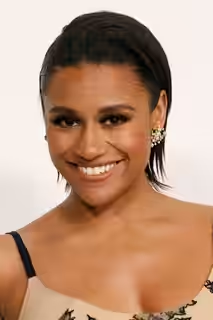
The plotting is the other problem. The central mystery is built out of red herrings, several an episode, and by the midpoint we had stopped trying to keep count. There is a thread involving an AI chatbot that belongs to a different, sillier series, and every time it appears the tone drops out from under the actors. Ariana DeBose, as Kay’s niece Lucy, deserves more than she is given. Ellen Kuras, David Gordon Green and Charlotte Brändström share the directing, and the episodes do not look or move like each other; Jeff Russo and Perrine Virgile’s score, low strings under most of the talk, is what holds the thing together when the picture will not.
Kidman has made a run of this kind of television, and The Undoing showed her that a thriller can be lurid and still under control. This one is lurid and loose. Set against the crime procedurals it is plainly modelled on, it has a stronger lead and a stronger sister than most of them and a weaker grip on its own case than nearly all. The reviews so far have split, some finding the two timelines well blended and others finding the whole thing a mess. We land in the middle, and nearer the second camp.
Watch it for the two women, and do not go in hungry. The eight episodes could have been six, and the two it would lose are the ones with the chatbot in them.