The first eight episodes are a well-built small-town horror story: children who can act, a two-note synthesiser score that does half the work, and Winona Ryder holding nothing back. The later runs get bigger, and not always in the right places.
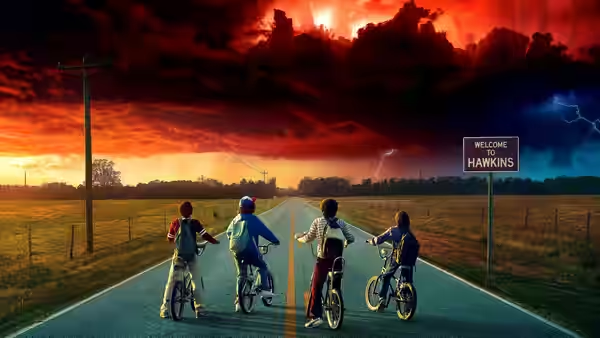
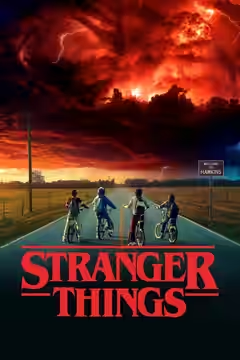
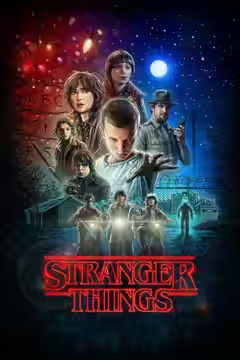
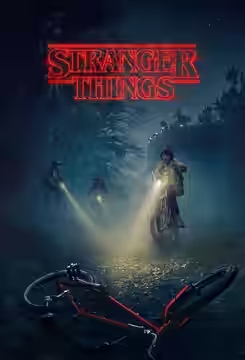
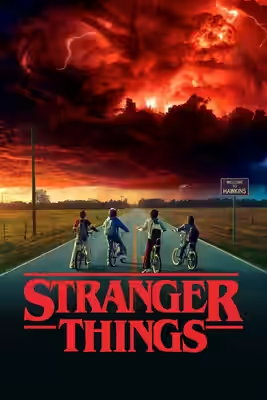
Hawkins, Indiana, November 1983. A boy called Will Byers (Noah Schnapp) sets off home from a friend’s house on his bicycle and does not get there. His mother Joyce (Winona Ryder) is told by everyone, kindly, that he will turn up. Police chief Jim Hopper (David Harbour) starts a search mostly to be seen starting one. Will’s three friends go looking themselves and find a girl in a hospital gown who will not give her name and has a number tattooed on her wrist. Matt and Ross Duffer wrote and directed most of the first eight episodes, which arrived on 15 July 2016. It is a good series, and that first run is the best of it.
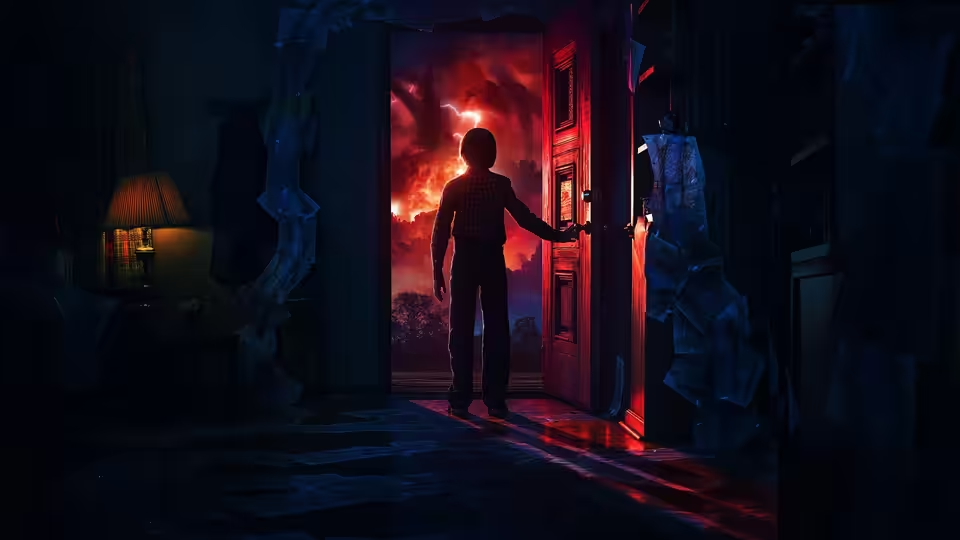
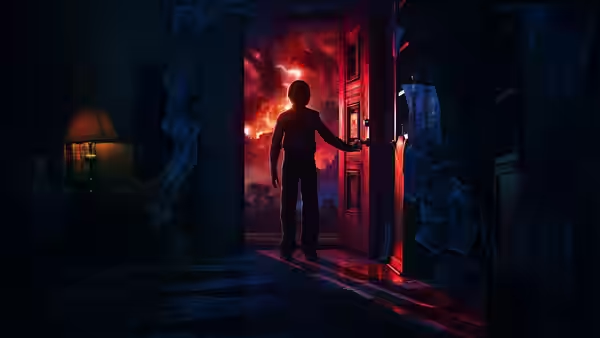
What the Duffers are attempting is plain from the first frame: the American small town as Spielberg, Carpenter and Stephen King left it, rebuilt by people who loved it. Chris Trujillo’s production design gives the Byers house wood panelling, brown carpet, a rotary phone on a wall and a fridge that hums. Costume designers Malgosia Turzanska, Amy Parris, Kim Wilcox and Kimberly Adams put the boys in corduroy and puffer waistcoats their mothers chose. The laboratory is the opposite: long fluorescent corridors, a lift, nobody about. Tim Ives, Tod Campbell and their colleagues shoot the woods blue-black with a single torch beam in them, and they let the dark stay dark.
We were frightened in the first three minutes, which is sooner than we expected. A man in a white coat runs down an empty corridor to a lift, the lights stutter, and something we never see arrives above him. What did it was the sound: Kyle Dixon and Michael Stein’s score comes in on two or three low synthesiser notes that never resolve, and the editors, Dean Zimmerman and Kevin D. Ross among them, hold the shot a beat longer than television usually dares. That pulse sits under the whole town for eight episodes. It is the series’ best idea and its cheapest, which is how good ideas often go.
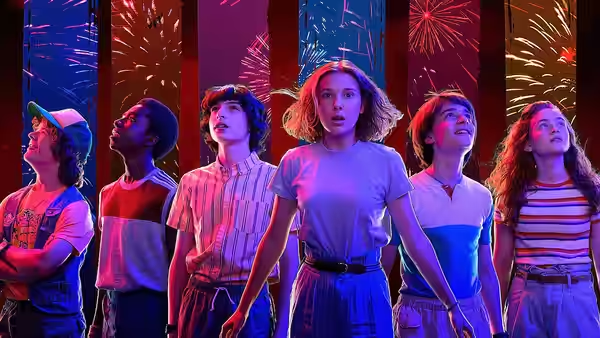
Ryder plays Joyce as a woman who was frayed before her son vanished, all cigarettes and grabbing hands, and she never once asks for our sympathy. Harbour’s Hopper is heavy, hungover and quietly clever, a man who has been sad for years and stopped mentioning it. Millie Bobby Brown, as Eleven, says perhaps a few hundred words across the run and is the centre of it anyway; she does most of the acting with her jaw. The boys are properly cast. Gaten Matarazzo’s Dustin is funny on purpose, Caleb McLaughlin’s Lucas is the one who asks the sensible questions, Finn Wolfhard’s Mike is earnest to the point of pain. Among the teenagers, Natalia Dyer’s Nancy and Charlie Heaton’s Jonathan carry the plot, and Joe Keery’s Steve Harrington, introduced as the boy with the hair and the car, turns into the person we most looked forward to seeing.
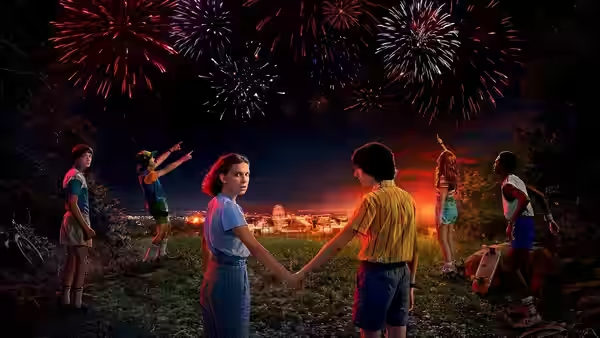
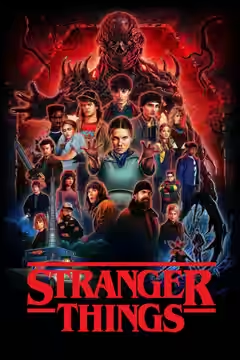
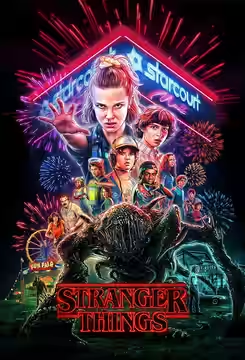
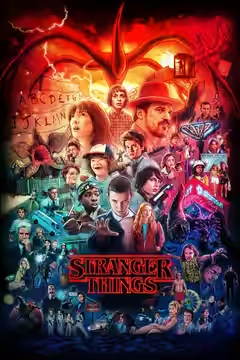
Then the series kept going. Five runs between 2016 and 2025, and every one adds people: Sadie Sink in the second, Maya Hawke’s Robin in the third, both good, both taking minutes from somebody else. The monsters get bigger and the episodes get longer to hold them. Somewhere in the fourth run, with the cast split across several places and cross-cut so no scene lasts long enough to breathe, we were bored, and then cross about it, because we could see what the Duffers wanted. They wanted the small ensemble of the first series, four boys in a basement arguing over a map. They had hired too many people to have it.
The writing has a habit worth naming. Each series answers its mystery with a larger mystery, so the laboratory becomes a door and the door becomes a place and the place has a history. Some of this is fun. Some of it is the sound of writers keeping a show alive. Eight directors are credited across the run, including Shawn Levy, Andrew Stanton and Frank Darabont, and to their credit the look and the pace hold from hand to hand.
Most critics found it comfortable and slightly predictable, and we agree with both halves. The Duffers did not invent a single thing here. Borrowing well is still work, though, and in the first eight episodes they do it with real care.
Watch the first series with the lights off and something to eat. Decide about the rest afterwards. Certificate 15, and the children swear like they mean it.