Claire Danes and Matthew Rhys give The Beast in Me enough tension to make its familiar setup work. But the eight-part thriller keeps them circling each other long after the writing has run short of things to say.
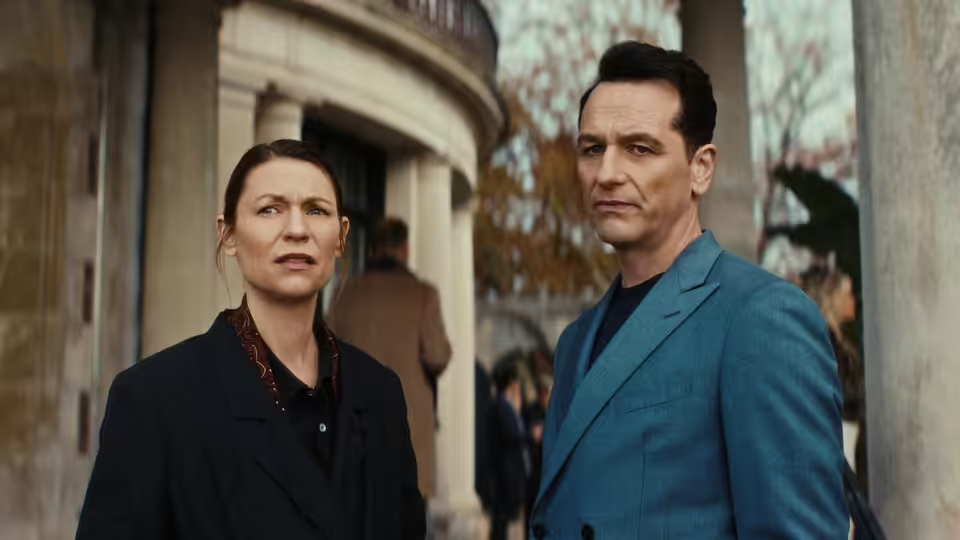
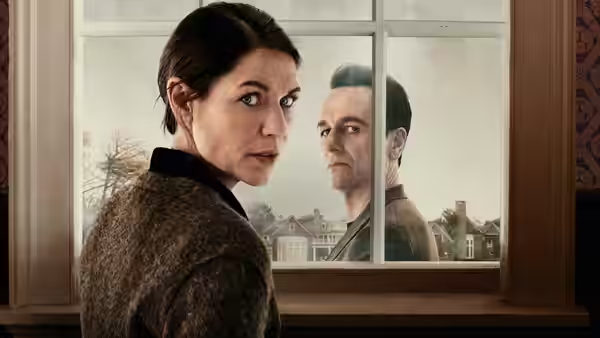
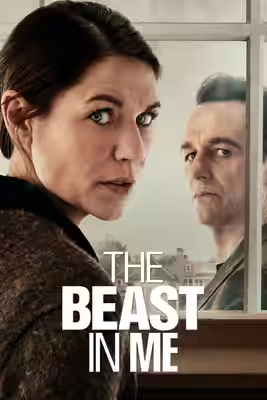
The Beast in Me has two actors worth watching and a mystery that struggles to justify eight episodes. Its strongest material is the awkward relationship between a grieving, reclusive author and the notorious property heir who moves next door. Claire Danes plays Agatha ‘Aggie’ Wiggs, Matthew Rhys plays Nile Jarvis, and their mutual interest gives the series a useful starting point: neither is straightforward company. We would have liked the writing to examine their fascination with each other more closely.
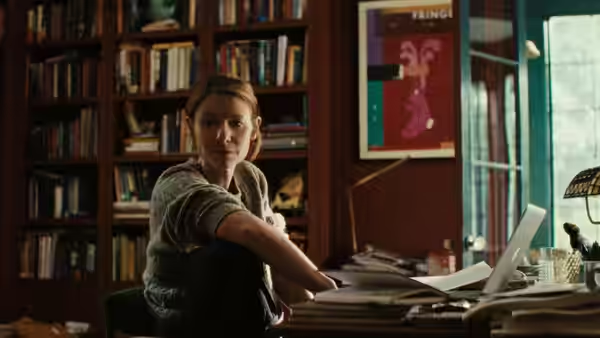
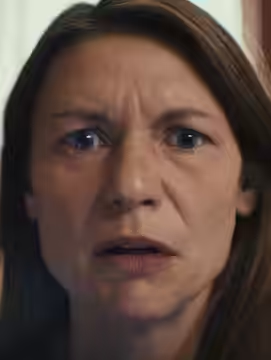
Danes makes Aggie’s withdrawal feel difficult rather than picturesque, which helps prevent her grief from becoming merely a convenient explanation for her behaviour. This sort of thriller can rely on a troubled central character to provide depth that the writing has not earned. Here, the performance supplies some of what the script leaves out. We were more moved by Aggie’s isolation than we expected, because Danes makes her interest in Nile feel like an effort to engage with another person again. She does not ask us to approve of the choice.
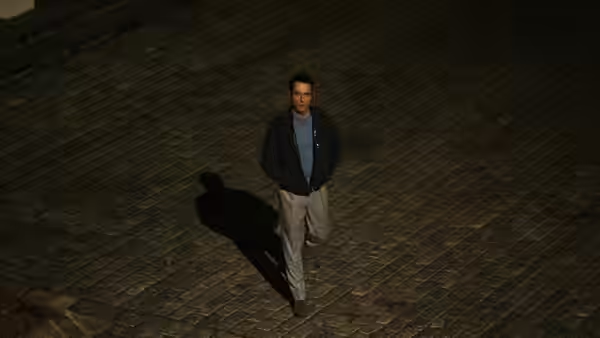
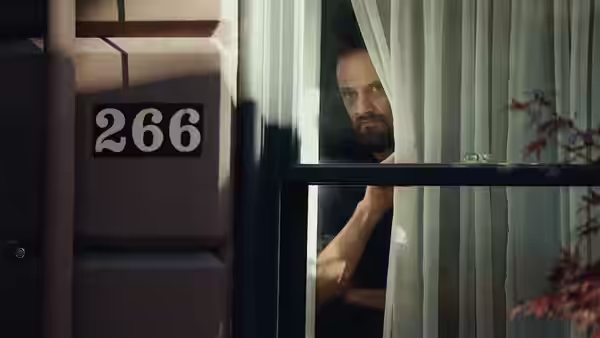
Rhys is equally important, giving Nile enough appeal for Aggie’s curiosity to remain credible. A possibly murderous neighbour is not much of a puzzle if he is plainly unbearable from the outset, and Rhys avoids that easy mistake. The exchanges between them are the reason to continue: each seems to be measuring how much the other can be persuaded to disclose. The tension depends on our uncertainty about what either person wants from the conversation.
The directors, Lila Neugebauer, Antonio Campos and Tyne Rafaeli, favour psychological unease over the brisk business of an investigation. Lyle Vincent’s cinematography helps give the encounters a horror-film unease, which suits the uncertainty about Nile. Loren Weeks’s production design contributes to the glossy finish, although that finish makes the threat feel a little too comfortably packaged. The atmosphere works while Danes and Rhys are testing one another. When their relationship stops developing, the care taken with the presentation becomes less persuasive.
The more serious problem is duration. Editors Shelby Siegel and Ralph Jean-Pierre cannot make eight episodes feel necessary when the central relationship keeps returning to the same questions. We grew impatient with the repeated contest for control, because a shift in advantage did not always bring a fresh understanding of either character. The music, credited to Sean Callery, Sara Barone and Tim Callobre, helps maintain the anxious mood. It is less successful at making these stretches feel urgent.
Writers Gabe Rotter, Howard Gordon and Daniel Pearle have material for a disquieting study of why another person’s notoriety can become so absorbing. Yet the programme is hesitant about following Aggie’s fascination towards anything especially uncomfortable. A psychological thriller needs its conversations to change our understanding of the people having them, even when it withholds the answer to the central mystery. Here, too much depends on renewing our suspicion of Nile, with too little attention to why Aggie keeps finding him compelling.
The attraction depends on how much pleasure we take in actors working through a difficult relationship. There is enough here for viewers who enjoy that process, even when the mystery stalls. Choose it for Danes and Rhys, provided a slow plot is not a deal-breaker.