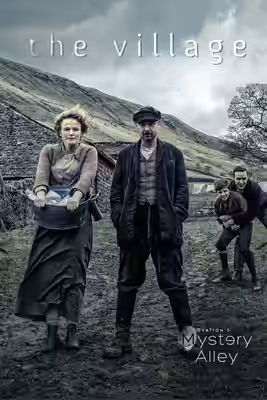
Peter Moffat’s The Village gives ordinary lives serious attention, with feeling that does not turn sugary. It is worth staying with, though the opening’s insistence on being grim can make watching feel like a duty.
Peter Moffat’s The Village asks us to take ordinary lives seriously, without making their difficulties easier to sit through. It is a good drama, sometimes a wearing one, with enough feeling to justify its demands. The temptation in this sort of programme is to make a community immediately lovable, so that its troubles arrive already cushioned by our affection. Moffat is less accommodating, and the opening can mistake making us uncomfortable for making us understand.
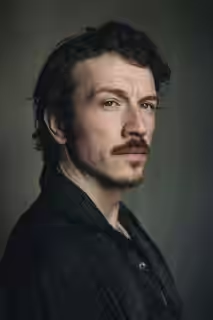
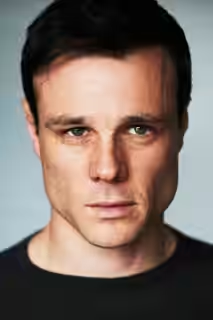
Maxine Peake, as Grace Middleton, is the strongest reason to stay. We were moved by her, because she makes Grace’s feelings matter without softening the severity around her or asking us to find it reassuring. John Simm’s John Middleton adds to the weight of the drama, although the accumulated grimness can leave too little room to distinguish one kind of unhappiness from another. The acting holds our attention even when the writing seems determined to make that attention hard work.
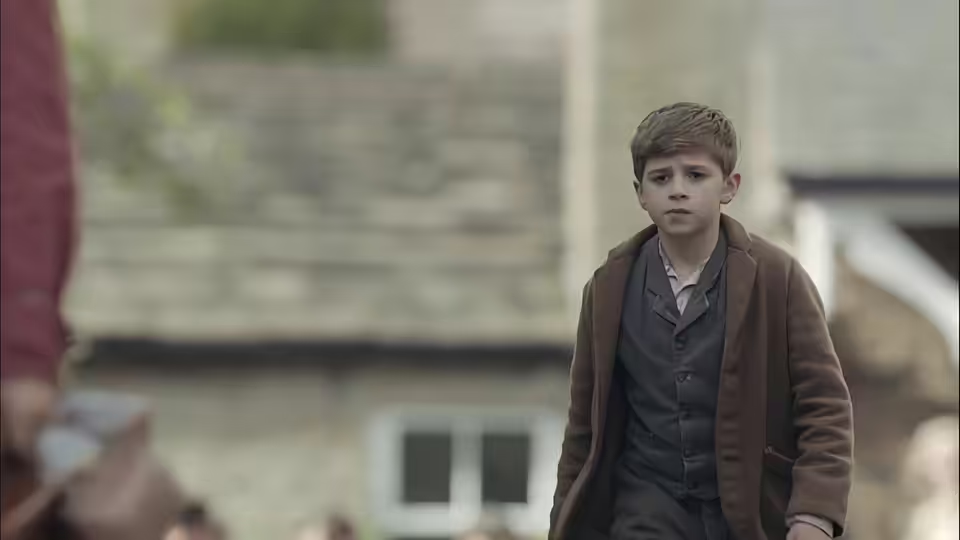
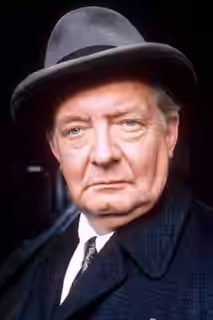
With Tom Varey as Bert Middleton and David Ryall as Old Bert Middleton, the programme gives the Middleton name particular weight. Its interest in ordinary experience is welcome, and it need not make every character immediately sympathetic to sustain that interest. Charlie Murphy as Martha Allingham and Juliet Stevenson as Clem Allingham help make the wider ensemble worth following. The cast gives us reasons to remain curious about these people, even when the general severity threatens to make their individual feelings harder to distinguish.
The cinematography is credited to David Raedeker, Adam Suschitzky, Maja Zamojda and David Odd, and its restraint suits the material. Maurice Cain’s production design feels rightly subordinate to the acting, helping the village hold our interest without making the surroundings the main attraction. Sheena Napier’s costume design works with similar discretion: the people remain more interesting than what they are wearing. These contributions support the programme’s seriousness, though a little more ease would not necessarily diminish the care being taken.
The editing credits include St. John O’Rorke, James Taylor, Anne Sopel, Simon Brasse, Sarah Brewerton and Lindsey Dillon-Massey, and the pace is less persuasive when patience becomes insistence. The opening’s grimness needs more variation; being given longer to feel bad does not always deepen our understanding of the people involved. Adrian Corker’s music faces a difficult task in a programme already so determined to make us feel its weight. It is most persuasive as support for performances that need little additional emphasis, and less welcome when the seriousness starts to feel prescribed.
As an ensemble drama, The Village succeeds when our interest in a person outweighs our awareness of how solemnly the programme regards them. Its unsentimental treatment of ordinary lives is welcome, but the writing does not always allow enough room for people to be something other than troubled. A lighter touch would give the actors more variety without requiring anyone to pretend that life is easy. That reservation matters, particularly at the start, but it does not cancel the strength of the performances. Choose it for an evening when strong acting matters more than being put at ease.