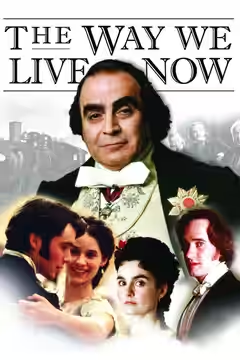
Andrew Davies and David Yates turn Trollope’s novel of a swindler and the society that courts him into four fast, rude, funny episodes, with David Suchet’s Melmotte at the centre. The love story is thin, and that is the only thing wrong with it.
Andrew Davies has adapted most of the Victorian shelf, and The Way We Live Now is the one where the material meets him halfway. Anthony Trollope’s novel is about a financier nobody can place, who arrives in London with money that may not exist, and the society that decides to hold its nose. Davies writes it fast and rude, David Yates shoots it as if the camera had drunk the champagne, and David Suchet gives Augustus Melmotte a weight the series never has to carry for him. It is good company for five hours, and it has a soft patch where its love story should be.
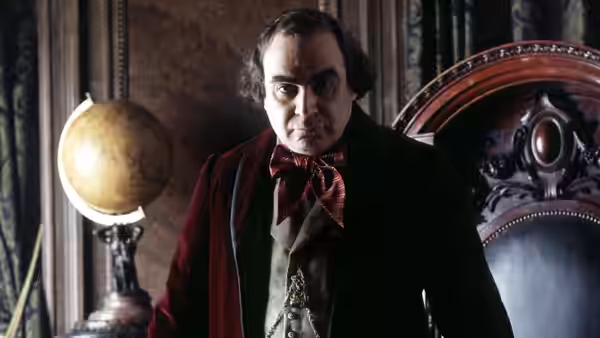
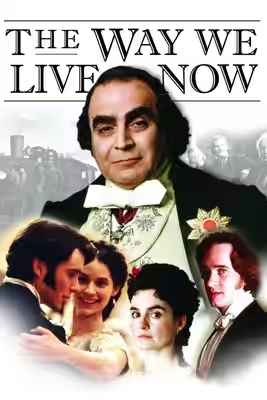
Suchet plays Melmotte big. He pads the voice with an accent from nowhere, lets the lower lip hang, and eats as if the plate might be taken away. He bullies his clerk Croll (Allan Corduner) and his daughter Marie (Shirley Henderson) in the same breath, then turns to a visiting lord with a courtesy so thick you could spread it on bread. What makes it more than a turn is how plainly the man knows he is despised. At his first great party the guests drink his wine and look through him, and we found ourselves on his side, which we had not expected and did not entirely enjoy. Everyone in the room is a snob or a sponger. He is only a thief.
The Carburys are the other engine. Cheryl Campbell’s Lady Carbury writes bad history books to pay her son’s debts and flatters the editor Mr Broune (David Bradley) into reviewing them kindly; Bradley plays him as a shy man who knows he is being used and does not mind. Matthew Macfadyen’s Sir Felix is the son, handsome, dim and nearly always drunk, and Macfadyen lets him be funny without once asking us to like him. Lady Carbury’s plan is to marry Felix to Marie Melmotte, and Davies gets his best comedy from a man with no intentions courting a girl who takes every word as a vow. Henderson’s Marie looks like a child and bargains like her father.
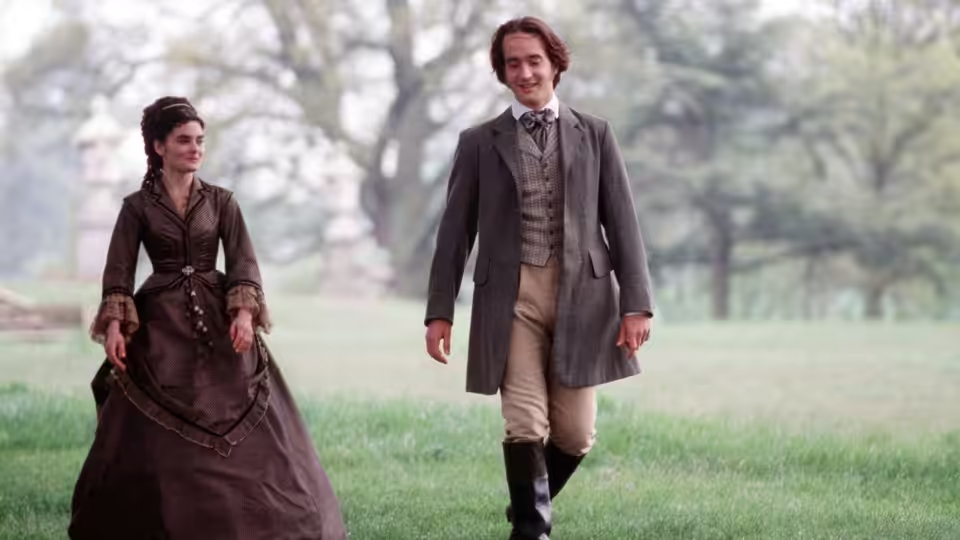
Yates and the cinematographer Chris Seager shoot it hand-held and close, the frame tipping as the money moves, with none of the usual carriage-and-crinoline stateliness. Gerry Scott builds Melmotte’s house as a wall of gilt and marble with nothing personal in it, and the Carbury rooms as furniture that has been sold once already. Andrea Galer puts Melmotte in waistcoats that announce his income and Marie in frills a size too young for her. Nicholas Hooper’s score is a march that keeps threatening to become a polka, and it tells us the whole thing is a joke before anyone on screen has noticed. Mark Day cuts the railway board meetings against the card tables at Felix’s club, so we can see it is the same game in different coats.
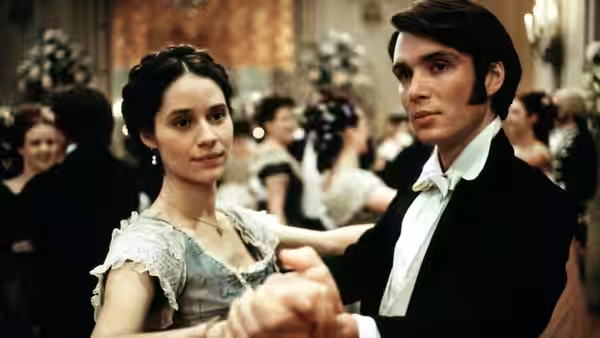
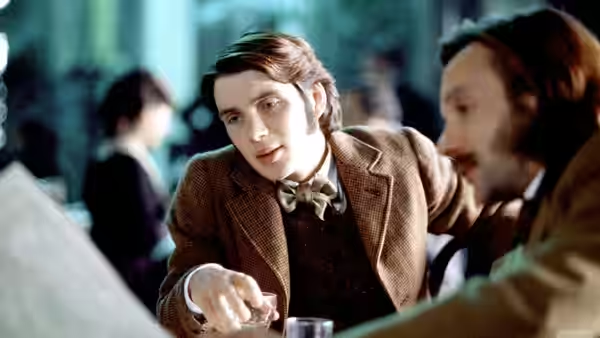
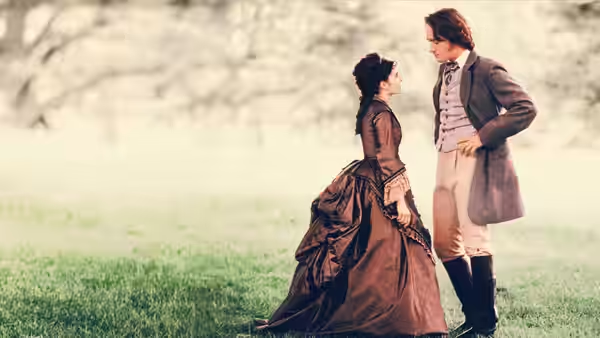
The weak strand is the one Trollope thought was the point. Paul Montague (Cillian Murphy), the young engineer whose railway gives Melmotte his scheme, loves Hetta Carbury (Paloma Baeza), who is also wanted by her upright cousin Roger (Douglas Hodge). Murphy is earnest, Baeza is patient, Hodge is honourable, and none of it has the pulse of a single scene with Melmotte. Miranda Otto’s Mrs Hurtle, the American who follows Paul across the Atlantic, livens things up, but the American material is played broad where the English is played sharp.
The one review we have read admires the care and doubts that Victorian debts mean much to a modern viewer. We think that is backwards. A man with no visible assets sells paper in a railway nobody has seen, the great and good fight for a seat on his board, and the only question anyone asks is whether the shares are going up. Davies does not underline the parallel and does not need to.
Against Davies’s own work this sits near the top; his Pride and Prejudice (1995) is the one everybody watched, and this is better written. It runs four episodes of 75 minutes and carries a 15 certificate. The dull patches are short, and Suchet is never far away.