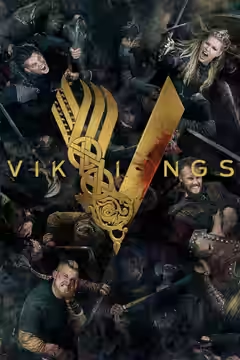
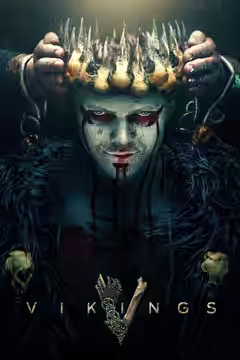
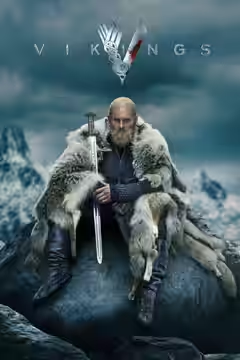
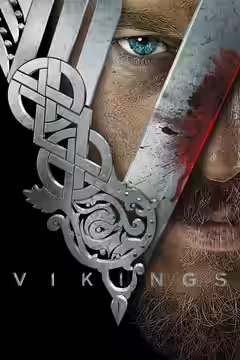
Michael Hirst’s historical drama is worth following for its battles, its countryside and Travis Fimmel. The dialogue can be painfully blunt, but the performances give the fighting enough human consequence to keep us interested.
Vikings is good, forceful historical adventure, with an engaging cast and a habit of saying things more heavily than it needs to. Creator and writer Michael Hirst wants the raids to matter beyond the immediate business of winning a fight: who commands, whose customs prevail, and how knowledge changes the exercise of power. That gives the action something to carry, even when the dialogue makes the questions sound less interesting than they are. The early awkwardness eases as the characters become more absorbing.
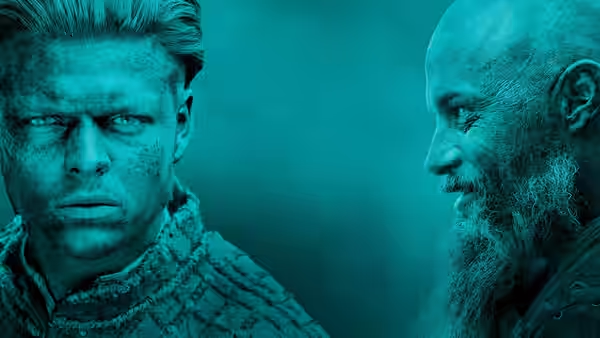
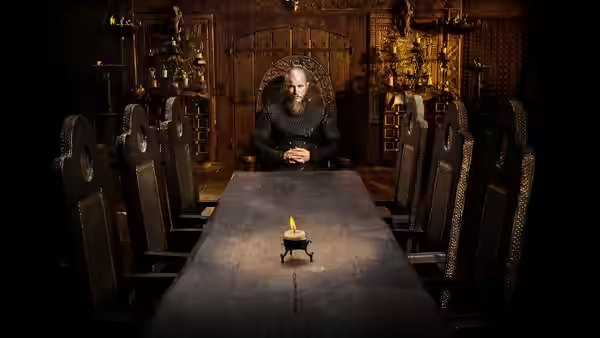
Travis Fimmel, as Ragnar Lothbrok, supplies much of the reason to stay. His performance allows for thought as well as appetite, and makes the rise of a raider interesting even when the script seems too keen to secure our approval. There is enough uncertainty in his presence to keep a familiar story of ambition from feeling settled in advance. The writing sometimes works against him by making its leading man easier to excuse than the world around him.
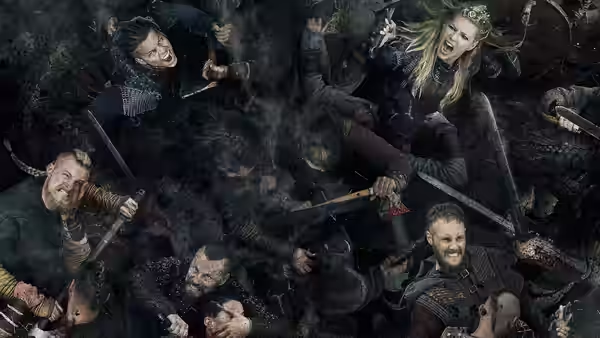
The battles give the programme much of its momentum, and their brutality prevents the fighting from becoming merely decorative. We winced at the carnage; the bloody raids make the pursuit of power harder to cheer than the leading man’s charm initially promises. Don Cassidy and fellow editors keep the action moving, though the early dramatic passages are less sure of their pace. The series becomes more absorbing as its characters develop and the plotting starts to move with greater assurance.
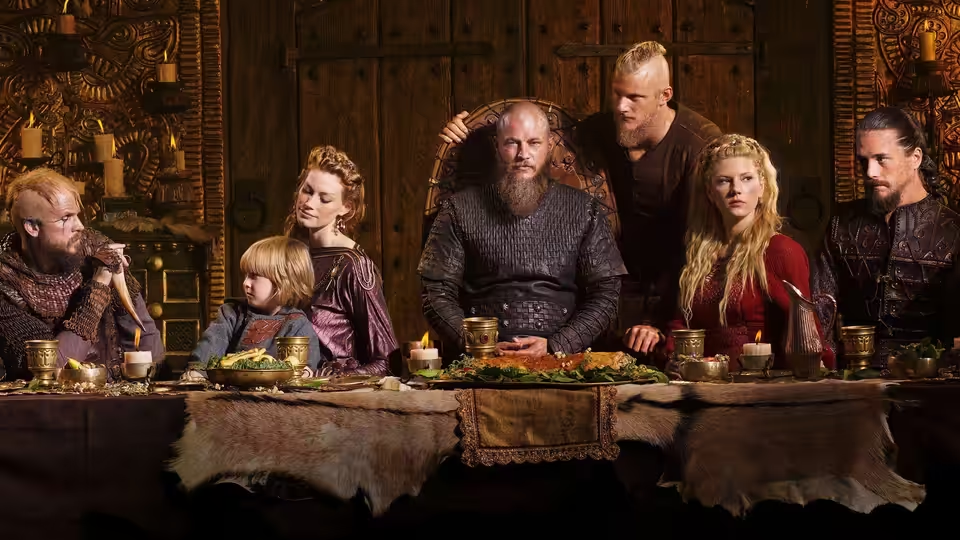
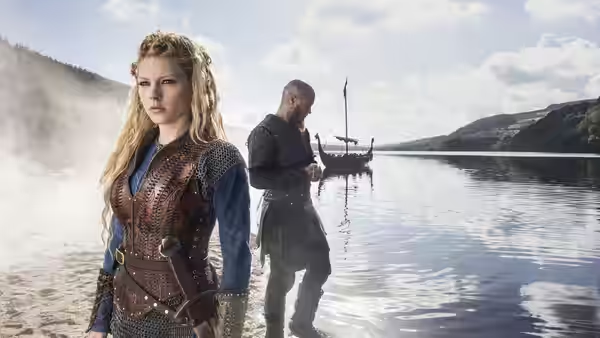
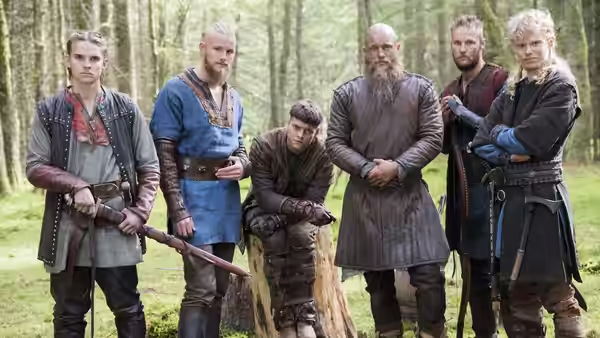
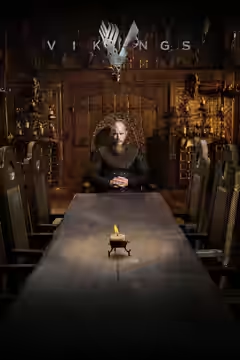
The countryside also earns its place, rather than merely filling the gaps between fights. Cinematographers P.J. Dillon and John Bartley give the landscapes an imposing presence, making the ambitions being argued over feel small against the land itself. Tom Conroy’s production design and Joan Bergin’s costumes do useful work in making rank visible, so the drama can establish status without another speech. The attention to surroundings lends weight to scenes that the dialogue cannot always support.
Trevor Morris’s music is effective at sustaining the pressure, although its insistence becomes tiring when dialogue and action are already working hard. It leaves little room for an audience to reach a feeling without assistance. Michael Hirst’s dialogue is the more persistent problem: too much is stated plainly, then stressed again. The ideas about custom and authority are worth considering, but people do not always sound as though they have reasons to say these things to one another.
As historical adventure television, the series has enough curiosity about its society to distinguish itself from a succession of interchangeable conquests. We need not mistake that curiosity for a reliable history lesson; the drama takes liberties and is chiefly concerned with keeping its characters in motion. Nor does every question about morality survive the desire to make its central raider appealing. Still, the performances and the attention to how this society works keep the quieter stretches interesting. Try it for the characters and the battles, provided a speech that announces its meaning twice will not send you reaching for the remote.