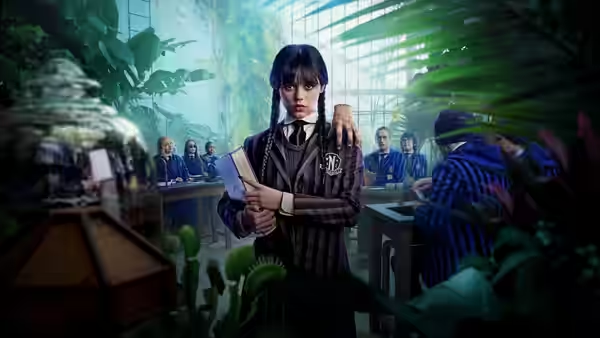
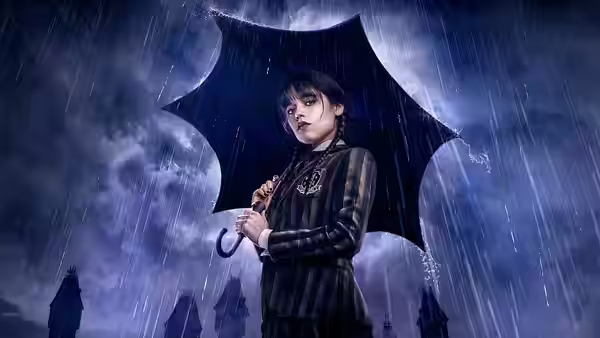
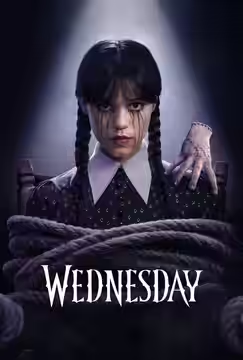
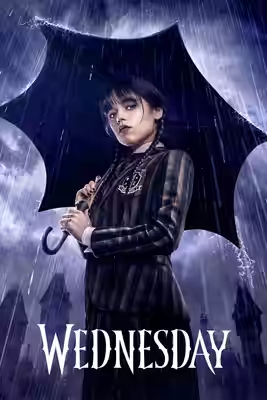
Jenna Ortega makes Wednesday worth the evening, finding real comedy in its heroine’s severity. The supernatural school mystery is less distinctive, but the cast supplies enough warmth and mischief to carry it.
The opening season of Wednesday is an enjoyable school mystery with a lead performance good enough to survive its more routine plotting. Moving Wednesday Addams into a teenage detective story gives her plenty to be cross about, and Jenna Ortega makes that a reliable source of pleasure. The programme wants to keep the character’s hostility intact while letting a broader young audience into her life. It largely manages that, although the boarding-school format dictates rather more than it should.
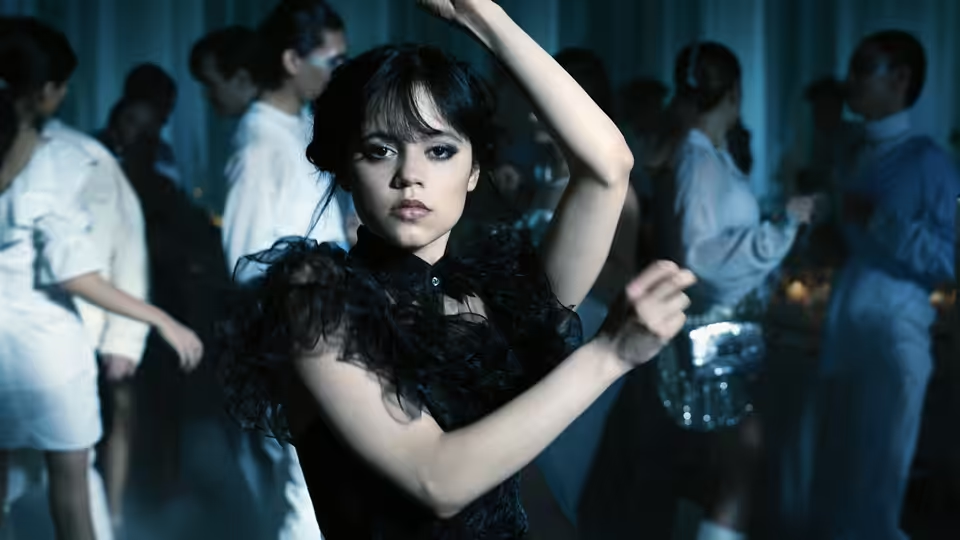
Ortega plays Wednesday’s severity with the confidence to let a joke arrive without announcing it. We laughed at the satisfaction visible beneath her solemn expression; she seems to enjoy being disagreeable, and does not ask us to excuse it. That tiny suggestion of pleasure stops the deadpan delivery becoming a mechanical exercise. It also makes the character tolerable over a series, where unbroken contempt could soon become as tiresome as any other adolescent pose.
The ensemble helps. Emma Myers as Enid Sinclair and Joy Sunday as Bianca Barclay give Ortega company worth watching, and the school scenes have enough comic life to survive stretches when the mystery becomes predictable. There is a practical advantage to this wider cast: Wednesday has people to play against without every exchange depending on our affection for the Addams family. The loss is that the family’s shared delight in the peculiar becomes less central. We miss the sense that these people find one another entirely reasonable.
Tim Burton is among the directors, and there is some visual mischief, though less strangeness than his presence might lead us to expect. David Lanzenberg and P.J. Dillon’s cinematography gives the school mystery a polished finish without making its setting especially unsettling. Mark Scruton’s production design is similarly comfortable with the demands of the genre. The school looks fit for supernatural intrigue, but we wanted surroundings that felt less orderly and more capable of surprising us.
Danny Elfman and Chris Bacon’s music supplies a welcome sense of play, keeping the gloom from turning ponderous. The pacing is less dependable. Jay Prychidny’s editing serves Ortega’s comic timing well, but the longer stretches of investigation do not always earn the attention they demand. We remained interested in Wednesday when we were no longer particularly curious about the next clue, and several scenes depend heavily on that attachment.
The writing, with Alfred Gough and Miles Millar among the credited writers, is the principal constraint. Familiar school-mystery complications keep the story moving, yet too often give Wednesday the same dramatic tasks any teenage sleuth might be handed. An Addams story ought to make ordinary behaviour look faintly ridiculous; here, the ordinary conventions of teenage television are granted rather too much respect. Ortega can make the business funny, but she cannot make every predictable development feel like a discovery.
The test for a series like this is whether its central character remains good company between revelations. Wednesday does, even when we can see the plotting doing its work. Those chiefly interested in solving a fiendish puzzle should temper their expectations, though anyone fond of supernatural school stories will find enough to enjoy. Watch it for Ortega, and allow for the occasional stretch of routine detective work.