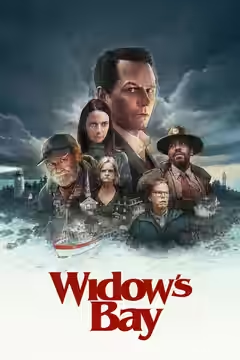
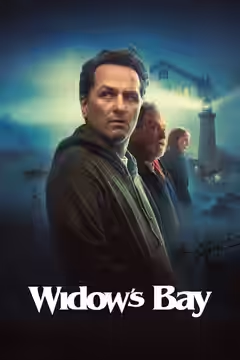
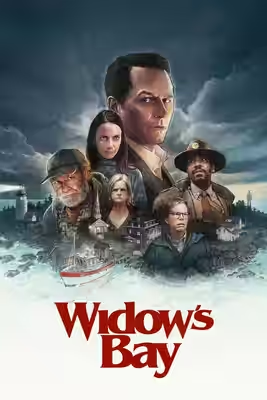
Widow’s Bay is a funny, unsettling island mystery with an ensemble worth caring about, especially Matthew Rhys and Kate O’Flynn. We recommend it, with a caveat: its supernatural rules sometimes demand more attention than they deserve.
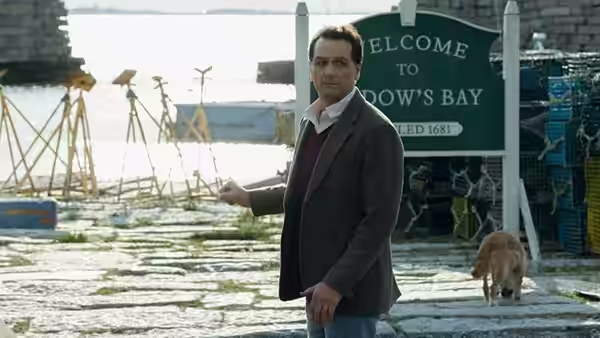
Widow’s Bay finds a useful occupation for a man in a supernatural mystery: he can try to improve the place. Mayor Tom Loftis, played by Matthew Rhys, wants to revive an isolated island community, which is difficult enough before the spirits are considered. This is a good, often unsettling comedy-horror series, and we recommend it for the care it takes with its residents. The mayor’s job gives the comedy something to be about beyond the oddness of the people he has to deal with.
Rhys gives the mayor’s attempts at improvement enough conviction to stop the premise becoming a joke at his expense. Kate O’Flynn’s Patricia Moyer is the performance we kept waiting to return to, and Stephen Root’s Wyck Crawford helps make the community worth investigating in its own right. We grew fond of Patricia, because O’Flynn plays her peculiarities without asking us to look down on her. That affection makes the prospect of harm to this community matter.
Writer Katie Dippold and director Hiro Murai help keep the humour close to the unease. The town’s business does not become irrelevant just because the supernatural has intruded. There is pleasure in watching a programme allow such different concerns to occupy the same story, without treating comedy as a break during which nothing counts. Some of the shifts are disconcerting, and rightly so: the island should not feel entirely manageable.
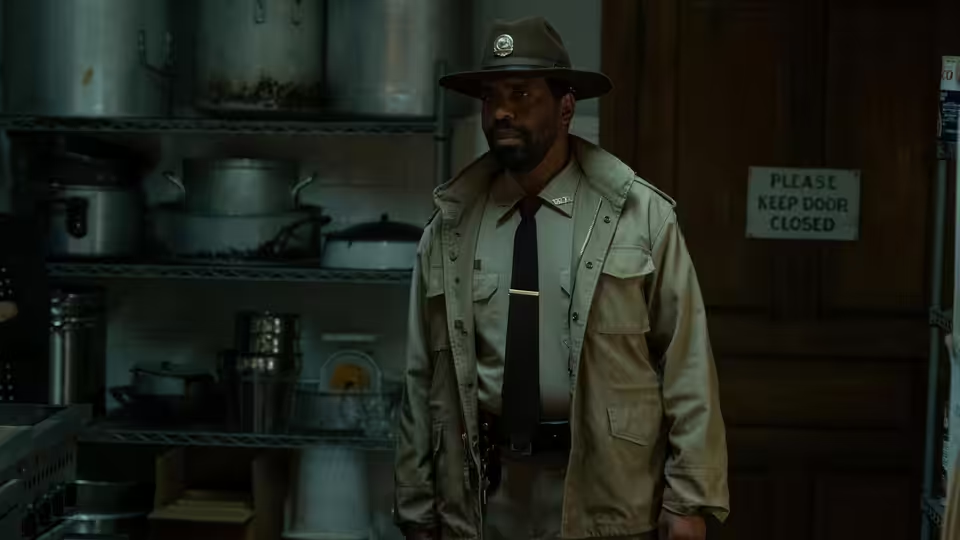
Cinematographers Cody Jacobs and Christian Sprenger, with production designer Steve Arnold, help give the island the sense of an inhabited place. That is useful work in a story which could easily turn its location into a display of ominous attractions. The setting accommodates the residents and their everyday concerns as convincingly as the mystery. Its persuasiveness is one reason the programme can change mood so sharply without seeming to have started again.
The editing team of Kyle Reiter, Isaac Hagy, Jen Bryson and Cameron Ross has a less enviable job, managing changes of pace that need to accommodate both comic performance and dread. Those changes often work; a settled mood would make this a less interesting series. David Fleming’s music contributes to the unease, though the programme is not consistently as frightening as its atmosphere promises. Nor does every comic passage earn the time it takes.
The larger problem is how complicated the supernatural rules become. Dippold and her fellow writers sometimes make keeping track of the mythology more demanding than caring about what it might mean for the characters. That is a particular frustration here, because the interest in trauma and the past gives the horror something human to work with. The programme would be stronger with fewer rules to remember.
There is a particular pleasure in small-town horror that remembers people still have to live there. The ensemble gives this series that pleasure, and enough warmth to make its nastier possibilities count. Try it for O’Flynn and Rhys, with patience for the occasional tangle of supernatural rules.