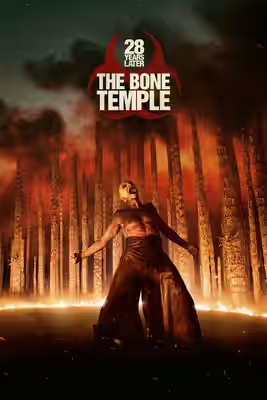
Danny Boyle and Alex Garland go back to the Britain they emptied in 28 Days Later and find it stranger and sadder than they left it. For an hour and three quarters this is a frightening, thoughtful horror film. Then come the last five minutes.
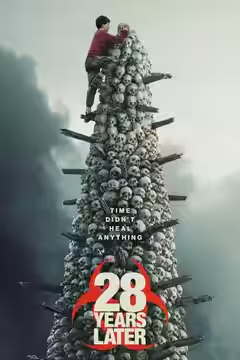
Danny Boyle and Alex Garland made 28 Days Later in 2002 and made the infected run. Twenty-three years on they are back, Garland writing and Boyle directing, and the country they left has grown strange. The mainland is quarantined and the rest of the world patrols the coast to keep it so. On Holy Island, reached by a causeway the tide covers twice a day, a community lives as if it were 1400, with bows and arrows and a gate they bar at night. This is a good film, Boyle’s most alive in years, and it has a final five minutes we would pay to have removed.
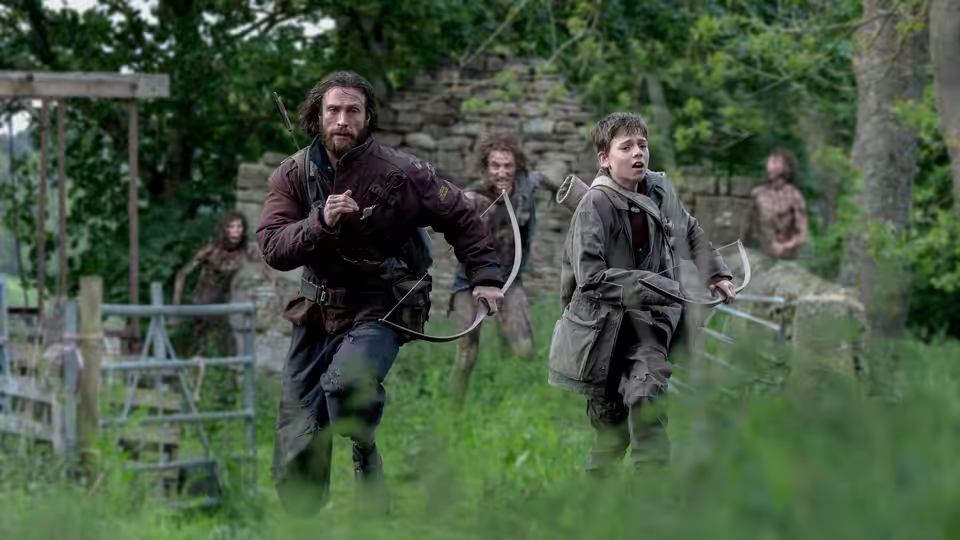
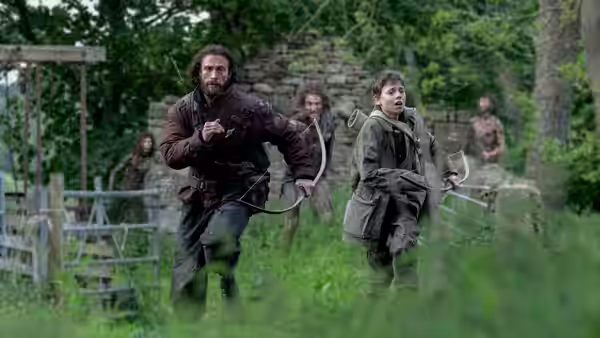
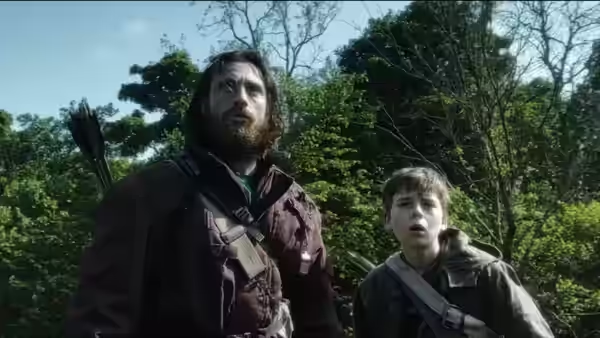
Spike (Alfie Williams) is a boy being taken across for his first kill by his father, Jamie (Aaron Taylor-Johnson), who enjoys the mainland more than a father should. Anthony Dod Mantle shot much of it on iPhones, rigged in banks so the picture can go wide and crisp and slightly wrong, and when the infected attack the frame shatters into a dozen angles of the same second. Over Spike’s first walk into the trees Boyle lays a scratched 1915 recording of Kipling’s Boots, a man barking the same word until it stops being one, and cuts in archive footage of English longbowmen. We were frightened, properly, on the way back across the causeway with the tide rising and something in the water behind them. It was the sound that did it: bare feet on wet sand, closer each time.
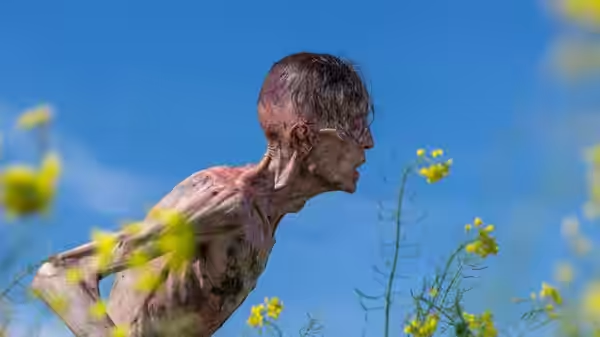
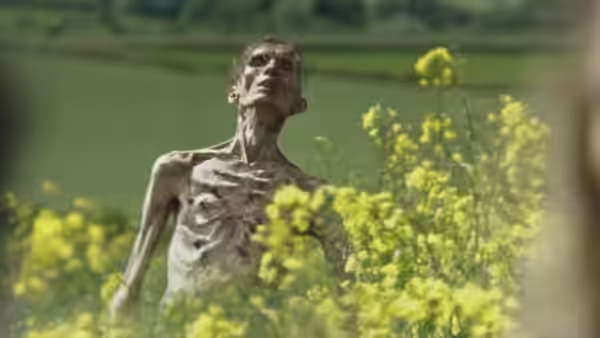
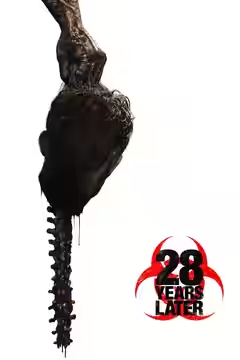
The infected have changed. Some crawl now, fat and slow, grazing on worms; others have grown into what the islanders call alphas, and the largest, Samson (Chi Lewis-Parry), tears heads off with the spine still attached. Gareth Pugh and Carson McColl, credited for both costume and production design, dress the island in wool, leather and salvaged plastic and let the mainland rot without art-directing it: trees through the roofs of cars, a house gone to moss. The islanders have made the end of the world cosy, and the film knows this is funny.
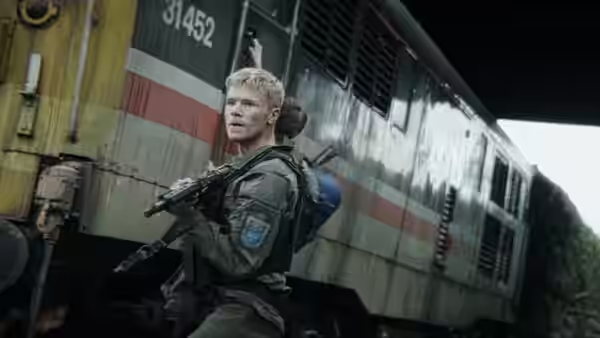
The second half belongs to Isla and to Ralph Fiennes. Isla (Jodie Comer) is ill in a way nobody on the island can name; she forgets where she is, then comes back and knows she has been gone. Comer never asks for sympathy and so earns it. Spike, having heard that a doctor still lives out there, takes her across himself, and on the way they collect a stranded Swedish soldier, Erik (Edvin Ryding), who gives the film its outside view and most of its laughs.
Then they reach Dr Kelson. Fiennes, shaven-headed and painted from crown to ankle in iodine, has spent the years building something out of the dead, and we will leave it there. He talks to the boy about dying as though it were a subject like any other, and it moved us more than we expected of a film with a spine-ripping in it. The reason is stillness. After an hour of Jon Harris cutting like a man in a hurry, the camera simply sits, and the music, by Young Fathers (credited as Alloysious Massaquoi, Kayus Bankole and ‘G’ Hastings), drops from percussion to voices.
The satire is thinner than the film thinks. Garland wants the island to stand for a certain Britain, walled in and pleased about it, and the point is made in the first twenty minutes and then made again on every return home. The alphas are frightening; the crawling infected are a curiosity the film raises and drops.
And the last five minutes take a turn we will not describe. They belong to a different, sillier film, they exist to set up the next instalment, and they arrive seconds after the story has finished properly and well. We were angry, sitting there, after being so well looked after for an hour and three quarters. Several critics have flinched at the same spot.
Against Boyle’s own work this is the most patient film he has made in a long time, and against the 2002 film it is stranger, slower and less frightening. At 115 minutes it does not dawdle. See it in a cinema if you can, with the sound up, because the infected frighten in proportion to how loud they are. And when Spike’s story ends, and you will know when it does, take it that the film has ended too. What follows is an advertisement for the sequel.