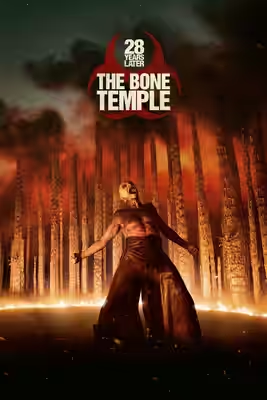
Ralph Fiennes, a tower of skulls and a Duran Duran record give Nia DaCosta’s sequel its best hour. Jack O’Connell’s cult of tracksuited Jimmys gives it its loudest and least interesting, and the film is only as good as whichever half is on screen.
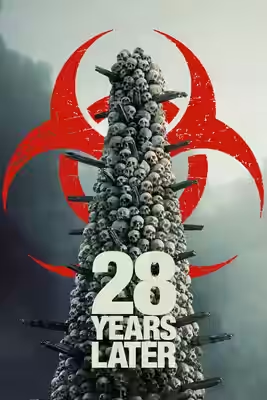
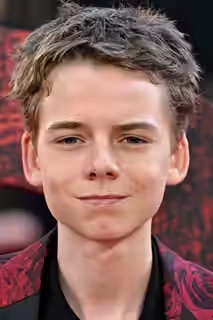
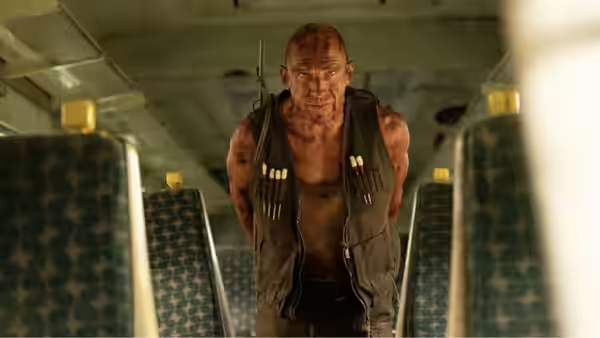
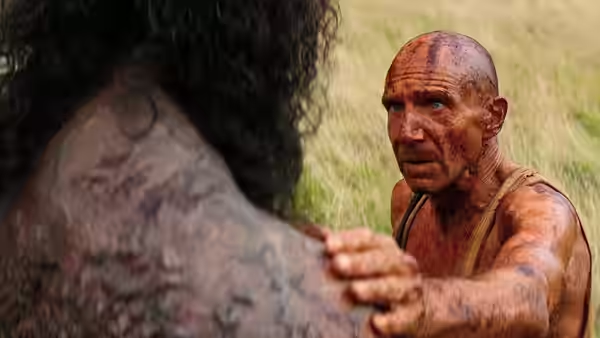
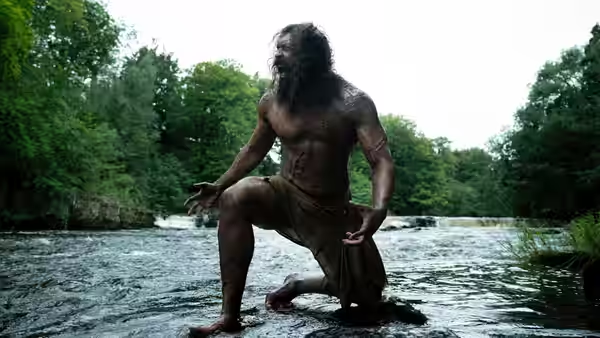
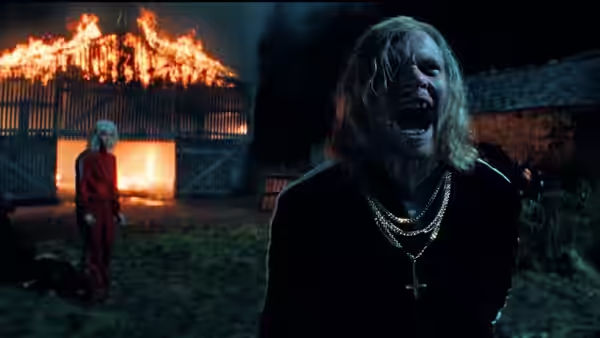
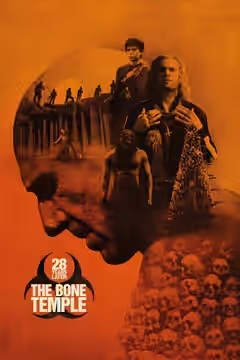
28 Days Later came out in 2002. This is the fourth film and the first not directed by Danny Boyle. Nia DaCosta takes the chair, Alex Garland writes, and the story picks up where 28 Years Later (2025) left it. Spike (Alfie Williams), the boy who walked off the island, has fallen in with Sir Jimmy Crystal (Jack O’Connell) and his followers, who wear tracksuits and blond wigs and are all called Jimmy. Elsewhere, Dr Kelson (Ralph Fiennes) is still stacking skulls into his tower and has acquired a companion, an infected alpha called Samson (Chi Lewis-Parry). It is a good film for about half its length and a hard, loud, less interesting one for the rest.
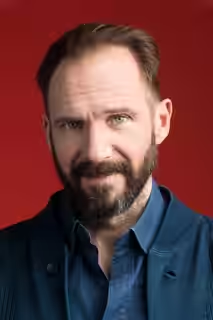
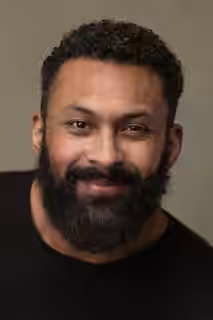
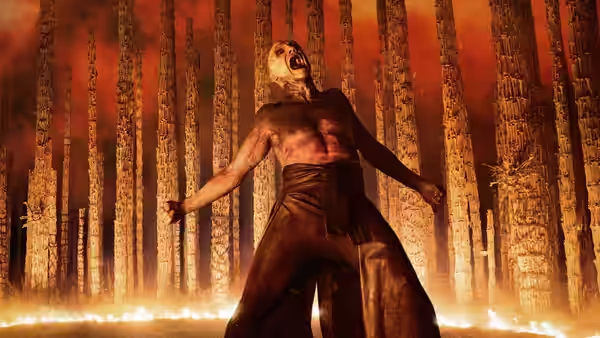
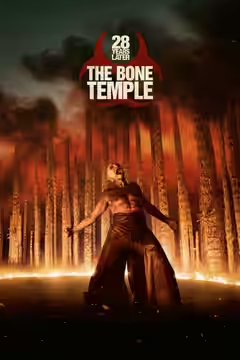
The Kelson half is the one we would send you to. Fiennes plays the doctor as a man who has kept his manners and his vocabulary in a country with no use for either. Lewis-Parry, under the prosthetics, listens, and does more with a tilt of the head than most of the cast manage with dialogue. The scene in which Kelson puts on Duran Duran and dances, with Samson swaying opposite him among the bones, is as odd as it sounds. We laughed, and then we stopped laughing, because Fiennes is not playing it for a laugh. He is playing a lonely man who has found company. A later scene between them under a full moon, almost without words, moved us more than a film with this much blood in it had any right to.
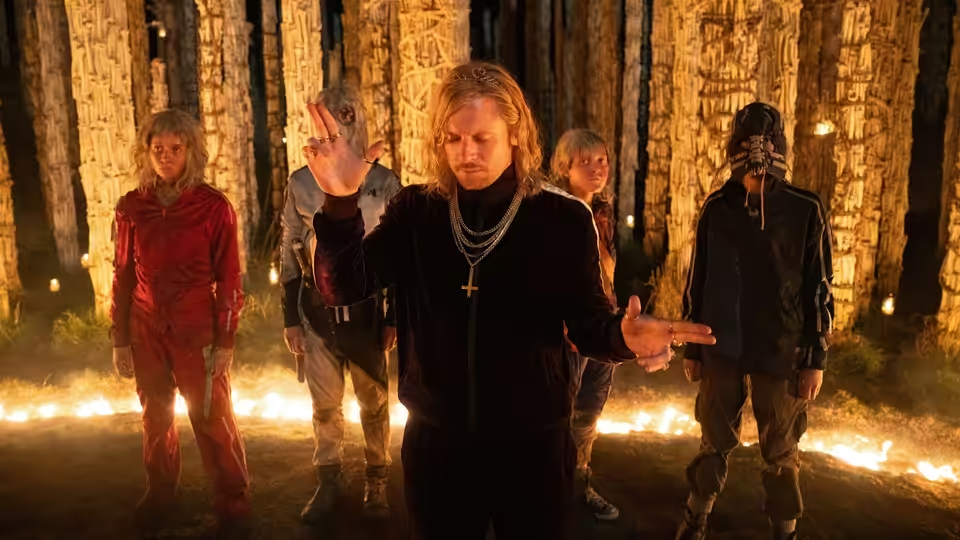
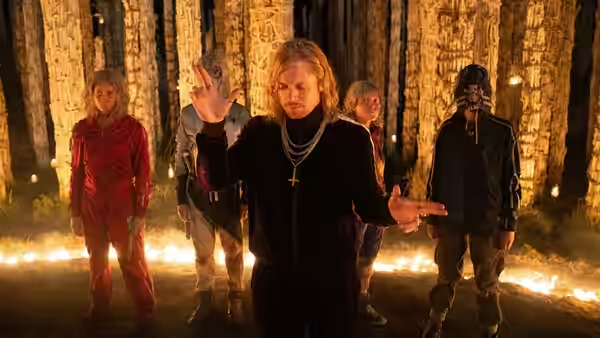
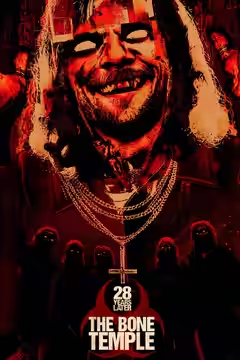
The other half belongs to Jimmy Crystal, and it is a harder sell. O’Connell commits: the bob, the shell suit, the patter, a smile that never reaches anyone, and the resemblance to a particular disgraced television presenter is the point of the costume. His Jimmys, among them Erin Kellyman’s Jimmy Ink, Emma Laird’s Jimmima and Connor Newall’s Jimmy Shite, hurt people because he tells them to, and the film shows this at length. We were horrified the first time, as we were meant to be. By the time it had happened again, and again, we were tired, which we were not. Garland has written a cult whose whole creed is cruelty and Jimmy’s face, and once you have grasped that, the scenes have nothing new to tell you.
DaCosta and her crew are better than the weaker half of the script. Sean Bobbitt keeps the camera close on faces inside the temple and pulls back to wide, empty country whenever the Jimmys are on the move. Gareth Pugh and Carson McColl, credited for both costume and production design, have built the tower as a structure you could walk round, and they dress the Jimmys like a boys’ football team gone badly wrong. Hildur Guðnadóttir’s score sits low, mostly drone and strings, and clears out when the pop records come on. Jake Roberts’s cuts between the strands are clean; the trouble is that one strand keeps interrupting the other.
It is a middle film and it behaves like one. Threads from 28 Years Later are picked up or put down without a word, and the ending, which we will not describe, is more an invitation to the next instalment than a conclusion to this one. At 109 minutes it is not long, but the Jimmy scenes make it feel longer. Garland puts his argument on a plate: reason against fanaticism, the doctor against the priest.
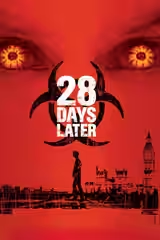
Set against the series’ own standard, this is a strange entry. 28 Days Later frightened people because its infected ran and because the film declined to explain them. The Bone Temple has almost no interest in the infected except as company for a lonely man; its monsters wear tracksuits. Most critics have admired that choice more than we do. We think the film is at its best when it is quiet, and it is not quiet often enough.
See it for Fiennes, and for Lewis-Parry, whose performance under all that latex deserves more notice than it will get. Sit through the rest. The 18 certificate is earned several times over, and if you can bear that, the temple is worth the visit.