Juan Carlos Fresnadillo’s sequel opens with the best ten minutes in either film and spends the rest of its time trying to live up to them. It comes closer than it has any right to, though the plot asks you to look away twice.
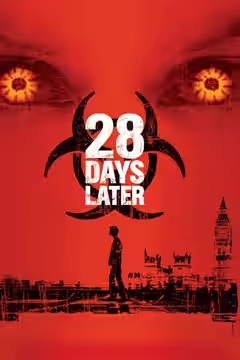
Danny Boyle’s 28 Days Later ended with a jet overhead and the suggestion that rescue was on its way. Juan Carlos Fresnadillo’s sequel asks what rescue would look like, and answers with a fenced compound, a curfew and an American soldier on every roof. It is a good, hard, fast horror film with one of the best openings the genre has produced, and it stands or falls on whether you can forgive a plot that needs two stupid decisions. We could, mostly.
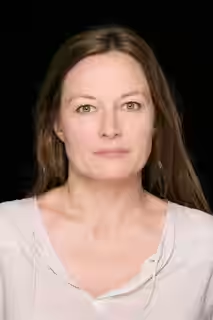
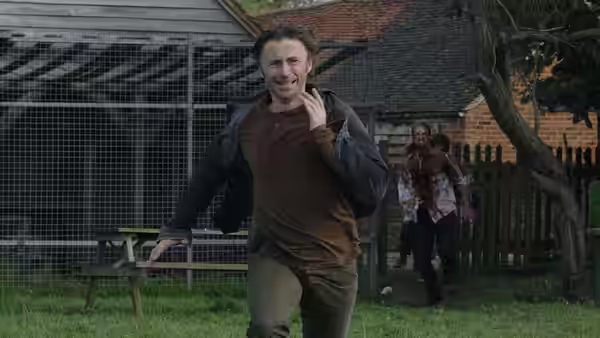
The first ten minutes are the film. A boarded-up farmhouse, tinned food by candlelight, a knock at the door nobody wants to answer. Then the infected come through the walls and Donald Harris (Robert Carlyle) makes a decision about his wife Alice (Catherine McCormack) that the rest of the film never mentions. Enrique Chediak shoots the escape hand-held and half-lit, Chris Gill cuts it so you see a face for a frame and no longer, and John Murphy’s guitar theme comes in low as Don rows away with the infected keeping pace along the bank. We were frightened in the ordinary way, and then, as the camera rose over the boat, we felt something rarer at a horror film: shame on a character’s behalf. Carlyle’s face does it. He is not looking back.
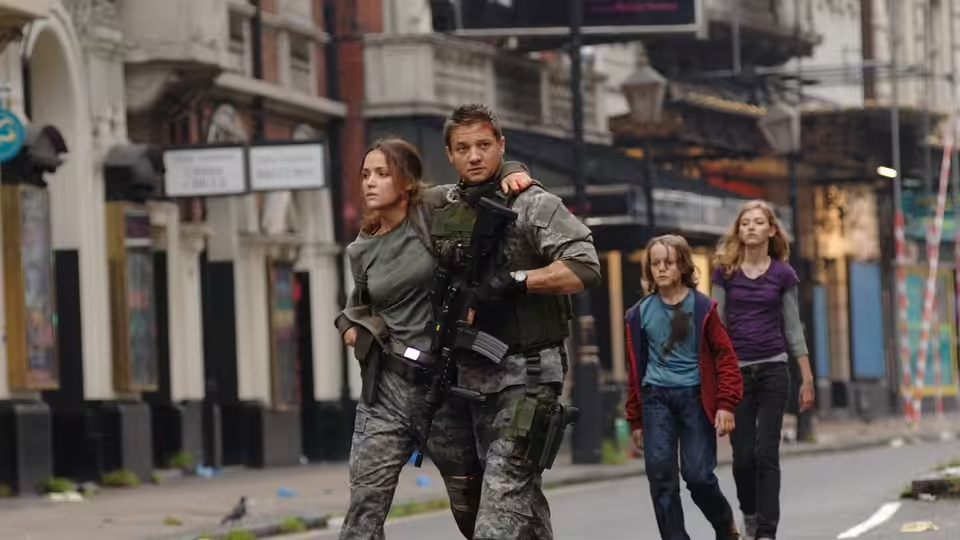
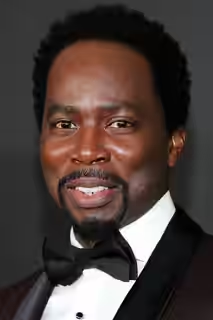
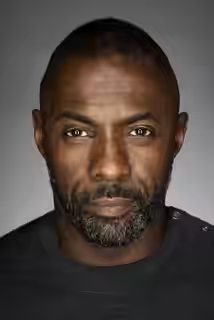
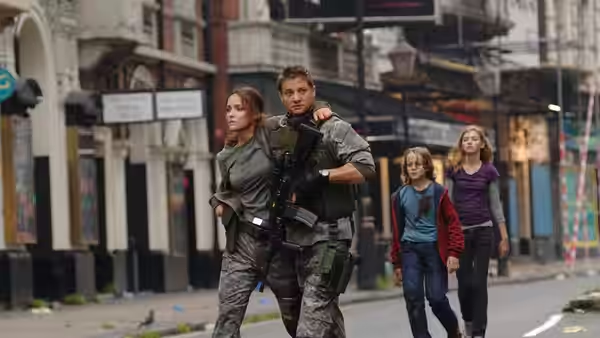
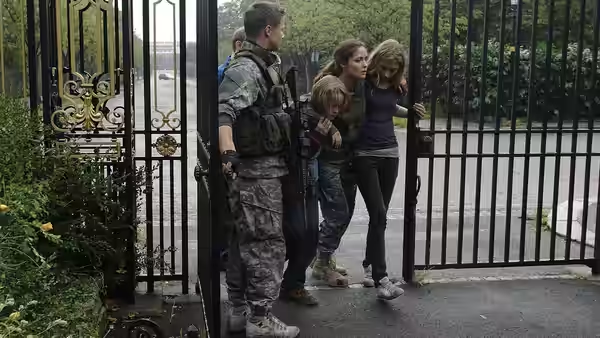
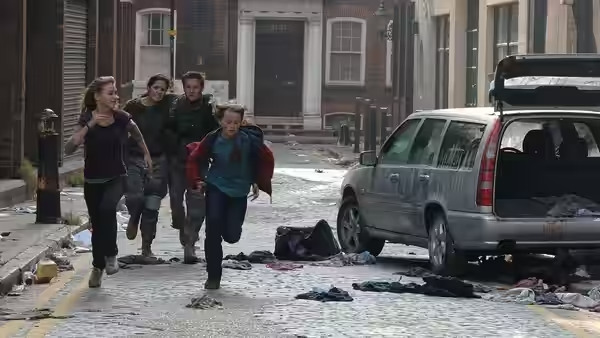
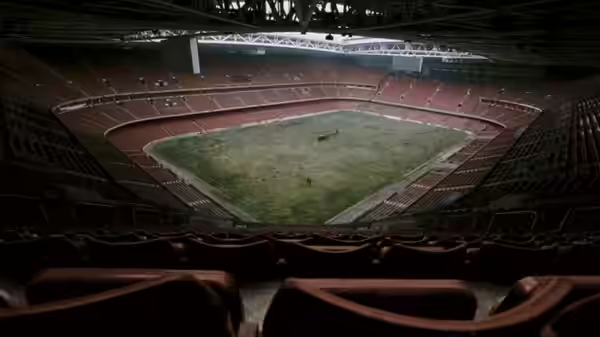
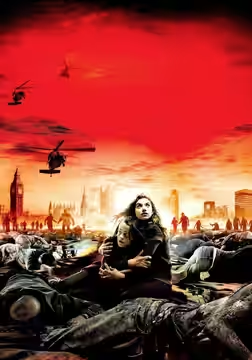
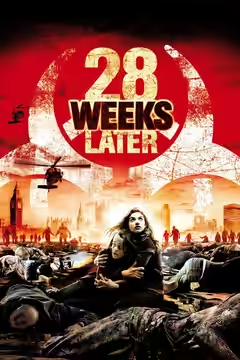
Twenty-eight weeks on, the army has taken a piece of the Isle of Dogs and called it District One. The production design, by Mark Tildesley, puts the returnees in tower-block flats with fresh paint and army-issue blankets under the Canary Wharf towers; the rest of London is exactly as it was left, cars where they stopped, grass through the pavements, nobody. Jane Petrie dresses the soldiers in desert camouflage that looks wrong against Docklands brick, which is the idea. Idris Elba’s General Stone runs it from a screen; Jeremy Renner’s Sergeant Doyle watches it through a rifle sight. Harold Perrineau flies the helicopter. Rose Byrne’s Scarlet, the medical officer, is the one person asking what happens when the wire is tested.
Then Tammy (Imogen Poots) and Andy (Mackintosh Muggleton), Don’s children, want something from the family house in the empty city, and they get out. The film has just spent ten minutes telling us the perimeter is watched by snipers with night scopes, and two children on a moped cross it in daylight. The screenplay, by Fresnadillo, Rowan Joffé, Enrique López Lavigne and Jesús Olmo, needs the children outside and does not care how they got there, and it does the same thing later when it needs two adults to change sides in one cut. Most critics have waved this through because the set pieces earn it. They do, just.
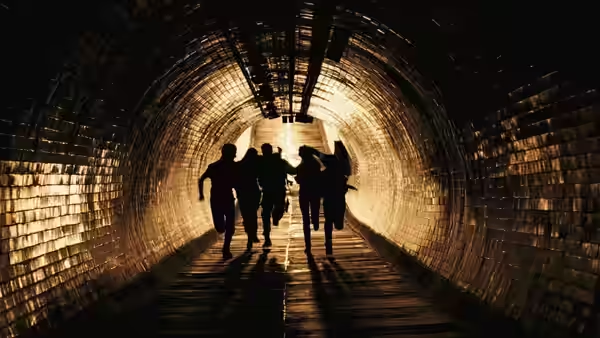
What the army does when the wire fails we will not describe, except that the second half is about being hunted by two sides, and that Fresnadillo stages it in sequences as good as anything in the first film: a room lit only by muzzle flash, a helicopter used for a purpose helicopters are not meant for, a stretch in a tube station seen only through the green of a night sight that we have not forgotten. Gill cuts these so fast that we sometimes lost who was standing where, and once who was still alive, and we are not sure the confusion was always deliberate.
In 2007, a film about an occupying army losing control of a city it promised to rebuild does not need a caption, and Fresnadillo does not add one. Where the film falls short of Boyle’s is in the people. 28 Days Later had four survivors you got to know; this one has eight characters and time for about two, and Byrne and Renner, both good, are playing jobs rather than people. Carlyle is the exception. He has perhaps twenty lines after the opening and works mostly with a face that has decided not to feel anything, and when the feeling arrives anyway it is the best acting in the film.
At 99 minutes it does not hang about. See it in the dark and forgive the moped. If you cannot forgive the moped, the first ten minutes are worth the evening.





![[REC] poster](https://cdn.film.one/media/title/1931/poster-0c2635acbe7c.jpg?width=360&format=avif&quality=35)