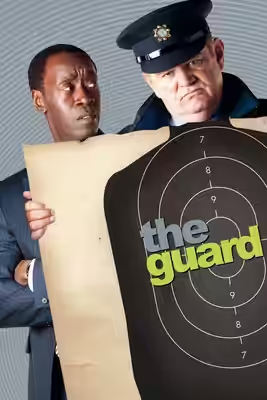
Walter Hill’s cop-and-convict thriller is lean, loud and built around an Eddie Murphy who had never made a film and behaves as if he owns it. The plot is thin and the racial abuse has dated badly, but the pairing still works.
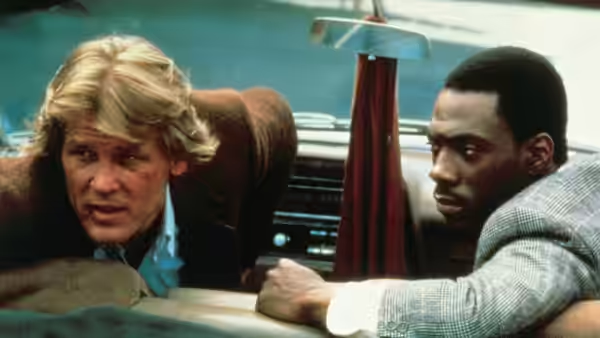
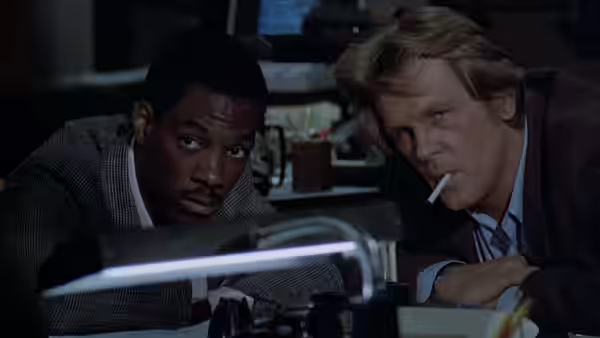
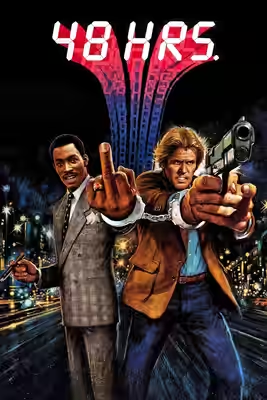
Walter Hill made his name with lean genre films, The Driver and The Warriors, in which nobody said more than the job required. 48 Hrs. is that director handing half his film to a man who does not stop talking. A San Francisco detective, Jack Cates, loses his gun to an escaped convict and borrows a second convict to get it back, with two days to do it. Four writers are credited, Hill, Larry Gross, Roger Spottiswoode and Steven E. de Souza, and between them produced a plot you could fit on a beer mat. The film is about two men in a car, and 96 minutes is the right length for it.
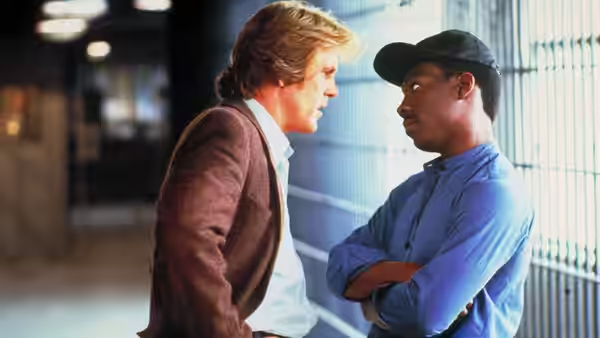
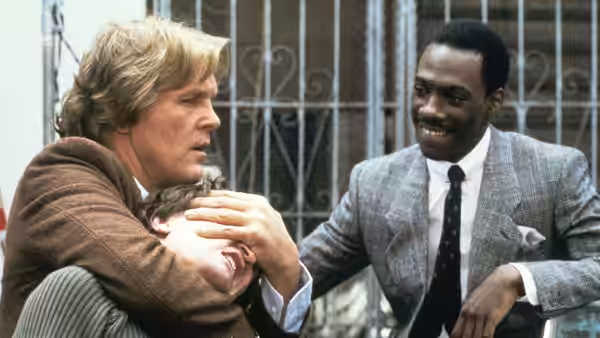
It is good, and worth your evening if the genre is yours. Most cop-and-partner pictures of the following decade borrowed its shape: the mismatched pair, the deadline, the dislike that turns into something like respect. The original is harder than its imitators. Nobody in it is lovable. Cates drinks, shouts and calls Reggie things we would not print. Reggie is a thief who is lying to him from their first conversation. Hill softens neither of them.
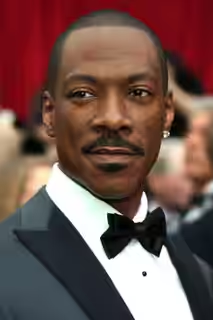
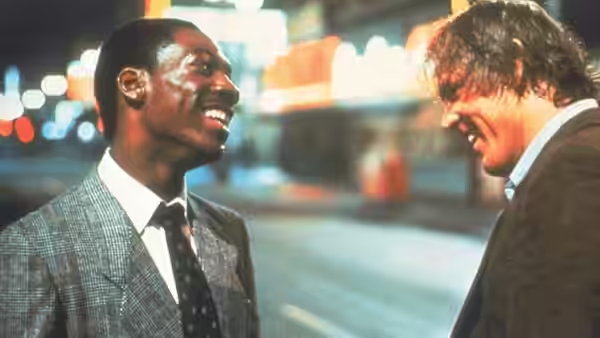
Eddie Murphy had never made a film before this one and walks in as if he had made twenty. The scene everyone remembers puts Reggie in a country bar full of men who do not want him there, with Cates’s badge in his pocket and no gun. He turns the place inside out in four minutes by voice alone. We laughed as hard as we have at anything in a thriller, and then felt a small chill, because what he is doing in that bar is frightening as well as funny, and Murphy plainly knows it. He plays Reggie’s confidence as something built over years of being the cleverest man present and never allowed to say so.
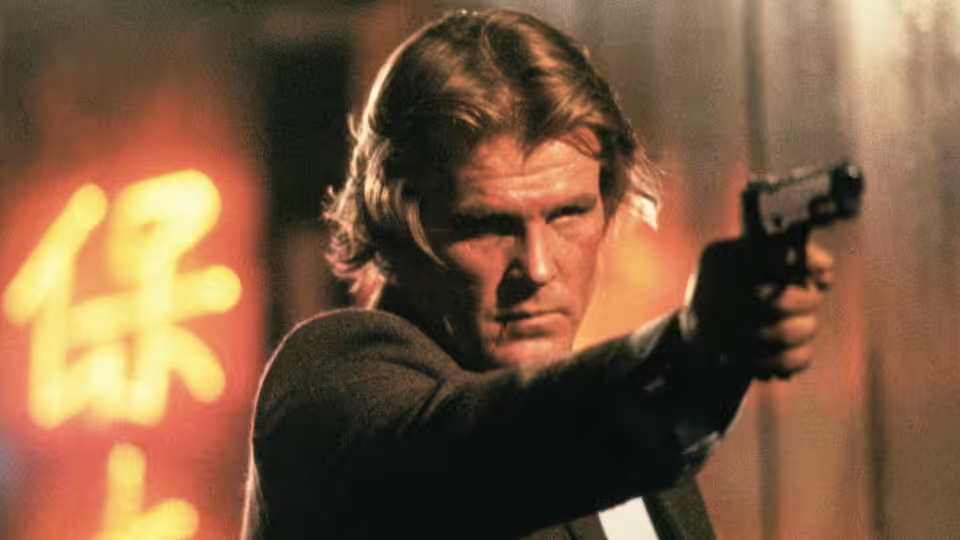
Nick Nolte has the less showy job and does it well. Cates looks hungover in every scene, his voice coming from somewhere under the floorboards, and Nolte lets him be unpleasant without asking us to forgive him. Annette O’Toole, as his girlfriend Elaine, gets a few phone calls and a bedroom scene; the writers did not care about her. James Remar plays Ganz as a man who kills without changing his expression, and Sonny Landham’s Billy Bear barely speaks; they are nastier than the plot needs. David Patrick Kelly’s Luther, a twitchy little man keeping a girl (Kerry Sherman) hostage in a flat, is the one villain allowed to be funny.
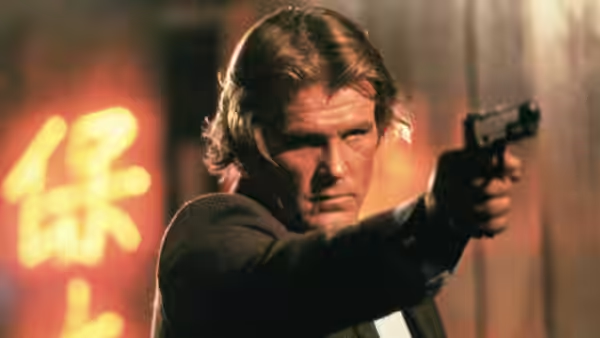
Ric Waite shoots San Francisco as a city of grey morning streets, hotel corridors the colour of nicotine and bars lit red. John Vallone’s sets are cheap on purpose: the hotel where Ganz shoots his way out is peeling paint and thin walls. Marilyn Vance puts Reggie in the pale suit he went inside wearing, and he spends the film insisting it is still in fashion. James Horner’s score is odd for a cop film, steel drums and saxophone over a nervous bass line, and it keeps the chases from turning grim. The three editors, Billy Weber, Mark Warner and Freeman A. Davies, keep the gunfights legible and the talk quick.
The plot is a list of addresses: go to a place, nobody is there, go to the next. The abuse Cates throws at Reggie is constant and racial, and the script treats it as the way men talk to each other rather than as something that needs answering. Reggie answers it himself, in the bar and in a fistfight in an alley, and the film’s view seems to be that two men who have hit each other are square. We found that harder to sit through than we expected to. It is of its time, which explains it without excusing it, and the 18 certificate is honest about the language as well as the violence.
Hill’s best films are about professionals who dislike each other getting a job done, and this is one of them. It is not as pure as The Driver or as strange as The Warriors, but it is funnier than either. Watch it knowing the hero is not a nice man, and that the film agrees with you.